Shrimp Farming Dissolved Oxygen Sensor: Complete Technical Requirements
Shrimp are among the most oxygen-sensitive species in commercial aquaculture. Unlike fish that can swim to oxygen-rich surface layers when conditions deteriorate, shrimp are benthic organisms—they live on the pond bottom where dissolved oxygen reaches its lowest point. This fundamental biological reality means that a Shrimp Farming Dissolved Oxygen Sensor faces a set of technical demands that no generic water quality probe can satisfy without careful specification.
If you are selecting a sensor for intensive or semi-intensive whiteleg shrimp (Litopenaeus vannamei) or black tiger shrimp (Penaeus monodon) production, this page defines the complete technical requirements. Every parameter discussed below—measurement range, accuracy, response time, depth rating, material compatibility, and output protocol—is derived from peer-reviewed aquaculture research, manufacturer field data, and operational benchmarks from active shrimp farms.
Why Shrimp Farming Demands a Purpose-Specified DO Sensor
A dissolved oxygen sensor for shrimp farming operates under conditions that would destroy a standard laboratory probe within weeks. The water is warm, typically 28–33°C, which accelerates both biofouling and electrochemical sensor degradation[reference:10]. It carries high loads of suspended solids, phytoplankton, and dissolved organics from intensive feeding. Salinity fluctuates between 15–30 ppt in brackish-water systems, directly affecting oxygen solubility[reference:11]. And the probe sits 10–20 centimeters above a sediment layer that actively consumes oxygen through microbial respiration.
The biological threshold that defines success or failure is narrow. At dissolved oxygen concentrations below 4.0 mg/L, L. vannamei suppress feeding activity and metabolic rate, directly degrading feed conversion ratios[reference:12]. Below 3.0 mg/L, shrimp experience acute physiological stress; research documents that hypoxia at this level disrupts osmoregulation, suppresses immune function, and increases susceptibility to Vibrio infections[reference:13]. Below 2.0 mg/L, mass mortality becomes irreversible within 20–40 minutes depending on biomass density and water temperature[reference:14].
A sensor that drifts by 1 mg/L in a pond operating at 3.5 mg/L is not inaccurate—it is dangerous. The difference between a reading of 3.5 mg/L and 2.5 mg/L is the difference between a recoverable alert and a total crop loss. For a deeper understanding of how these oxygen thresholds integrate into full farm management, see our complete guide to dissolved oxygen monitoring in aquaculture.
Measurement Range and Accuracy: The Critical 0–5 mg/L Window
Shrimp pond dissolved oxygen typically cycles between 2.5–3.0 mg/L pre-dawn and 12–15 mg/L during peak afternoon photosynthesis, when dense phytoplankton blooms supersaturate the water column. A sensor must handle both extremes without saturation or damage.
| Parameter | Minimum Requirement | Justification |
|---|---|---|
| Measurement range | 0–20 mg/L (0–200% saturation) | Covers anoxic sediment conditions through supersaturation during algal blooms |
| Accuracy | ±0.1 mg/L or ±1% of reading | A 0.1 mg/L error near the 3.0 mg/L hypoxia threshold represents acceptable margin; a 0.5 mg/L error creates a false sense of safety |
| Resolution | 0.01 mg/L | Enables detection of slow downward trends before they cross critical thresholds |
| Lowest reliable detection | 0–0.5 mg/L | Required for monitoring sediment oxygen demand and anoxic zone formation in dissolved oxygen monitoring systems |
The most dangerous measurement zone for shrimp is not the high end—it is the 0–5 mg/L range where mortality decisions are made. Academic research confirms that electrically powered aerators are typically activated when DO concentration falls below 3 mg/L, which is considered the critical hypoxia level for penaeid shrimp[reference:15]. A sensor with poor accuracy below 5 mg/L is functionally useless for automated aeration control. For detailed sensor engineering specifications, refer to our resource on dissolved oxygen sensor engineering specifications.
Sensor Technology: Why Optical Sensors Are the Standard for Shrimp Ponds
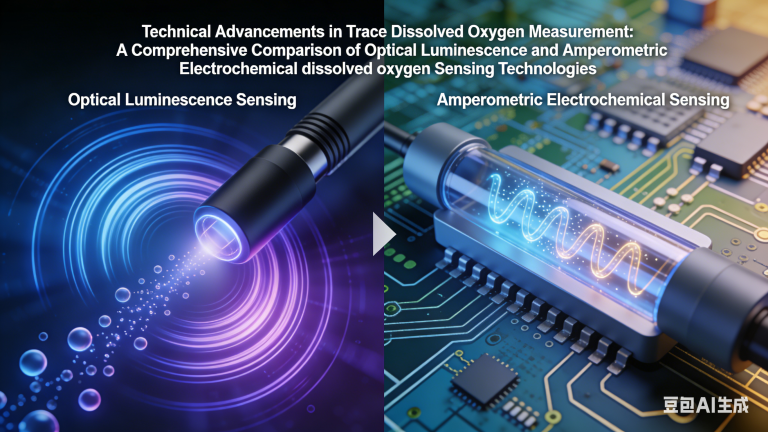
The choice between optical fluorescence and electrochemical dissolved oxygen sensor for shrimp farming technology affects every downstream operational decision—calibration frequency, data reliability, and total cost of ownership.
Electrochemical sensors (galvanic and polarographic) consume oxygen at a cathode to generate a current. In shrimp pond water—warm, algae-rich, and biologically active—their thin gas-permeable membranes foul within days. Algae and bacterial biofilm form on the membrane surface, blocking oxygen diffusion and producing falsely low readings. Field evidence shows electrochemical sensors can drift by more than 20% within two weeks under these conditions. Their membranes require replacement every 6–12 months, and electrolyte must be refreshed regularly.
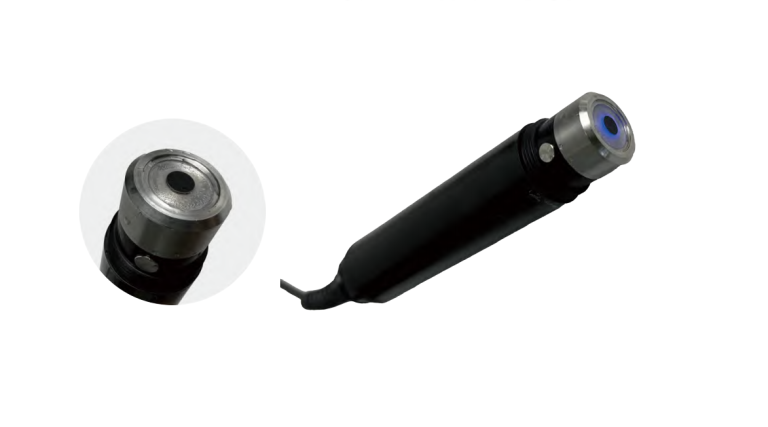
Optical fluorescence sensors eliminate the membrane entirely. A blue LED excites a luminescent dye immobilized in a solid-state sensing cap; oxygen molecules in the water quench this luminescence in precise proportion to their partial pressure. There is no electrolyte, no anode to deplete, and no membrane to foul or tear. The flat optical window is inherently easier to clean than a delicate stretched membrane, and integrated mechanical wipers can automate this process entirely. Quality optical sensors maintain calibration stability for 2–4 weeks in intensive shrimp pond conditions. For a complete comparison of these two technologies, see our analysis of optical vs. electrochemical DO sensors for aquaculture.
Modern optical sensors also provide native RS485 Modbus RTU digital output, enabling direct connection to PLCs and IoT controllers for automated aeration without signal converters[reference:16]. This integration capability transforms the sensor from a passive monitoring device into an active control input. Learn more about available sensor platforms in our optical dissolved oxygen sensors technology overview.
Environmental Compensation: Temperature, Salinity, and Pressure
A dissolved oxygen sensor for shrimp farming must compensate for three environmental variables that shift oxygen solubility independently of biological activity. Without all three compensations active, the displayed mg/L value is not reliable for management decisions.
Temperature compensation
Oxygen solubility decreases as temperature rises. A 1°C increase in water temperature causes a roughly 0.2 mg/L shift in DO readings at saturation if uncompensated. Shrimp pond temperature can swing 5–8°C between early morning and mid-afternoon—an uncompensated swing that would produce a 1.0–1.6 mg/L false drift. Every sensor must include an integrated fast-response thermistor and apply temperature correction to both partial pressure and concentration calculations in real time.
Salinity compensation
Salinity has a direct inverse relationship with oxygen solubility. At 35 ppt salinity and 28°C, seawater saturated with oxygen holds approximately 6.3 mg/L—roughly 20% less than freshwater at the same temperature, which saturates at approximately 7.8 mg/L[reference:17]. A sensor reporting in mg/L that lacks salinity compensation in a marine shrimp pond operating at 25–35 ppt will systematically overestimate oxygen availability by roughly 1.0–1.5 mg/L. If a sensor displays 4.0 mg/L without salinity compensation active, the true value in seawater may be only 3.2 mg/L—dangerously close to the hypoxia threshold.
The technical requirement is clear: optical sensors deployed in shrimp ponds, especially those operating at 15 ppt salinity or higher, must either accept manual salinity input from the operator or integrate a conductivity sensor for automatic real-time compensation. For a detailed analysis of integrated monitoring options, visit our dissolved oxygen monitoring systems page.
Mechanical and Environmental Durability
Shrimp pond deployment imposes mechanical demands on a dissolved oxygen sensor for shrimp farming that laboratory and clean-water sensors were never designed to meet.
- Ingress protection: IP68 rating is mandatory. The sensor, cable gland, and connector must all be rated for continuous submersion at operating depth. Condensation inside an optical sensor housing permanently damages the electronics.
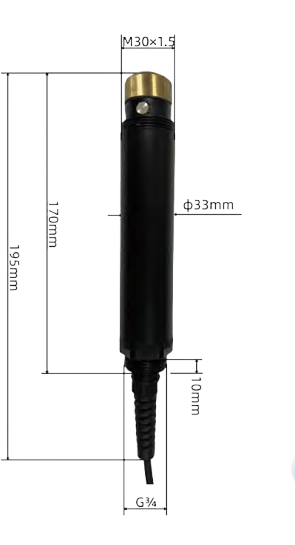
- Wetted materials: All materials in contact with pond water must resist corrosion in saline and brackish environments for years. Titanium, 316L stainless steel, and high-grade engineering polymers (POM) are the accepted standards. Aluminum and standard steel grades will corrode within a single grow-out cycle and contaminate the pond with metal ions[reference:18].
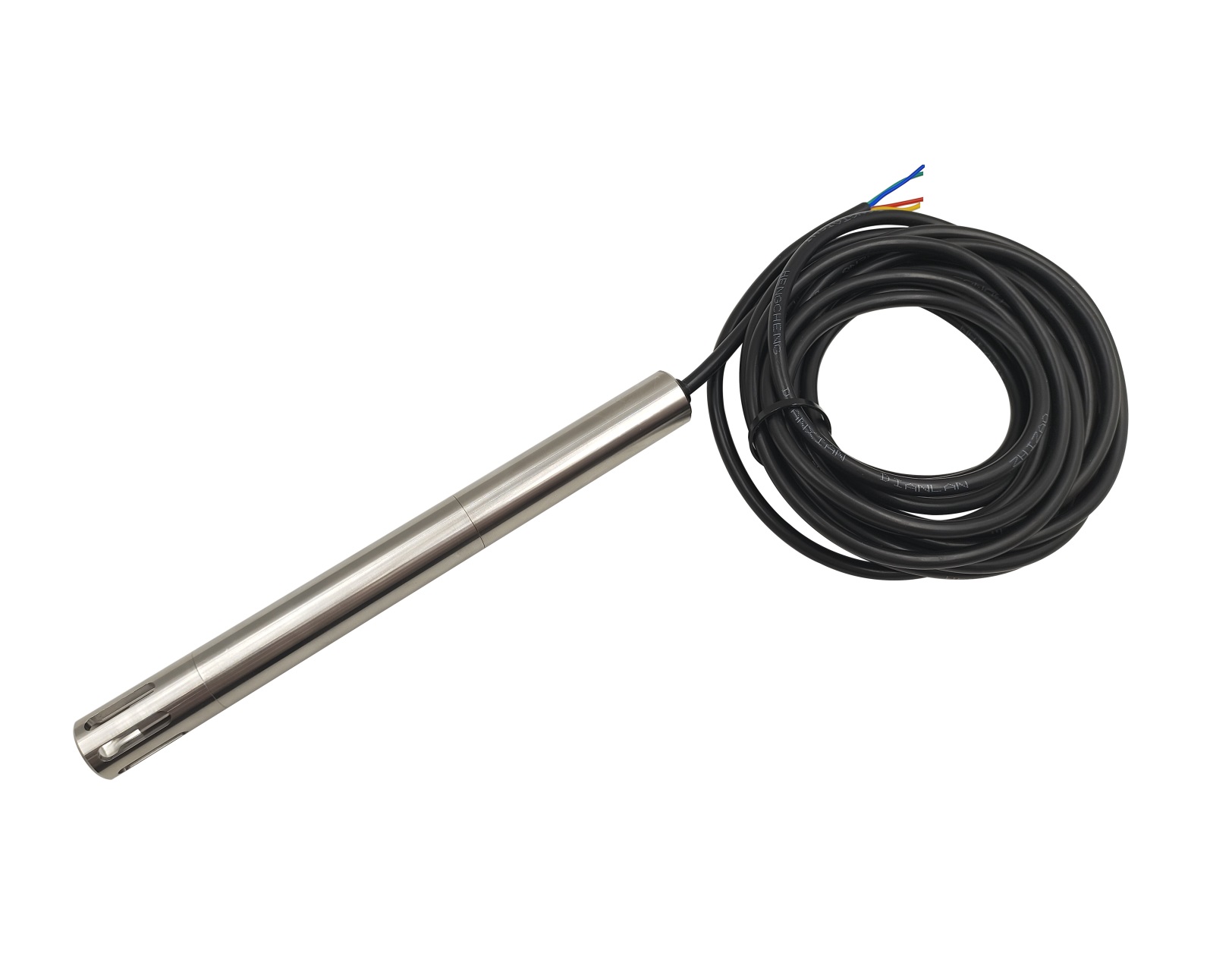
- Physical protection: The sensor head must be enclosed in a slotted guard or perforated deployment pipe that prevents shrimp from physically impacting the optical window. Shrimp, with their hard exoskeletons and rapid tail-flick escape behavior, can collide with exposed sensor faces and scratch or crack the sensing cap.
- Anti-biofouling design: The flat optical sensing window should be positioned to allow natural water flow across its surface. Sensors with integrated motorized wipers that clean the window on a timed cycle significantly extend maintenance intervals in warm, high-fouling shrimp ponds.
- Cable management: Cables must be routed through rigid conduit from pond bank to sensor depth. Unsupported cables suspended from buoys or floats attract algae growth and create snag points that can pull the sensor out of position during feeding operations or harvesting.
Sensor Depth Placement for Shrimp Ponds
DO is not uniform throughout the water column. During daytime, a 1.5-meter-deep shrimp pond can exhibit a surface-to-bottom oxygen gradient of 8–12 mg/L when dense phytoplankton blooms produce intense surface photosynthesis while sediment respiration consumes oxygen below. A sensor placed at the surface will miss the bottom hypoxia that affects shrimp directly, while a sensor placed at the bottom captures the most biologically relevant measurement.
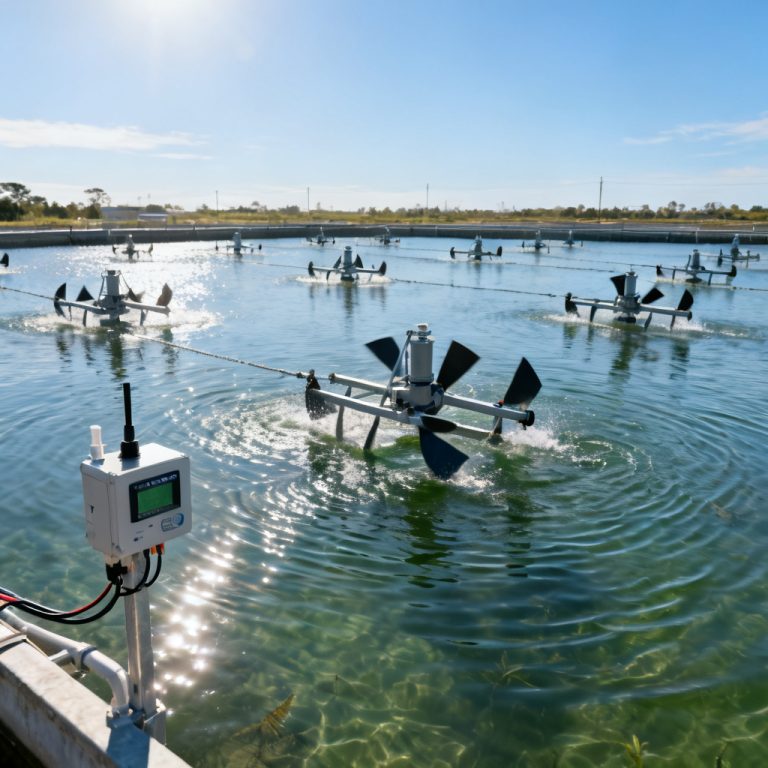
Minimum deployment configuration for a single-pond sensor: One sensor 10–20 cm above the pond bottom, positioned in a zone with moderate water circulation from paddlewheel aerators. This is where shrimp feed, where organic matter accumulates, and where oxygen depletion occurs first.
Recommended dual-sensor configuration for intensive ponds: One bottom sensor (10–20 cm above sediment) plus one mid-water column sensor (50–80 cm below surface). The mid-water sensor detects the beginning of the nighttime DO decline before the bottom becomes critically hypoxic, providing a 30–60 minute early warning window for aeration intervention.
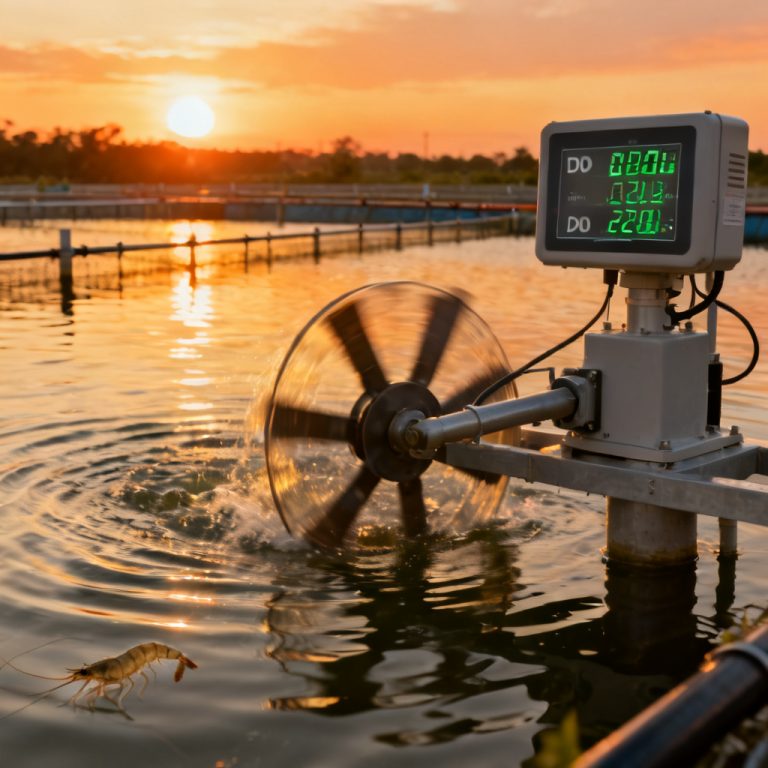
Placement relative to aerators: Position sensors at least 5–10 meters downstream from paddlewheel aerators. A sensor placed directly in the aerator plume will register localized, freshly oxygenated water—displaying 6–7 mg/L when the rest of the pond bottom is below 3 mg/L. Academic best practices also recommend positioning aerators to promote the flow of oxygenated water across the pond bottom to prevent anaerobic conditions at the sediment-water interface[reference:19].
Response Time: Why T90 Matters in Automated Control
In a pond where dissolved oxygen can drop from 5.0 mg/L to 2.0 mg/L in under an hour during an algal bloom crash or sudden weather change, sensor response time directly determines whether automated aerators activate in time to prevent mortality. T90—the time required for the sensor to reach 90% of the final reading after a step change in oxygen concentration—should be under 30 seconds for any sensor used in automated aeration loops.
Slower response times, common among aging electrochemical sensors and some lower-cost optical designs, introduce a dangerous control lag. If a sensor takes 90 seconds to register a drop while oxygen is falling at 2 mg/L per hour, the automated system is always responding to conditions that existed 90 seconds ago. In a pond carrying 10,000 kg of harvestable shrimp, a 90-second delay in aeration activation can be measured in lost animals.
Output Protocols and Automation Integration
A dissolved oxygen sensor for shrimp farming must speak the language of industrial automation. The technical requirement is native digital output—RS485 with Modbus RTU protocol—without proprietary converters or signal conditioners[reference:20].
Analog 4–20 mA outputs remain widely used for legacy systems and simple relay-based aeration controllers. The most versatile sensors provide both digital and analog outputs simultaneously, allowing connection to a modern SCADA or cloud IoT platform via RS485 while driving a local relay for fail-safe aeration activation. Fail-safe design is non-negotiable: if the sensor loses power or communication, the controller must default to aerators running. A damaged sensor should never cause an aeration shutdown.
For a comprehensive guide to integrating sensors into automated aeration systems, refer to our complete dissolved oxygen monitoring in aquaculture pillar page.
Calibration and Maintenance Requirements
Even the most robust optical sensor requires a documented maintenance schedule to deliver trustworthy data across an entire grow-out cycle. A dissolved oxygen sensor for shrimp farming must enable, not resist, routine maintenance.
- Calibration method: 100% water-saturated air calibration is the standard field method. No chemical zero-oxygen solutions are required for routine calibration. A quality optical sensor completes a full air calibration in under 10 minutes, including equilibration time.
- Calibration frequency: Every 2–4 weeks under normal shrimp pond conditions. Calibrate immediately after any severe weather event, phytoplankton crash, or prolonged turbidity event—all of which can accelerate biofouling.
- Cleaning frequency: In tropical shrimp ponds operating above 28°C, manual inspection and gentle cloth cleaning of the optical window every 7–14 days. Sensors with integrated automatic wipers can extend the manual cleaning interval but should still be visually inspected on a regular schedule.
- Sensing cap lifetime: 1–2 years for quality optical caps under continuous shrimp pond deployment. Caps should be proactively replaced based on age and exposure, not only when readings begin to drift. A failed cap can produce plausible but inaccurate values, and a zero-point calibration check with sodium sulfite solution provides early detection of cap aging.
Technical Specification Summary for Shrimp Farm DO Sensor Selection
| Specification Category | Minimum Requirement | Recommended |
|---|---|---|
| Measurement method | Optical fluorescence | Optical fluorescence with integrated wiper |
| Range | 0–20 mg/L | 0–20 mg/L + 0–200% saturation |
| Accuracy | ±0.2 mg/L | ±0.1 mg/L |
| T90 Response time | < 60 seconds | < 30 seconds |
| Temperature compensation | Automatic, integrated thermistor | Automatic, integrated thermistor, verified against reference |
| Salinity compensation | Manual input capable | Real-time conductivity-based automatic compensation |
| Output protocol | RS485 Modbus RTU | RS485 Modbus RTU + 4–20 mA analog |
| Ingress protection | IP68 | IP68 with corrosion-resistant connector |
| Wetted materials | 316L stainless steel or titanium | Titanium body with POM or 316L guard |
| Operating temperature | 0–50°C | 0–50°C with documented accuracy across full range |
| Anti-biofouling | Smooth flat optical window | Integrated motorized mechanical wiper with copper-alloy guard |
| Calibration interval | Every 4 weeks | Every 2–4 weeks with simple air calibration |
Frequently Asked Questions About Shrimp Farming DO Sensor Requirements
What is the minimum dissolved oxygen level required for shrimp farming?
For Pacific white shrimp (Litopenaeus vannamei), dissolved oxygen must remain above 4.0 mg/L to avoid stress and feed suppression. Levels below 3.0 mg/L cause acute stress and mortality risk. Optimal growth occurs above 5.0 mg/L. Some species such as black tiger shrimp (Penaeus monodon) require DO above 2.7 ppm for basic survival, but 5 ppm is the minimum threshold to prevent respiratory collapse under intensive production conditions[reference:21][reference:22].
What type of dissolved oxygen sensor is best for shrimp ponds?
Optical fluorescence sensors are strongly recommended for shrimp ponds. They require no membrane or electrolyte replacement, resist biofouling in nutrient-rich water, provide stable readings over weeks without recalibration, and support RS485 Modbus RTU output for automated aeration control. Traditional electrochemical sensors with membranes fail quickly in algae-rich shrimp pond environments[reference:23].
At what depth should a dissolved oxygen sensor be placed in a shrimp pond?
Deploy at least one sensor 10–20 cm above the pond bottom where shrimp live and where oxygen depletion occurs first due to sediment oxygen demand. A second sensor at mid-water column provides a complete vertical profile. Avoid placing sensors directly in aerator plumes—position them at least 5–10 meters downstream from paddlewheels to obtain representative readings.
Does salinity affect DO sensor readings in shrimp ponds?
Yes. At 35 ppt salinity, water holds approximately 20% less oxygen at saturation than freshwater. Sensors measuring in mg/L must have active salinity compensation enabled. Optical sensors with integrated conductivity-based compensation automatically adjust readings for accurate results in brackish and marine shrimp ponds. Without compensation, the sensor will systematically overestimate oxygen availability by 1.0–1.5 mg/L, creating a dangerous false sense of safety[reference:24].
How often should a dissolved oxygen sensor in a shrimp pond be calibrated?
Perform a 100% air calibration every 2–4 weeks under normal shrimp pond conditions. Calibrate immediately after severe weather events, phytoplankton crashes, or prolonged turbidity that accelerate biofouling. Optical sensors maintain calibration stability far longer than electrochemical types, but they are not calibration-free.
What output protocol is required for automated aeration control in shrimp ponds?
RS485 Modbus RTU is the standard protocol for connecting DO sensors to PLCs, IoT controllers, and SCADA systems for automated aeration activation. Sensors with both digital (RS485) and analog (4–20 mA) outputs provide the greatest integration flexibility. A fail-safe design must default to aerators running if sensor communication is lost.