What is a rankshaft Position Sensor? (5 Symptoms & Fix Costs)
If this sensor fails, your engine won’t know when to fire the spark plugs or inject fuel, leading to a car that cranks but will not start.
What is a crankshaft position sensor?
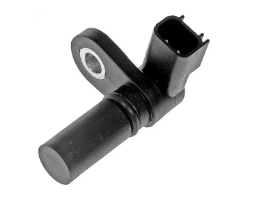
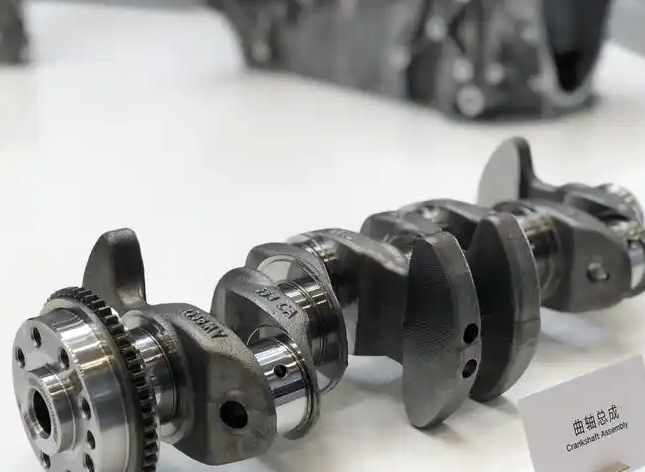
The crankshaft position sensor (CKP) is the “heartbeat” monitor of your engine. It is an electronic device that tracks the rotational speed and position of the crankshaft, sending this data to the Engine Control Unit (ECU) to manage ignition timing and fuel injection.
How Does It Work?
Crankshaft position sensor working principle
Most modern vehicles use a Hall Effect or Inductive sensor. As the crankshaft spins, a “reluctor ring” with teeth passes the sensor. Every time a tooth passes, it interrupts a magnetic field, creating a pulse. The ECU counts these pulses to determine exactly how fast the engine is turning (RPM) and where each piston is located.
Magnetic Pickup Sensor
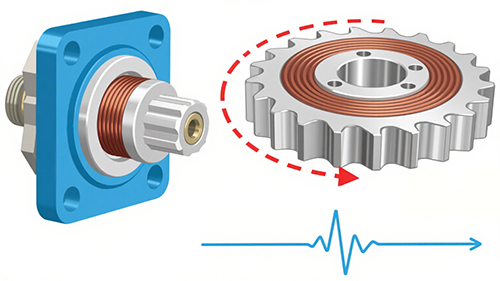
Uses electromagnetic induction.
The variable reluctance rotor inside the sensor works in conjunction with the target wheel on the crankshaft. When the crankshaft rotates, the magnetic field of the variable reluctance rotor will change accordingly, thereby inducing the sensor to generate an induced voltage pulse to achieve accurate detection of the sensor crankshaft position.
Hall Effect Sensor
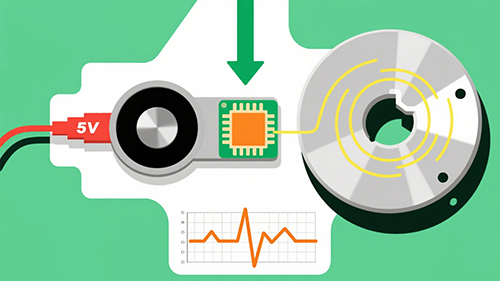
Utilizes the Hall Effect, where a voltage difference is created across an electrical conductor when exposed to a magnetic field perpendicular to the current flow. A permanent magnet and Hall element inside the sensor create a steady magnetic field. As metal tabs on the reluctor ring pass by, they disrupt this field, causing voltage changes in the Hall element. These changes are converted into a digital (on/off) signal for the ECU.
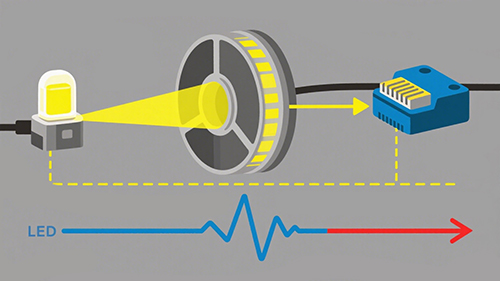
Optical Sensor
Uses a light-emitting diode (LED) and a phototransistor (light sensor) to detect notches or slots on a rotating disc attached to the crankshaft. The LED emits light toward the phototransistor, but the rotating disc blocks or allows light passage through its slots. This creates a pulsed electrical signal as light reaches the phototransistor in intervals.
Where is the crank sensor located?
Crankshaft position sensor location
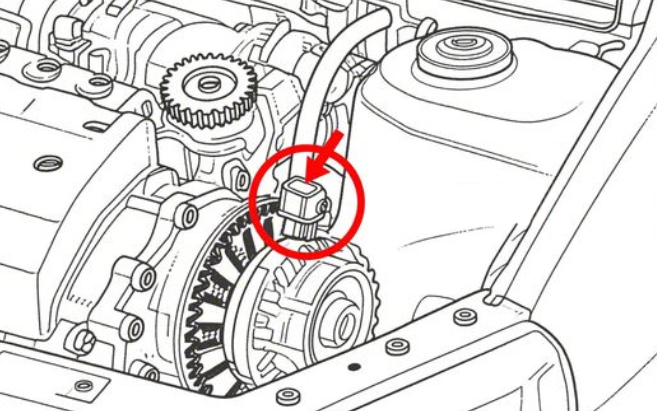
The location of the crankshaft position sensor can vary depending on the vehicle, but it is always situated in close proximity to the crankshaft, above the crankshaft gear in the crankcase.
Accessing the sensor typically requires getting under the vehicle to reach it, though some designs may place it higher, requiring engine component removal.
The exact location is best found in your specific vehicle’s repair manual.
1. Crankshaft position sensor basic information
Crankshaft sensor function
Detecting engine speed and piston TDC position is an important basis for controlling ignition and fuel injection.
The primary function of the crankshaft position sensor is to track the precise location and speed of the crankshaft. This information is then relayed in real-time to the vehicle’s Engine Control Unit, the onboard computer that manages engine performance. The ECU uses this data to control critical engine functions such as ignition timing and fuel injection. In diesel engines, the sensor specifically controls the fuel injection timing. By knowing the exact position of the crankshaft, the ECU can determine the optimal moment to ignite the fuel-air mixture in each cylinder, maximizing power and efficiency.
TDC detection function of crankshaft position sensor
- Definition of TDC: The piston top dead center (TDC for short) refers to the point when the piston moves to its highest position in the cylinder.
- Importance of TDC detection: The TDC position of the piston is crucial to controlling the ignition timing and the amount of fuel injection. Accurately detecting the TDC position can ensure that the engine can achieve the best combustion effect under various working conditions, thereby improving the engine’s performance and fuel economy.
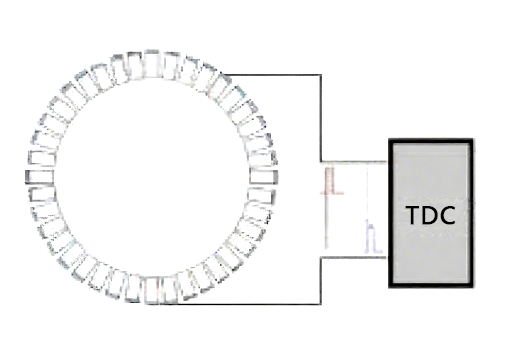
- TDC detection principle: The crank crankshaft position sensor determines the rotation direction and position of the crankshaft by detecting the target wheel groove on the crankshaft. When the crankshaft rotates to a certain position, that is, when the piston moves to TDC, the sensor receives a specific signal (such as an induction voltage pulse) to identify the TDC position of the piston.
Other functions of the crankshaft position sensor
In addition to detecting the TDC position, the crankshaft position sensor also has the following functions:
- Detecting engine speed: By calculating the speed of crankshaft rotation, the engine speed can be accurately measured. This is of great significance for controlling the working state of the engine and the amount of fuel injection.
- Capturing the TDC signal of each cylinder: The crankshaft position sensor is able to capture the TDC signal of each cylinder, including the TDC signal of the first cylinder used to control sequential fuel injection. This helps to achieve more accurate fuel injection control and ignition control.
A crankshaft position sensor hall effect is a type of sensor used in vehicles to monitor the position and rotational speed of the crankshaft. It plays a crucial role in ensuring the engine operates efficiently by providing accurate timing information to the engine control module (ECM).
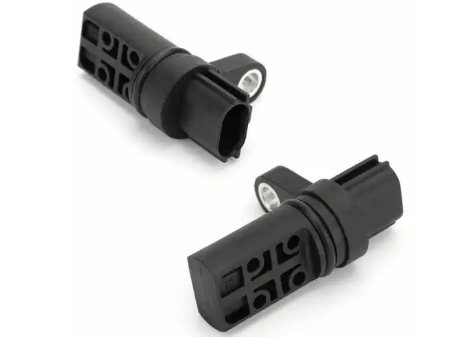
Camshaft sensor and Crankshaft sensor
2. Symptoms of a failing crankshaft position sensor
Crankshaft sensor symptoms
Due to its critical role, a failing crankshaft position sensor can lead to a variety of engine problems. These can include difficulty starting the engine, intermittent stalling, rough idling, reduced engine power, and decreased fuel efficiency.
Common causes of failure include damage to the sensor’s wiring, exposure to high heat over extended periods, and issues with the reluctor wheel that the sensor reads. Contaminants like dirt and oil can also interfere with the sensor’s operation.
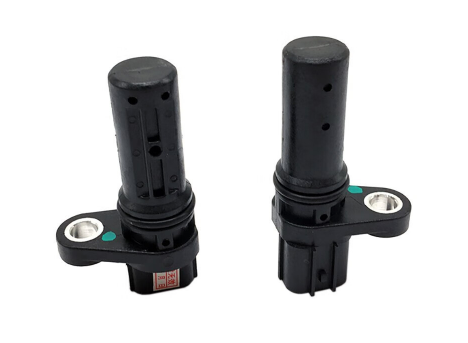
Crankshaft position sensor code
The most common fault codes for crankshaft position sensor failures are between P0335 and P0339. For example, a P0335 code indicates a circuit malfunction, while a P0336 code indicates the sensor signal is outside the expected range.
Can you drive a car with a bad crankshaft sensor?
When the crankshaft position sensor is faulty, long-distance driving is not recommended, but short-distance driving is possible. A faulty sensor may cause the engine to stall, lack power, or have difficulty starting. It’s best to address the issue promptly to avoid stranding the vehicle or causing further damage.
3. How to replace crankshaft position sensor?
Crankshaft position sensor replacement
To replace the crankshaft position sensor, you must first disconnect the vehicle’s negative battery cable for safety. Next, locate the sensor (typically located between the engine and transmission), which may require access under the vehicle. Disconnect the electrical connector, remove the mounting bolts, and carefully remove the old sensor. After cleaning the mounting surface, install the new sensor with the lubricated O-ring. Then, reverse the process and reinstall the bolts, connector, and any protective covers. Finally, reconnect the battery and test the vehicle.
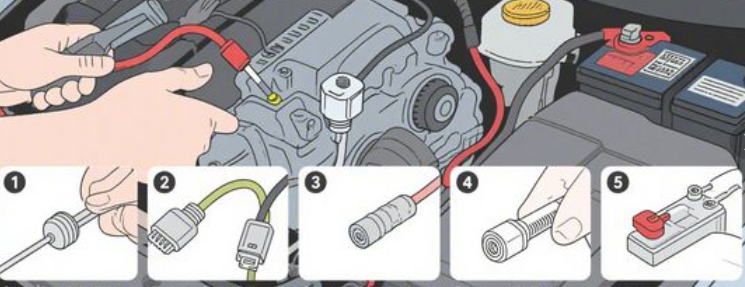
Crankshaft position sensor replacement cost
The cost of replacing a crankshaft position sensor can vary depending on the vehicle’s make and model. Generally, the total cost, including parts and labor, can range from approximately $120 to $300. The part itself typically costs between $30 and $100.
Replacement Costs (2024-2025)
- Total Average: $120 – $300
- Parts: $30 – $100
- Labor: $90 – $200 (1-2 hours)
4. Summary
The crankshaft position sensor detects the target wheel tooth groove on the crankshaft to identify the rotation direction and position of the crankshaft, thereby accurately detecting the engine speed and piston TDC position. These detection functions are essential for controlling ignition and fuel injection, helping to improve engine performance and fuel economy. Therefore, the crankshaft position sensor plays an important role in the automotive control system.
FAQ
crankshaft position sensor
What happens when a crank position sensor goes bad?
A bad crank position sensor can disrupt the timing of your fuel injection, leading to decreased fuel efficiency and cause you to spend more on gas than you should be. Sudden stalling. A bad sensor can cause your engine to stall suddenly, which can be dangerous, especially if you’re driving at high speeds or in heavy traffic.
How much does it cost to replace a crankshaft sensor?
Replacing a crankshaft position sensor typically costs between $200 and $400. This price includes both the cost of the sensor itself and the labor required for installation. However, the exact cost can vary depending on factors like the vehicle’s make and model, the specific location of the sensor within the engine, and the labor rates of the mechanic or repair shop.
Is a crank sensor easy to replace?
How hard is it to replace a crankshaft sensor? Replacing a crankshaft sensor is a job for a trained technician. As with most car maintenance jobs, there are several variables factoring into the difficulty. These are down to things like the placement of the sensor, and how much space around it you’ve got to work with.
Can I drive without a crankshaft sensor?
A crankshaft position sensor is an integral part of the engine control system and provides information to the ECU about the rotational speed of the crankshaft. Without this data, the engine will not run properly and could suffer serious damage due to incorrect timing and fuel delivery.