Dissolved Oxygen Monitoring for RAS and Intensive Fisheries
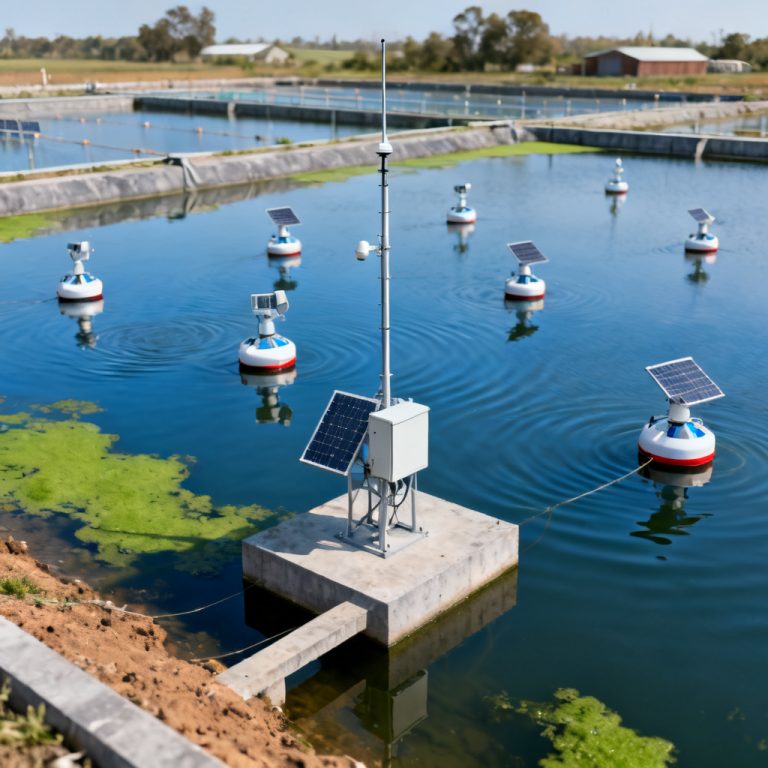
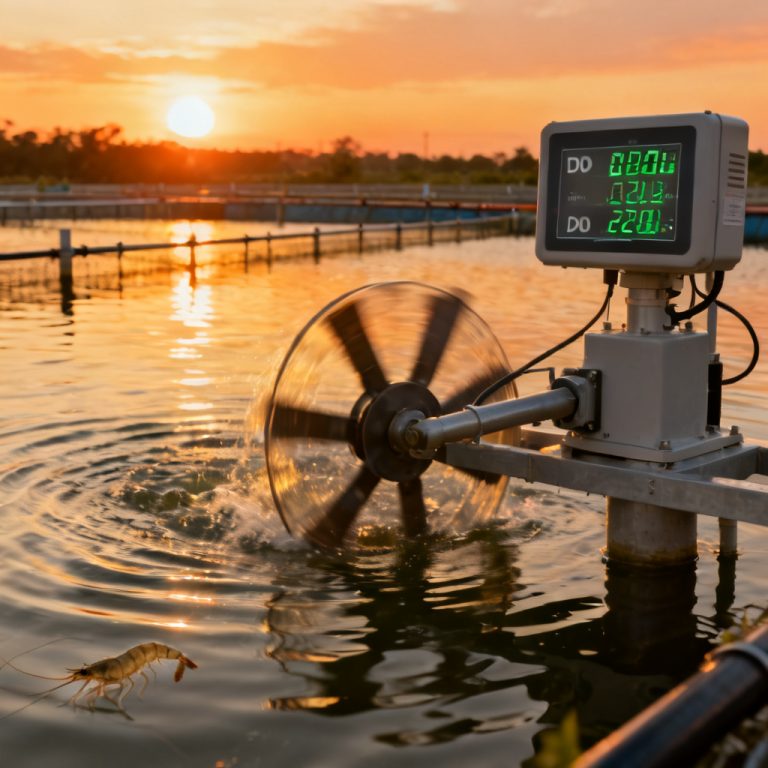
Dissolved oxygen monitoring for RAS and intensive fisheries is the foundation of water quality control in modern recirculating aquaculture. Without continuous, high-accuracy DO measurement, biofilter health, fish welfare, and regulatory compliance are all at risk. This guide covers sensor technologies, SCADA/PLC integration, biofouling management, and the international standards that govern reliable dissolved oxygen monitoring in RAS facilities worldwide.
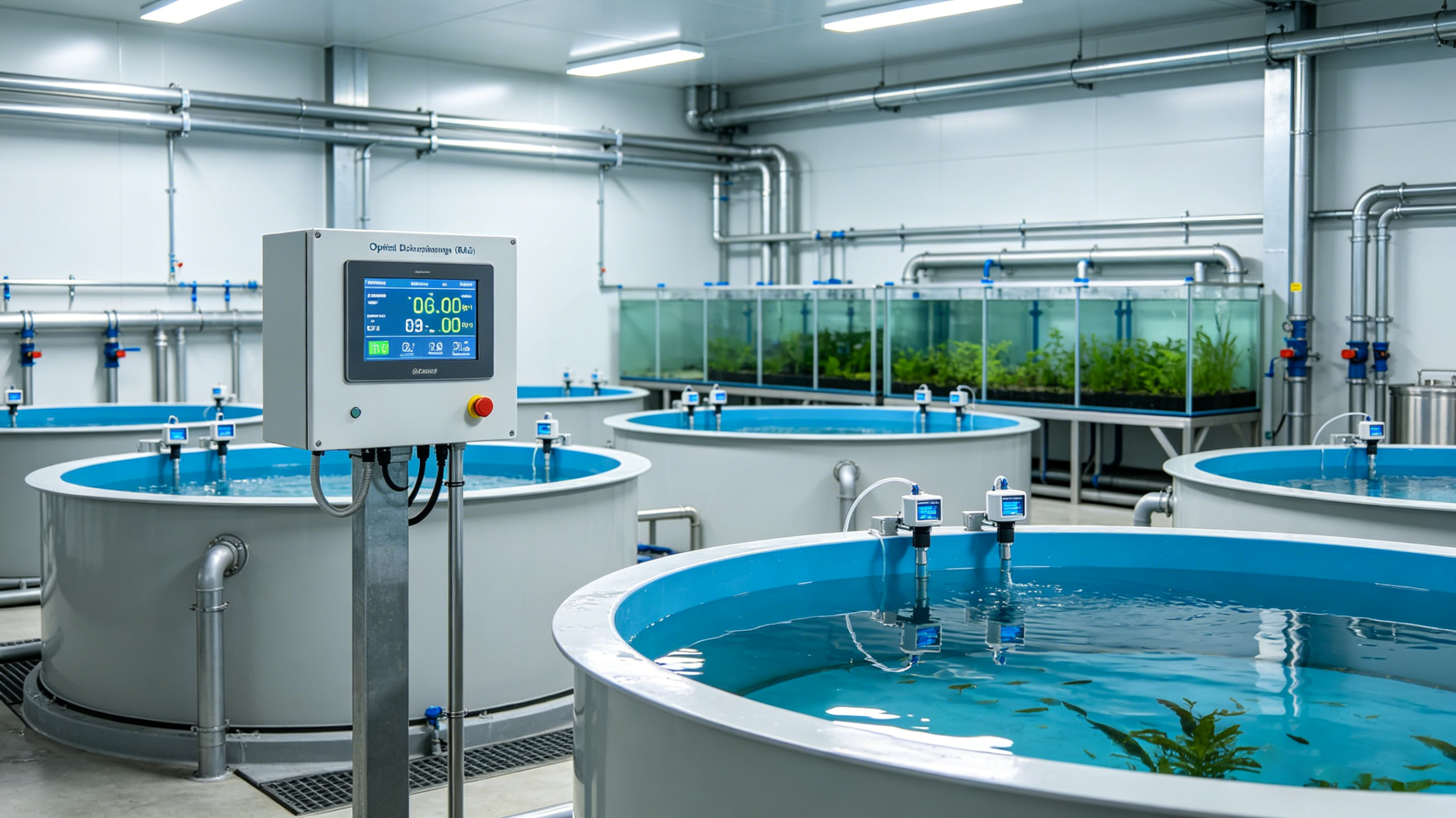
Why RAS Requires Advanced DO Monitoring
Dissolved oxygen monitoring for RAS must meet demands far beyond those of open-water aquaculture. Every gram of oxygen consumed by fish metabolism, bacterial respiration, and organic matter oxidation must be precisely replenished through mechanical oxygenation.
The Critical Role of DO in RAS Biofilters
The biofilter houses dense populations of nitrifying bacteria — primarily Nitrosomonas and Nitrobacter — that convert toxic ammonia into nitrate. This nitrification process is fundamentally oxygen-dependent, making dissolved oxygen monitoring for RAS biofilters an operational necessity.
Nitrification consumes approximately 4.57 mg of oxygen per mg of ammonia‑nitrogen oxidized. When DO concentrations fall below 4 mg/L in the biofilter, nitrification efficiency declines measurably. Below 2 mg/L, the process can slow dramatically, risking ammonia and nitrite accumulation. Bead filter research at the University of Arkansas–Pine Bluff confirmed that maintaining outflow DO above 2 mg/L is essential to prevent oxygen limitation of nitrifying bacteria. A recent DTU Aqua study further demonstrated how continuous oxygen‑sensor data can be used as a non‑invasive proxy for biofilter performance.
Nitrification collapse occurs when DO drops below critical thresholds. Unionized ammonia (NH₃) becomes highly toxic, and re‑establishing full nitrification may take weeks. Therefore, continuous dissolved oxygen monitoring for RAS biofilters — at both inlet and outlet — is the primary defense against catastrophic water quality failure.
DO Stratification in RAS Tanks
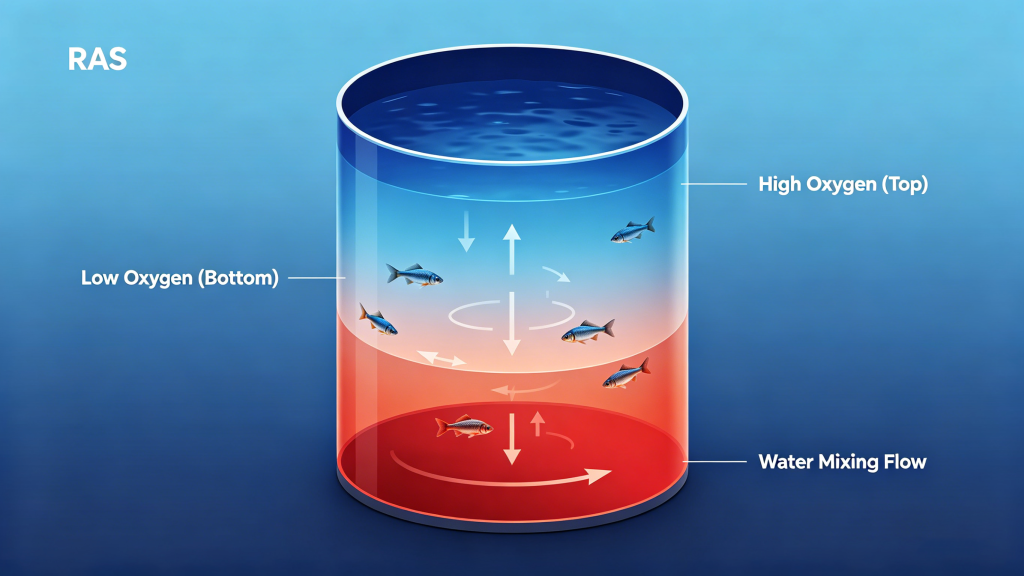
In intensive RAS culture tanks, dissolved oxygen monitoring for RAS must account for vertical and horizontal gradients. Densely stocked circular tanks and raceways often show oxygen depletion in bottom water or dead zones. Effective tank mixing should be verified by vertical DO profiling, with a target of ±0.5 mg/L variation across all sampling points. This level of uniformity can only be confirmed through systematic dissolved oxygen monitoring.
Technical Specifications for Fisheries‑Grade DO Sensors
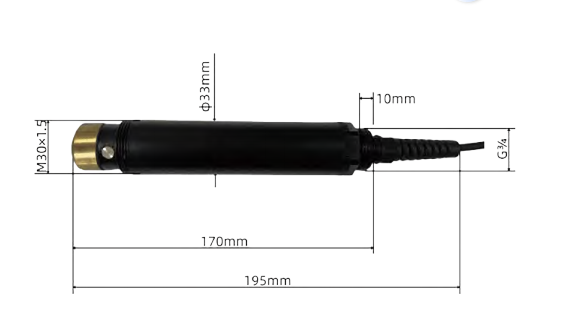
Fisheries‑grade dissolved oxygen monitoring for RAS requires sensors that deliver laboratory‑quality accuracy under continuous immersion in biologically active, high‑solids water.
Measurement Range and Accuracy Requirements
Dissolved oxygen monitoring for RAS applications demands the following minimum specifications:
| Parameter | Requirement |
|---|---|
| Measurement range | 0–20 mg/L (0–200% saturation); must handle supersaturation from pure oxygen injection |
| Accuracy | ±0.1 mg/L or better across full range |
| Resolution | 0.01 mg/L |
| Detection limit | 0.1 mg/L or 0.2 mg/L (per ISO 17289:2014) |
These specifications are essential because dissolved oxygen monitoring for RAS must distinguish normal diurnal fluctuations from genuine system anomalies.
Response Time Specifications
For effective dissolved oxygen monitoring in RAS control loops, the sensor’s T90 response time should be less than 30 seconds. Slower sensors introduce control lag — the feedback loop acts on outdated information, causing over‑ or under‑compensation. Optical DO sensors achieve fast response because they do not rely on oxygen diffusion through a membrane electrolyte layer.
Output Protocols for SCADA and PLC Integration
Modern dissolved oxygen monitoring for RAS automation requires industrial‑grade digital communication. The essential protocols are:
- Modbus RTU over RS‑485: the most widely adopted protocol for multi‑sensor networks, offering robust noise immunity and cable runs up to 1,200 m.
- 4–20 mA analog output: industry‑standard analog interface for point‑to‑point connections.
- Profibus and Ethernet/IP: preferred in large installations with existing industrial Ethernet backbones.
Dual‑output sensors (Modbus RTU + 4–20 mA) provide maximum deployment flexibility for dissolved oxygen monitoring systems.
DO Sensor Technologies for RAS Applications
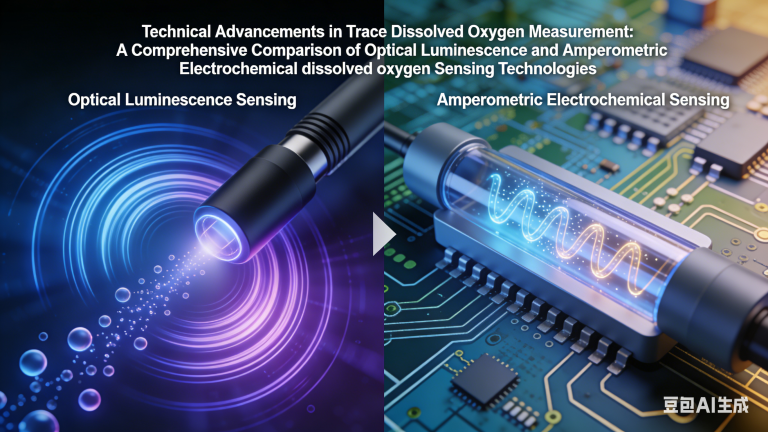
Two fundamental sensor technologies are used for dissolved oxygen monitoring in RAS: optical (luminescence quenching) and electrochemical. Understanding their differences is critical for informed equipment specification.
Optical DO Sensors: Advantages for RAS
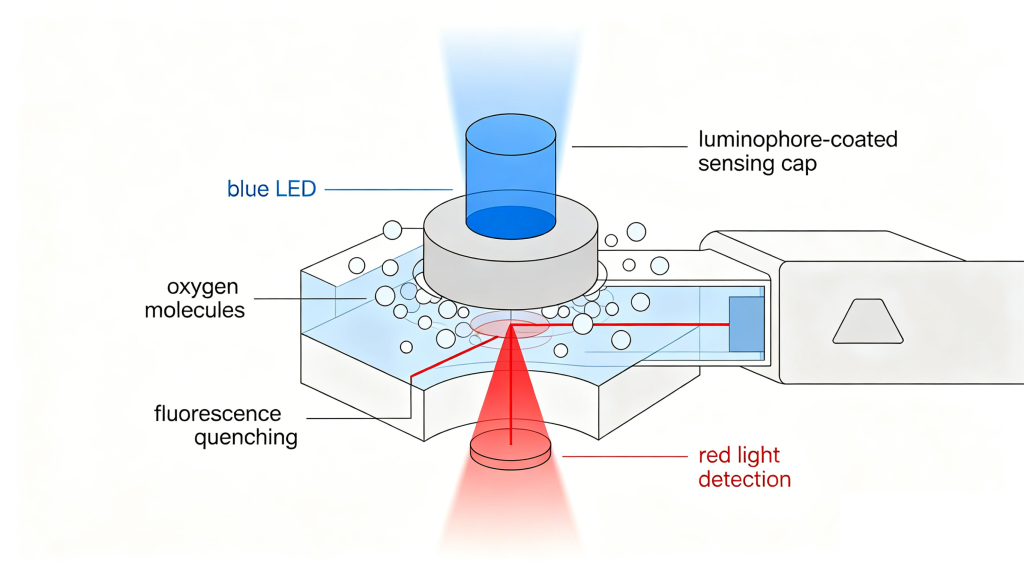
Optical dissolved oxygen monitoring for RAS relies on fluorescence quenching. A blue LED excites a luminophore‑coated sensing cap; oxygen molecules quench the fluorescence, and the sensor calculates DO concentration from the change in luminescence lifetime. ISO 17289:2014 formally specifies this optical method, while ASTM D888‑05 serves as the U.S. equivalent. Dual‑certified sensors ensure global regulatory acceptance.
Optical dissolved oxygen monitoring offers these RAS advantages:
- No oxygen consumption during measurement — no minimum flow velocity needed.
- No electrolyte replacement; no membrane fouling issues.
- Minimal calibration drift — typically quarterly to semi‑annual calibration.
- Insensitivity to H₂S and chlorine, which poison electrochemical sensors.
- Sensor cap life of 1–3 years.
Electrochemical Sensors: Limitations in RAS
Electrochemical dissolved oxygen monitoring for RAS, while lower in upfront cost, presents significant operational limitations: membrane fouling in high‑solids water, electrolyte depletion, a minimum flow velocity requirement, and frequent calibration. H₂S poisoning can degrade the cathode irreversibly. For 24/7 in‑line deployment, optical technology provides superior long‑term stability and lower total cost of ownership.
Integration with Automated Control Systems
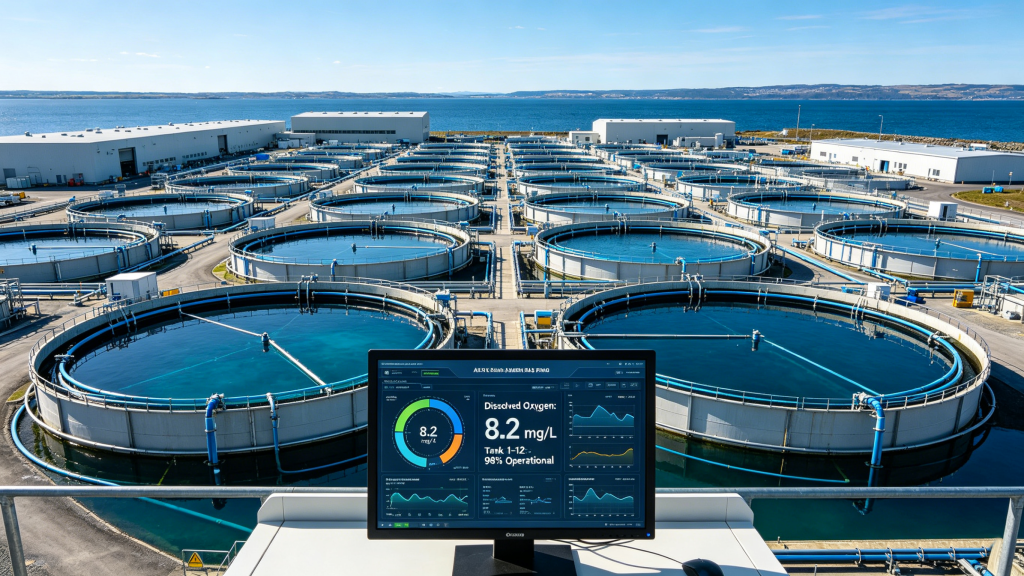
Dissolved oxygen monitoring for RAS achieves its full value only when integrated into a closed‑loop automation system. The standard architecture connects sensors, PLCs, and actuators to match oxygen delivery with biological demand in real time.
PLC/SCADA Integration Architecture
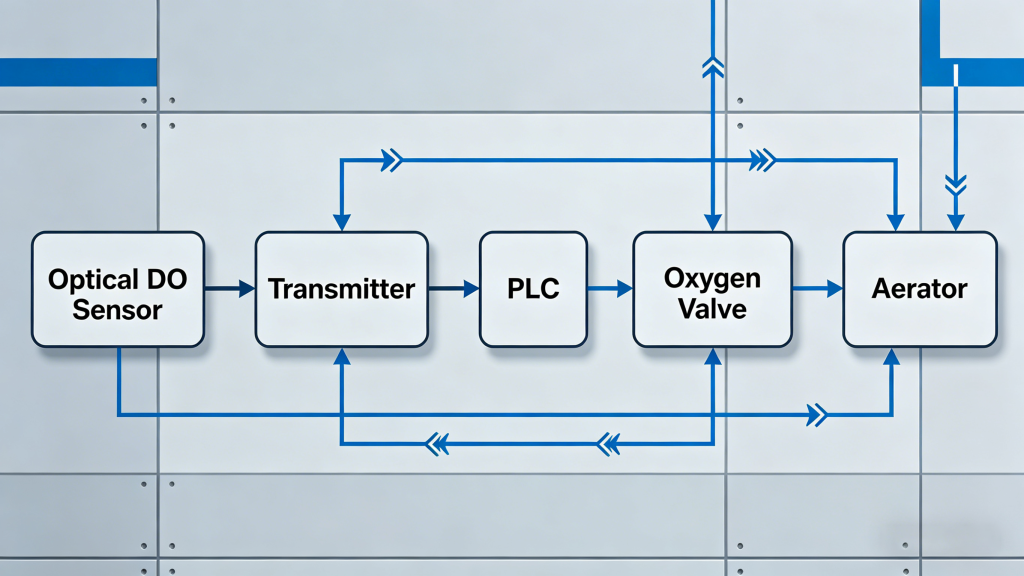
The sensor → transmitter → PLC → actuator chain is the backbone of dissolved oxygen monitoring for RAS. Optical DO sensors with RS‑485 Modbus RTU connect directly to the PLC’s serial module. The PLC executes control logic based on real‑time readings and drives oxygen mass flow controllers, variable‑speed aerators, or solenoid valves on pure oxygen injection lines.
Control Logic Design
A study at the Freshwater Institute implemented Proportional‑Integral (PI) control for side‑stream oxygenation in a 150 m³ rainbow trout tank. The PLC regulated an actuated needle valve to vary oxygen injection, successfully maintaining DO setpoints during both planned feeding and unplanned load fluctuations. Key elements of dissolved oxygen monitoring for RAS control include PID algorithms, hysteresis settings (±0.1–0.2 mg/L deadband), and multi‑level alarm thresholds (early warning, critical, emergency shutdown).
Remote Monitoring and Data Logging
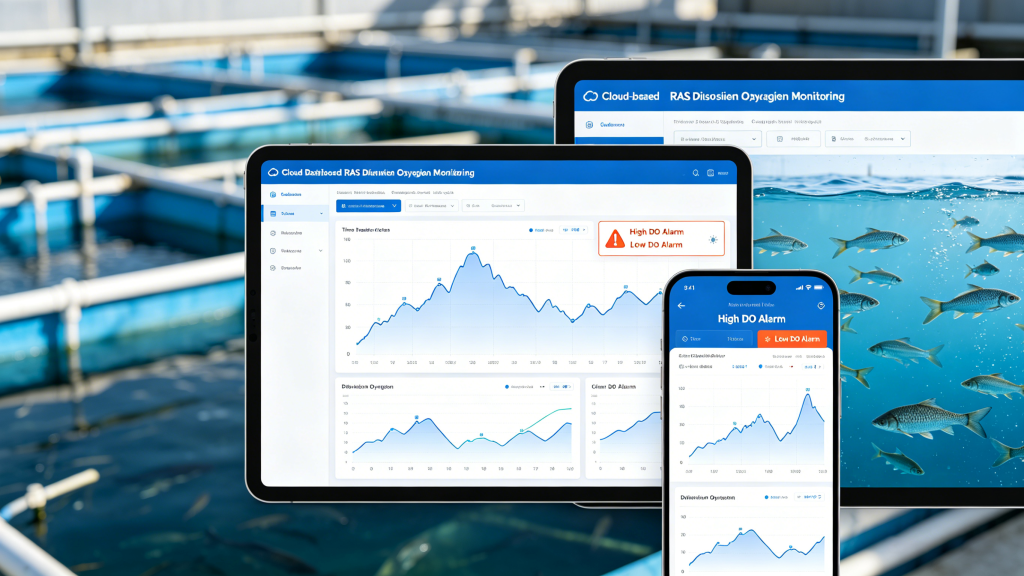
Integrating dissolved oxygen monitoring for RAS with cloud platforms and IoT telemetry enables remote oversight of multiple farms. Historical trend analysis supports long‑term oxygenation optimization, while mobile alerts allow rapid response to alarm conditions even when staff are off‑site.
Regulatory Compliance and Environmental Standards
Dissolved oxygen monitoring for RAS must satisfy both in‑system water quality requirements and effluent discharge regulations. Continuous compliance data is legally defensible only when generated by internationally recognized methods.
Discharge Permit DO Requirements
Most jurisdictions require aquaculture effluent to maintain a minimum DO of > 4 mg/L before discharge. Continuous dissolved oxygen monitoring at the discharge point, integrated with the SCADA system, provides auditable compliance records.
ASTM and ISO Standards for DO Measurement
The two cornerstone standards for dissolved oxygen monitoring in RAS are ISO 17289:2014 (optical sensor method, suitable for highly coloured and turbid waters) and ASTM D888-05 (multiple test methods, including optical). Both are essential for regulatory acceptance in North America, Europe, and Asia.
Biofouling Management in RAS Environments
Biofouling management is the greatest operational challenge for continuous dissolved oxygen monitoring in RAS. Even a thin biofilm can alter the optical signal path and invalidate calibration.
How Biofouling Degrades DO Measurements
Biofilm can cause upward or downward measurement drift by scattering or attenuating the excitation and emission light. In high‑fouling RAS, unprotected sensors can show significant deviation within 2–4 weeks.
Mechanical Cleaning Solutions
Automated mechanical cleaning is the most effective countermeasure for dissolved oxygen monitoring in RAS:
- Automatic wipers sweep the sensor cap at programmed intervals, often triggered by signal stability analysis.
- Air‑jet / water‑jet cleaning removes loosely adhered solids.
- Ultrasonic cleaning uses high‑frequency vibrations to prevent biofilm attachment at the molecular level, eliminating the need for chemical treatments.
Material Selection for Biofouling Resistance
Passive strategies for dissolved oxygen monitoring for RAS include copper‑infused sensor guards, fouling‑release coatings, and electropolished stainless steel housings (Ra < 0.8 µm). Combining automated cleaning with fouling‑resistant materials provides the most robust long‑term solution.
Case Studies: RAS Facilities with Automated DO Control
Land‑Based Salmon RAS (Northern Europe)
Large land‑based Atlantic salmon RAS facilities, with biomasses exceeding 100 kg/m³, rely on PLC/SCADA‑based dissolved oxygen monitoring for RAS. Automated oxygen control has demonstrated a 15% improvement in feed conversion ratio (FCR) by eliminating the stress response associated with DO fluctuations around feeding events. Precision control also minimizes oxygen waste, which published data indicate can account for 3–5% of total production costs.
Tropical Species RAS (Southeast Asia)
Tropical RAS producing tilapia, barramundi, and shrimp face lower oxygen solubility at elevated temperatures. Dissolved oxygen monitoring for RAS in these systems is typically combined with temperature, pH, conductivity, and ammonia sensors on a unified SCADA platform. Remote fleet management via cellular IoT gateways allows centralized oversight of multiple sites, with SMS alerts triggered by alarm conditions.
Frequently Asked Questions
What happens if DO drops in my RAS biofilter?
When dissolved oxygen monitoring for RAS biofilters fails to detect a drop below 2–4 mg/L, nitrification inhibition and ammonia accumulation occur rapidly. The resulting toxicity spike can kill stock within hours. Recovery of full nitrification may take days to weeks. Continuous monitoring with automated alarms is the primary defense.
How do I integrate DO sensors with my existing PLC?
Successful PLC integration of dissolved oxygen monitoring for RAS begins with verifying communication protocols (RS‑485 Modbus RTU is most universal), confirming voltage levels (12–24 VDC), obtaining the sensor’s Modbus register map, and validating readings against a handheld meter before closing the control loop.