Dissolved Oxygen Meter for Fish Tank: Complete Guide to DO Monitoring
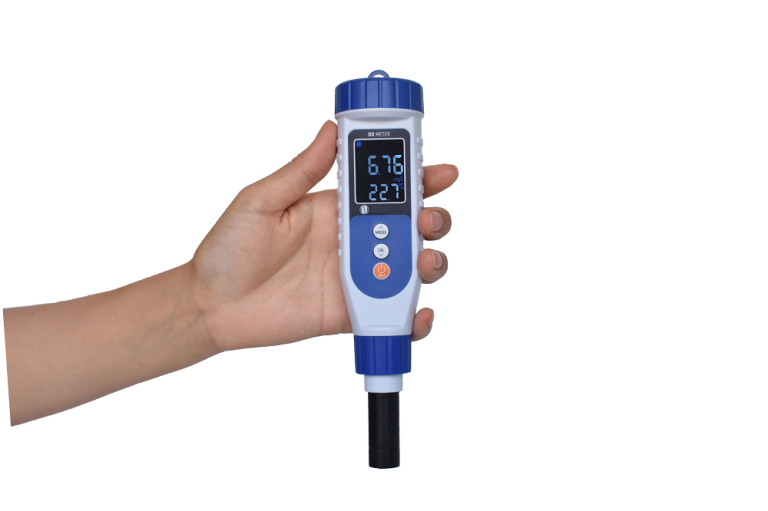
Whether you’re maintaining a home aquarium or managing a commercial fish farming operation, monitoring dissolved oxygen (DO) is the single most important water quality parameter you can track. Fish literally breathe through water — and a dissolved oxygen meter for fish tank monitoring is the only instrument that tells you, in real numbers, whether your aquatic environment is safe or silently heading toward a crisis.
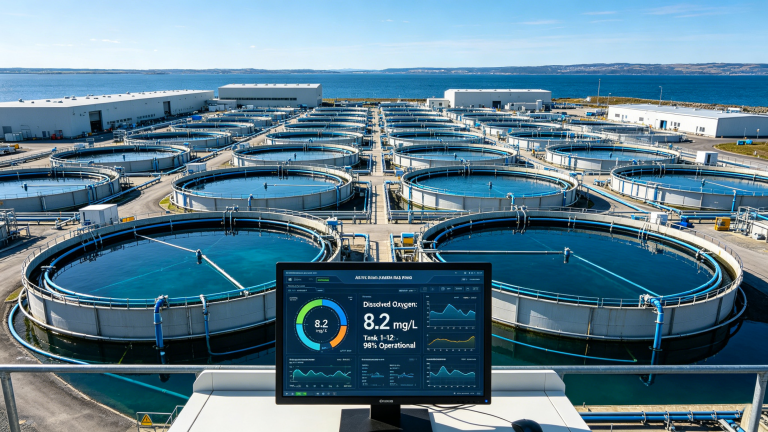
This guide covers everything you need: safe DO levels, how to recognize oxygen stress, the different types of DO meters available, what to look for when buying, and how to calibrate and maintain your meter for reliable readings. We also bridge into industrial-scale aquaculture monitoring for users scaling up from hobby tanks to commercial systems.
The Science of Survival: Why DO is the “Master Variable”
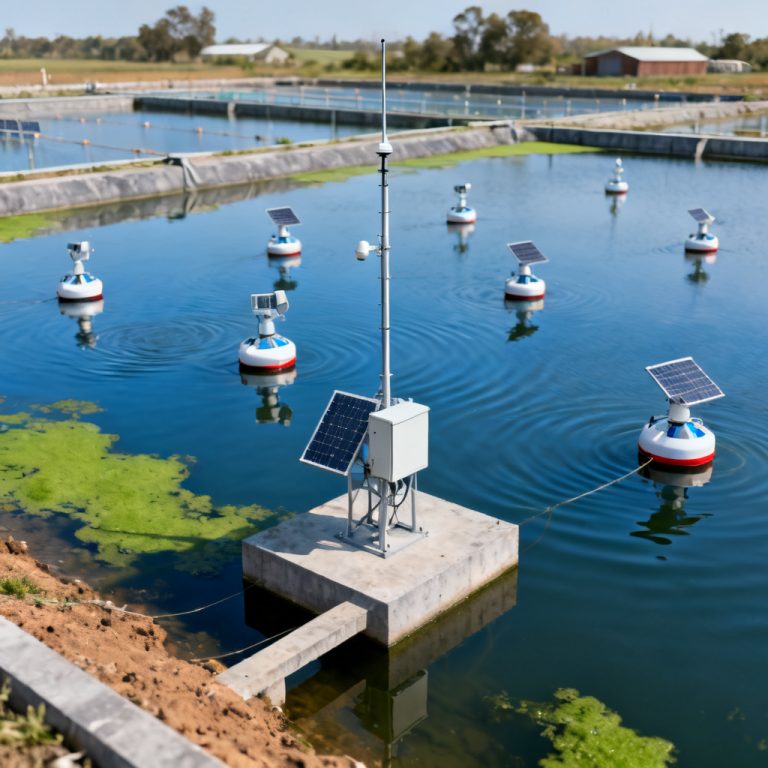
Modern dissolved oxygen sensor aquaculture deployment must account for the Henry’s Law principle where gas concentration is proportional to partial pressure.
- Diurnal Fluctuations: The “Oxygen Crash” typically occurs between 2:00 AM and 5:00 AM in shrimp ponds.
- Thermal Inversion: Warmer water has lower gas solubility, necessitating NTC or PT1000 thermistor compensation.
- Salinity Factors: Marine applications require firmware that allows for salinity input (0-40 ppt) to maintain data integrity.
- Altitude/Barometric Bias: Exporting to high-altitude regions (e.g., trout farms in the Andes) requires sensors that compensate for lower atmospheric pressure to avoid false low-saturation alarms.
Technical Evolution of the Optical DO Sensor
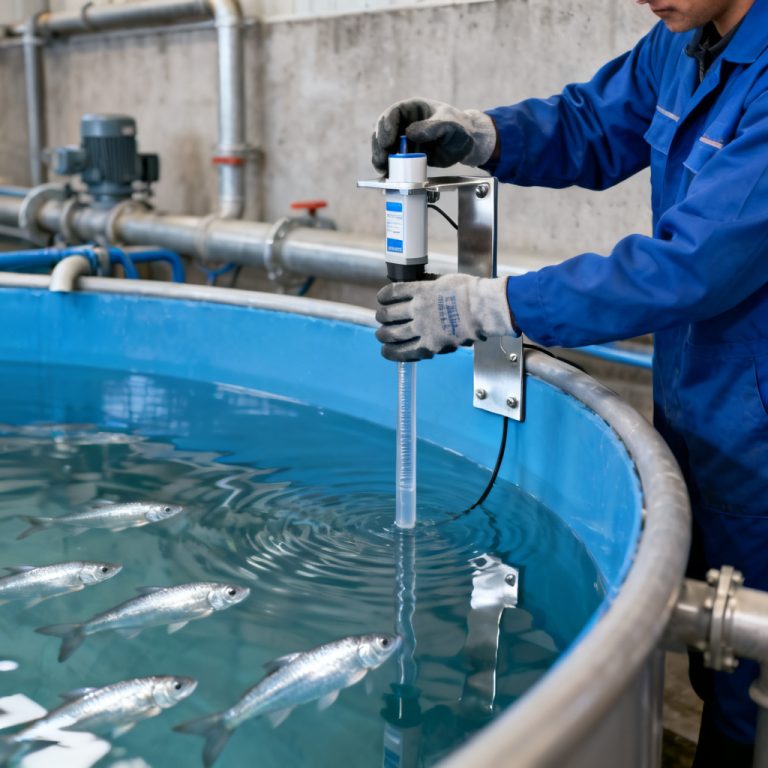
The optical DO sensor is rapidly replacing legacy electrochemical methods due to its Low-OpEx (Maintenance-Free) nature in export markets.
| Parameter | Details | Feature | Optical DO Sensor | Electrochemical Sensor |
|---|---|---|---|---|
| Calibration Frequency | 6-12 Months | 2-4 Weeks | ||
| Warm-up Time | Instant | 5-15 Minutes | ||
| Flow Dependency | None (Works in stagnant water) | Required |
See more details about Optical Dissolved Oxygen Sensor vs. Electrochemical Dissolved Oxygen Sensor
Engineering Modbus RS485 for Industrial Connectivity
Reliable Modbus RS485 (RTU) communication is essential for connecting dozens of sensors across large-scale industrial farms without signal loss.
By using a digital Modbus RS485 backbone, integrators can slash installation costs through Multi-Drop Networking and access Rich Data Diagnostics for predictive maintenance.
Maintenance & Survival in Harsh Aquatic Conditions
Trust in a sensor is built on its ability to survive. Our manufacturing standards focus on two critical defense mechanisms:
Anti-Biofouling Systems
Biofilm (algae and bacteria) on the sensor tip will consume oxygen locally, causing the sensor to read lower than the actual tank level.
- Mechanical Wipers: Ideal for high-density RAS.
- Copper Mesh Guards: Essential for coastal sea-cages.
- Nano-Coatings: Advanced hydrophobic layers that prevent protein attachment.
Segment-Specific Deployment Strategies
Different species have different “Oxygen Risk Profiles.” We tailor our sensor configurations accordingly:
The Two-Point Calibration Standard
- 100% Saturation (Air-Water Interface): The most reliable field calibration.
- 0% Saturation (Anoxic Check): Using a Sodium Sulfite solution to verify the sensor’s “Lower Limit.
Why Dissolved Oxygen Matters in Your Fish Tank
Fish extract oxygen from water through their gills. Unlike air — which is 21% oxygen — water typically holds only 6-10 mg/L of dissolved oxygen at saturation. That margin is thin, and it shrinks further as water warms, stocking density increases, or organic waste accumulates.
A dissolved oxygen meter for fish tank use gives you a precise, instant reading of this critical parameter, eliminating guesswork. Without one, you’re left watching fish behavior for distress signals — and by the time symptoms appear, damage may already be done.
Key factors that reduce DO in fish tanks:
- Rising water temperature — warmer water holds less oxygen (water at 25°C holds ~8.2 mg/L at saturation vs. 11.3 mg/L at 10°C)
- Overstocking — more fish means more oxygen consumption and more waste
- Overfeeding — uneaten food decomposes, fueling bacterial oxygen demand
- Insufficient surface agitation — gas exchange happens at the water surface; still water = low oxygen transfer
- Algae blooms — algae produce oxygen during daylight but consume it at night, causing dangerous pre-dawn DO crashes
- High salinity — saltwater holds roughly 20% less oxygen than freshwater at the same temperature
- Medication treatments — some aquarium medications reduce oxygen solubility
Safe DO Levels for Fish Tanks: Species-by-Species Guide
Not all fish have the same oxygen requirements. Using your dissolved oxygen meter for fish tank monitoring, compare your readings against these species-specific safe ranges:
| Fish Type | Safe DO Range (mg/L) | Danger Threshold | Notes |
|---|---|---|---|
| Tropical Freshwater (tetras, guppies, angelfish) | 5.0 – 8.0 | Below 4.0 | Most common home aquarium fish; prefer well-oxygenated water |
| Coldwater Fish (goldfish, koi) | 7.0 – 9.0 | Below 5.0 | Higher oxygen demand due to cold-water adaptation |
| Cichlids (African, South American) | 5.5 – 8.0 | Below 4.5 | Active swimmers; need strong filtration and aeration |
| Betta & Labyrinth Fish | 3.0 – 6.0 | Below 2.0 | Can breathe atmospheric air; tolerate lower DO but still benefit from monitoring |
| Marine/Saltwater (clownfish, tangs) | 5.5 – 7.5 | Below 4.0 | Saltwater holds less oxygen; reef tanks need strong protein skimmers |
| Discus | 6.0 – 8.0 | Below 5.0 | Extremely sensitive to oxygen fluctuations; warm water (28-30°C) reduces DO capacity |
| Aquaculture Species (tilapia, catfish) | 4.0 – 7.0 | Below 3.0 | More tolerant of low DO; farmed at higher densities |
| Trout & Salmon | 7.0 – 10.0 | Below 6.0 | Coldwater species with very high oxygen demand; hatcheries require continuous monitoring |
Shrimp/Crustaceans: Since shrimp dwell at the bottom, sensors must be mounted in the lower 1/3 of the water column but above the “sludge zone.”
High-Density RAS: Redundancy is mandatory. We recommend a “2-out-of-3” voting logic for sensor alarms to prevent false-positive emergency shutdowns.
Live Transport: For export logistics, sensors must be vibration-resistant and have a fast response time (T90 < 30s) to monitor fish health during air or sea freight.
FAQ
Optical Dissolved Oxygen Sensor 0.01 resolution
My sensor is reading 120% saturation. Is it broken?
Likely not. During peak sunlight, heavy algae blooms produce more oxygen than the water can naturally hold. This is a sign of a healthy pond during the day, but a warning of a potential crash at night.
How often should I replace the electrolyte?
If using an electrochemical sensor, every 2-4 weeks depending on the water quality. If using an optical sensor, there is no electrolyte—simply replace the cap once a year.
Can the sensor handle salt water?
Yes, provided the body is made of non-corrosive materials like PVC, POM, Stainless steel or Titanium. Ensure your software allows for “Salinity Compensation” inputs.
Why Partner with a Specialized DO Sensor Manufacturer?
In the B2B export market, you need more than a product; you need a technical partner who understands the nuances of aquaculture. From Custom Cable Lengths and OEM Branding to Technical Protocol Support, our goal is to provide the data integrity you need to maximize harvest yields.
Can your sensors be integrated into existing third-party SCADA systems?
Yes. By using the standard Modbus RTU protocol, our sensors act as “Slave” devices that can be polled by any master controller, ensuring seamless integration for global integrators.
How do you handle signal loss over long distances?
For distances exceeding 500 meters, we recommend our RS485 to LoRaWAN or 4G/5G gateways, allowing for remote cloud-based monitoring via a smartphone app.
Partner with a DO Sensor Manufacturer
Contact our engineering team today for a customized DO sensor solution and a wholesale quote.
Request a Quote
Get a customized solution for your application!