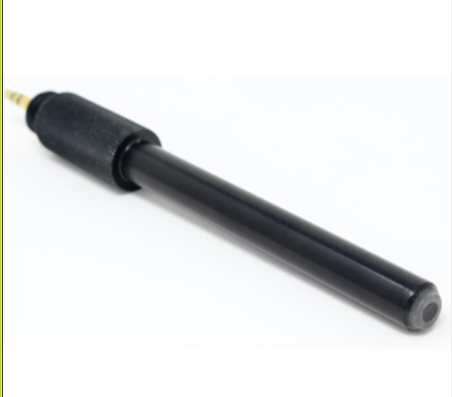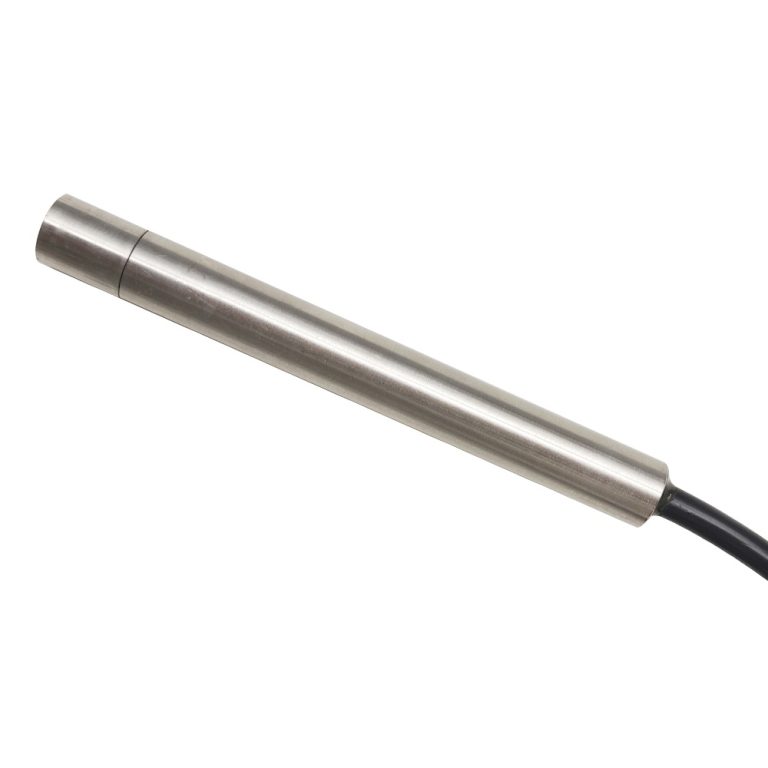
Dissolved Oxygen Sensor Fault Diagnosis and Calibration
A dissolved oxygen sensor delivers reliable water quality monitoring only with accurate fault diagnosis and standardized calibration. Unresolved sensor failures distort data, disrupt operations, and invalidate compliance reporting across all aquatic applications.
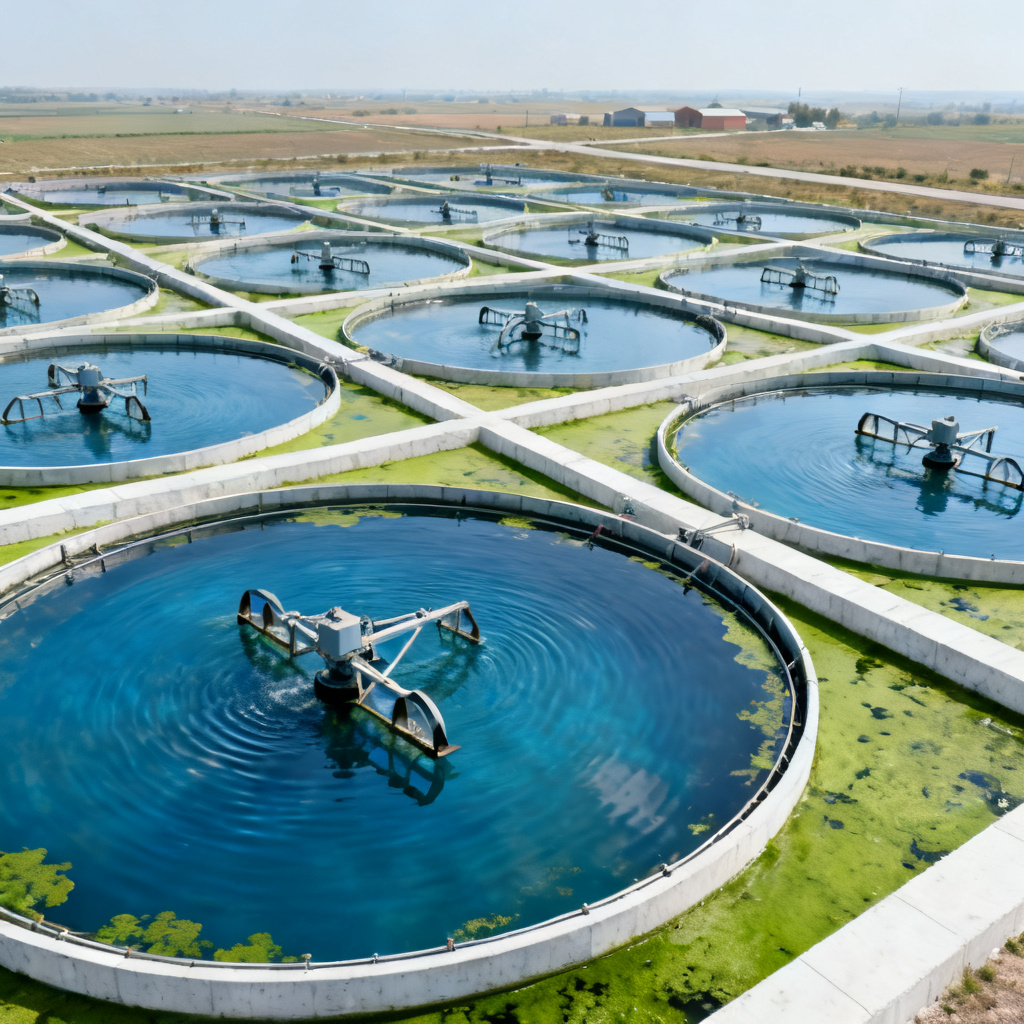
Dissolved Oxygen Sensor Fault Types and Diagnosis
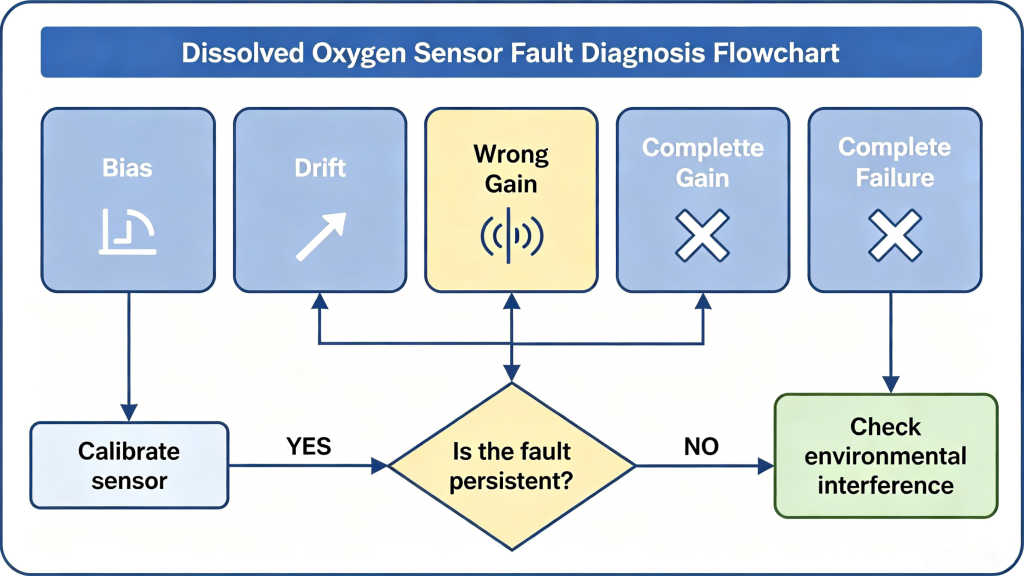
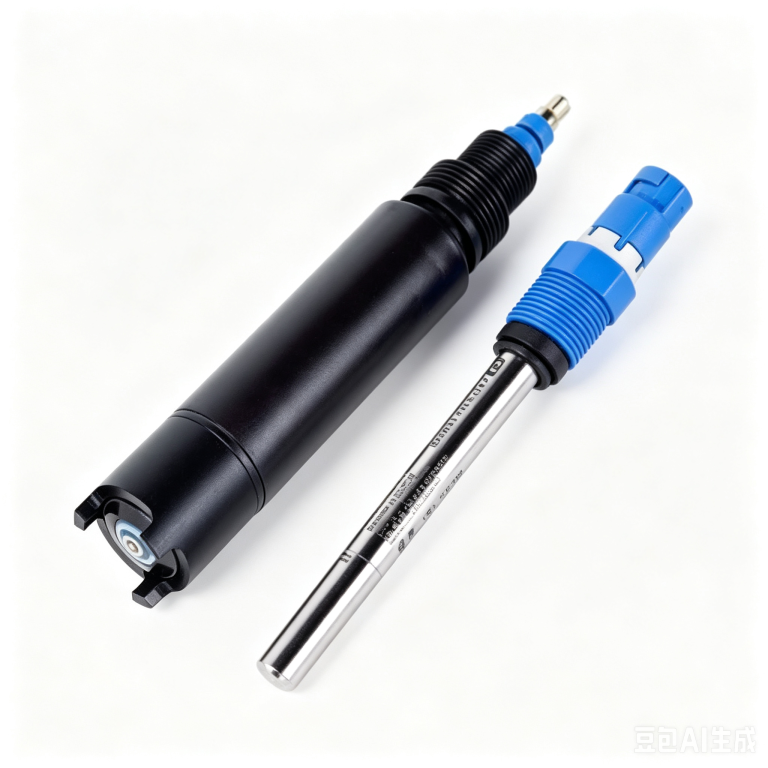
A dissolved oxygen sensor relies on precise performance to measure oxygen levels in water. Understanding core fault patterns eliminates errors and maintains measurement integrity for industrial, environmental, and aquatic monitoring systems.
Bias: Systematic Offset Error
Bias is a fixed offset between a dissolved oxygen sensor reading and the true oxygen concentration, classified as a systematic calibration error. This fault stems from incomplete pre-deployment conditioning, improper calibration, or mild fouling, and can be fixed with targeted calibration adjustments.
Drift: Gradual Reading Shift Over Time
Drift is a slow, progressive change in dissolved oxygen sensor output unrelated to real environmental changes, split into zero drift and span drift. It is caused by component degradation, fouling, electrolyte loss, or environmental stressors like temperature fluctuations.
Optical Dissolved Oxygen Sensor Drift
Optical dissolved oxygen sensor models have predictable low drift rates, averaging –0.31 ± 0.17% per year in long-term aquatic deployments. Regular maintenance and correction reduce drift and extend service life compared to electrochemical alternatives.
Wrong Gain: Sensitivity Scaling Failure
Wrong gain breaks the linear response of a dissolved oxygen sensor, creating disproportionate readings across the measurement range. Caused by damaged components, degraded electrolytes, or fouling, this fault requires full two-point calibration to resolve.
Loss of Accuracy: Increased Measurement Uncertainty
Loss of accuracy reduces dissolved oxygen sensor reliability over time, with subtle deviations that compromise regulatory data. Root causes include cumulative fouling, component aging, and insufficient environmental compensation.
Fixed Value: Static Sensor Reading
A fixed-value fault means a dissolved oxygen sensor outputs a constant reading regardless of real oxygen changes, indicating critical hardware failure. This issue requires inspection, cleaning, or component replacement with no calibration workaround.
Complete Failure: No Valid Output
Complete dissolved oxygen sensor failure presents as no signal, erratic readings, or lost communication. Caused by catastrophic damage, water intrusion, or end-of-life components, this fault requires repair or full sensor replacement.
Fisher Discriminant Analysis for Fault Detection
Fisher Discriminant Analysis (FDA) is an automated statistical method for dissolved oxygen sensor fault classification. It isolates signal features to identify bias, drift, and failure faster than PCA, enabling real-time proactive maintenance for remote systems.
Dissolved Oxygen Sensor Calibration Best Practices
Calibration is the most critical process for a dissolved oxygen sensor, with tailored protocols for optical and electrochemical technologies to meet global accuracy standards.
Single-Point Calibration
Single-point calibration uses 100% air-saturated water for dissolved oxygen sensor routine checks, ideal for low-accuracy, non-critical deployments. This fast method cannot correct zero offsets or span drift, limiting its use for high-precision applications.
Two-Point Calibration
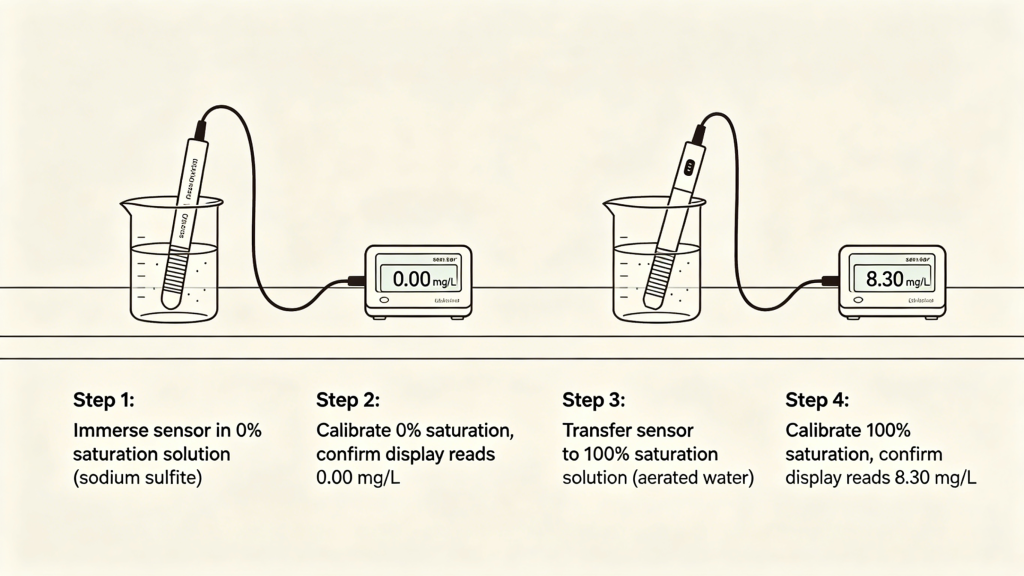
Two-point calibration is the gold standard for dissolved oxygen sensor accuracy, calibrating 0% and 100% saturation points to fix bias, drift, and wrong gain. It is mandatory for regulatory-compliant environmental and industrial monitoring.
Pre-Calibration Sensor Conditioning
Pre-calibration conditioning requires submerging a dissolved oxygen sensor in clean water for 24–48 hours to reach chemical equilibrium. Skipping this step causes immediate post-calibration drift and invalidates all measurements.
Environmental Parameter Compensation
Temperature, salinity, and barometric pressure directly impact dissolved oxygen sensor readings. Real-time compensation is required for accuracy, with salinity reducing solubility by 0.2% per unit and pressure altering calibration reference values.
Sensor Maintenance and Validation Procedures
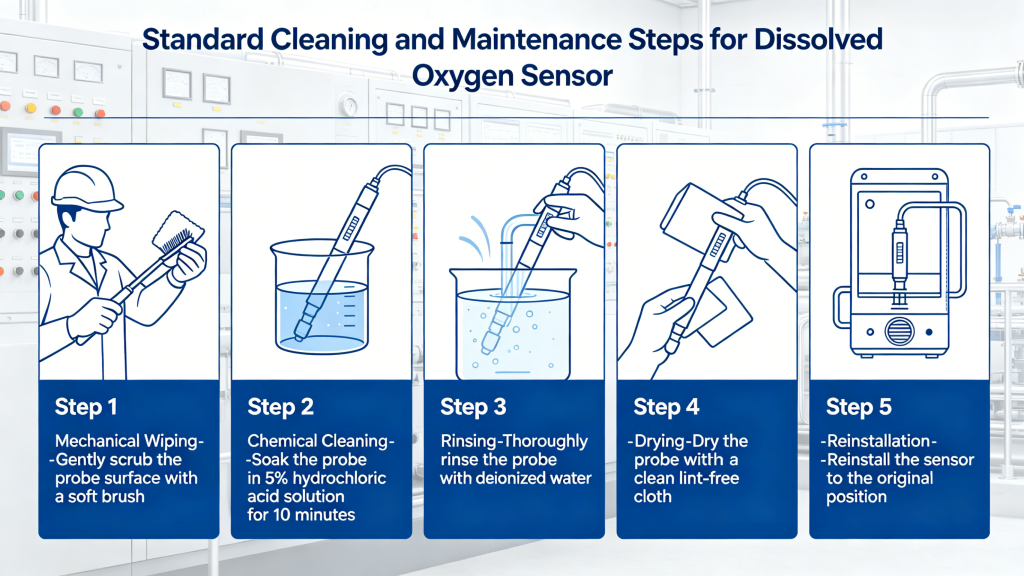
Proactive maintenance preserves dissolved oxygen sensor performance, while validation ensures readings match global reference standards for long-term reliability.
Cleaning Protocols and Schedules
Fouling is the leading cause of dissolved oxygen sensor drift, requiring standardized cleaning. Mechanical wipers, mild chemical solutions, and environment-based schedules (monthly to semi-annually) prevent performance loss.
Optical Sensor Cap Replacement
Optical dissolved oxygen sensor caps require replacement every 12–24 months, with shorter intervals in harsh environments. Post-replacement two-point calibration is required to restore full accuracy.
Electrochemical Sensor Maintenance
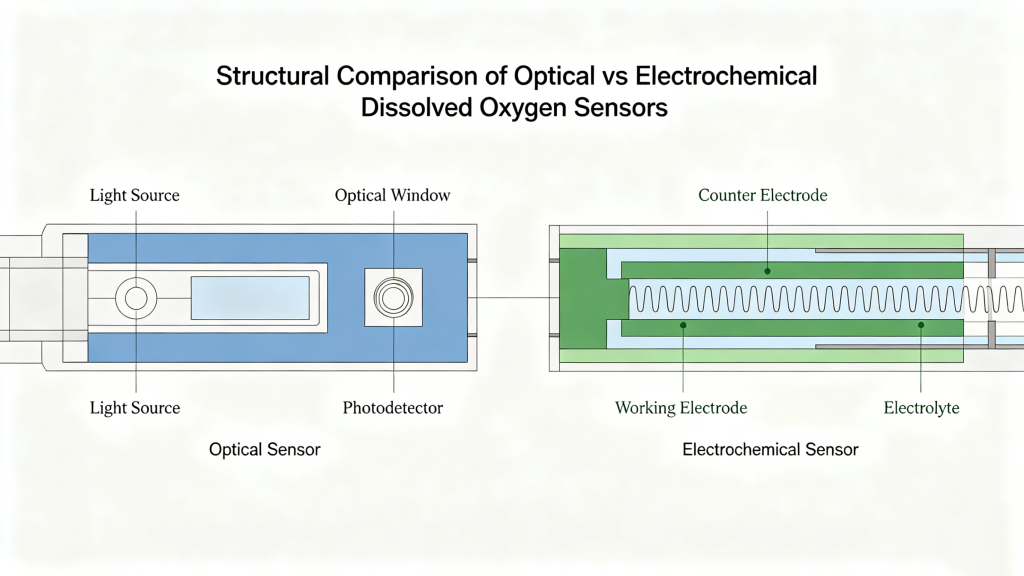
Electrochemical dissolved oxygen sensor models need membrane replacement every 3–6 months and electrolyte replenishment every 6–12 months, followed by full calibration to reset sensor response.
Reference Method Validation
Winkler titration is the global reference standard for dissolved oxygen sensor verification, aligned with EPA, ASTM, and ISO guidelines. A secondary calibrated sensor provides on-site validation for remote field locations.
Data Post-Processing and Drift Correction
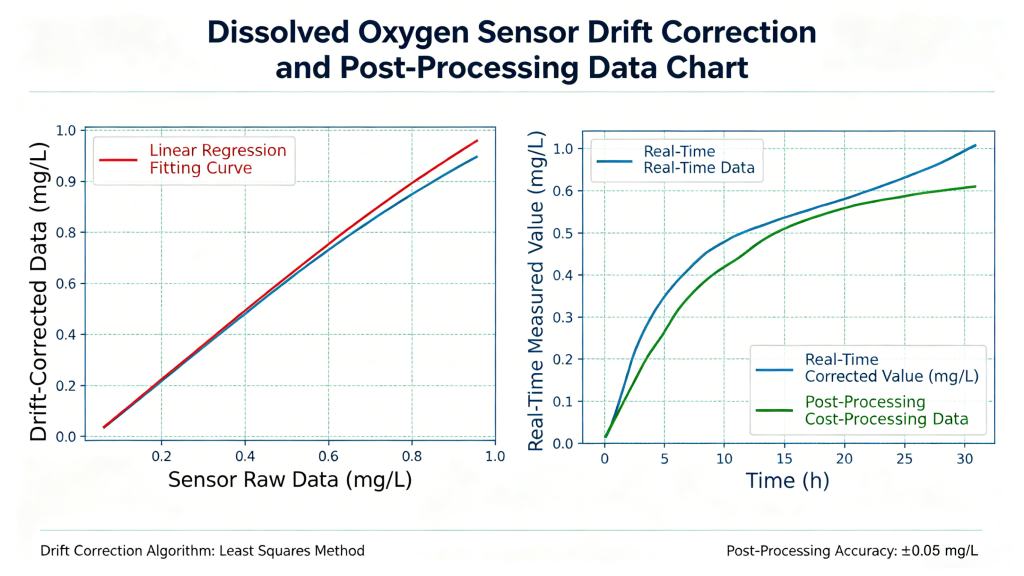
Long-term dissolved oxygen sensor deployments require drift correction and post-processing to refine historical data and eliminate residual errors.
Real-Time vs Post-Processing Correction
Real-time correction adjusts dissolved oxygen sensor data during deployment, while post-processing uses statistical models to refine stored datasets for final reporting and compliance.
Calibration Coefficient Adjustment
Long-term moored dissolved oxygen sensor units need coefficient updates using reference measurements to correct cumulative drift and maintain consistent accuracy over years of deployment.
Statistical Coefficient Estimation
Linear regression and ARIMA models estimate calibration coefficients for remote dissolved oxygen sensor systems, reducing field calibration needs while preserving data accuracy.
Negative Offset Correction
Negative offset correction fixes sub-zero dissolved oxygen sensor readings in anoxic environments, a critical step for sediment, deep-water, and industrial zero-oxygen monitoring applications.
Dissolved Oxygen Sensor Quality Assurance Program
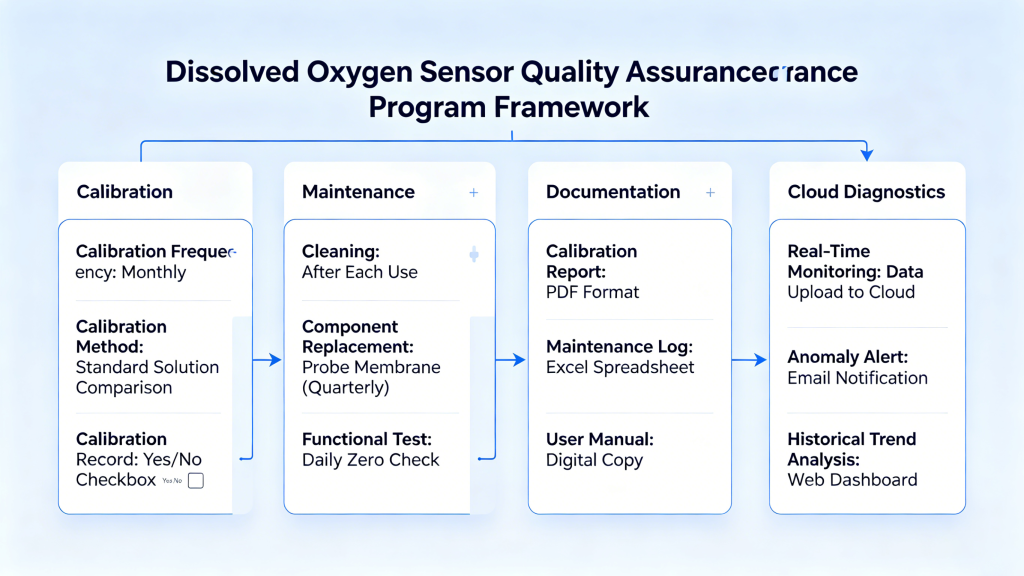
A structured quality assurance program standardizes dissolved oxygen sensor calibration, maintenance, and documentation to ensure regulatory compliance and consistent performance.
Calibration Frequency Guidelines
Calibration frequency for a dissolved oxygen sensor is determined by environment and accuracy needs: monthly for high-fouling sites, quarterly for environmental monitoring, semi-annually for moored systems, and annually for non-critical use.
Documentation Requirements
Calibration logs, validation records, and maintenance history are mandatory for dissolved oxygen sensor compliance, with digital storage required for a minimum of 5 years to meet global regulatory standards.
Remote Diagnostics and Predictive Maintenance
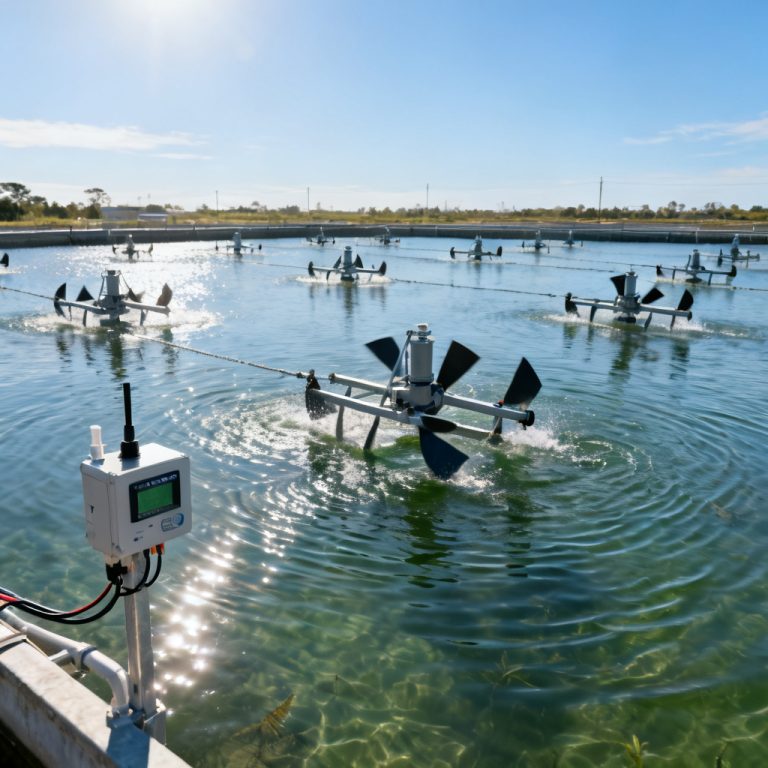
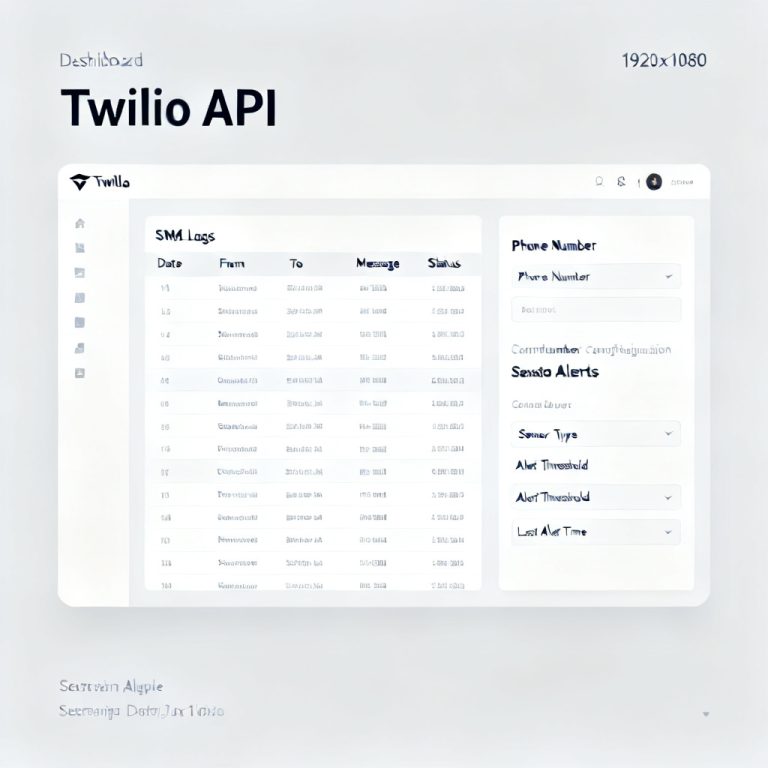
Cloud platforms enable remote dissolved oxygen sensor fault diagnosis and predictive maintenance, with automated alerts for calibration, fouling, and component issues to reduce operational downtime.
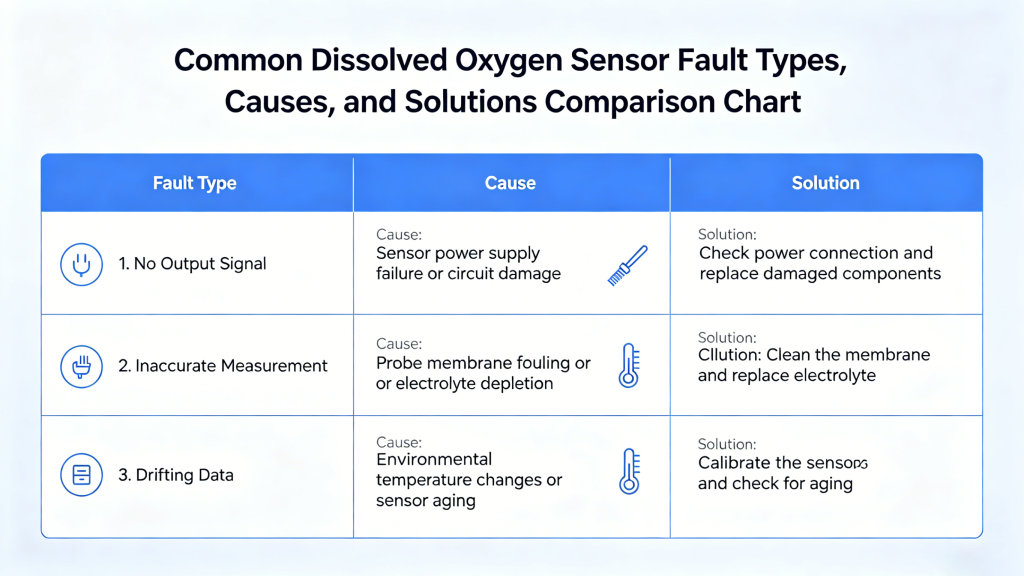
Dissolved Oxygen Sensor Fault Type Comparison Table
| Fault Type | Key Cause | Solution |
|---|---|---|
| Bias | Calibration Error | Calibration Adjustment |
| Drift | Component Degradation | Maintenance & Correction |
| Wrong Gain | Sensitivity Failure | Two-Point Calibration |
Frequently Asked Questions
1. How to distinguish drift from real changes on a dissolved oxygen sensor?
Compare dissolved oxygen sensor readings with a reference sensor or Winkler titration; gradual uncorrelated shifts indicate drift, while abrupt changes reflect real oxygen fluctuations.
2. What to do if a dissolved oxygen sensor fails validation?
Clean the dissolved oxygen sensor, perform two-point calibration, replace worn components, re-validate, and replace the sensor if issues persist.
3. How often to replace an optical dissolved oxygen sensor cap?
Replace an optical dissolved oxygen sensor cap every 12-24 months, with shorter intervals in high-fouling or harsh environmental conditions.
4. Why is pre-calibration conditioning important for a dissolved oxygen sensor?
Pre-calibration conditioning stabilizes a dissolved oxygen sensor for 24-48 hours, eliminating initial drift and ensuring accurate calibration results.
5. What is the best calibration for a dissolved oxygen sensor?
Two-point calibration is the best practice for a dissolved oxygen sensor, correcting zero offset, span drift, and sensitivity errors for high-precision monitoring.