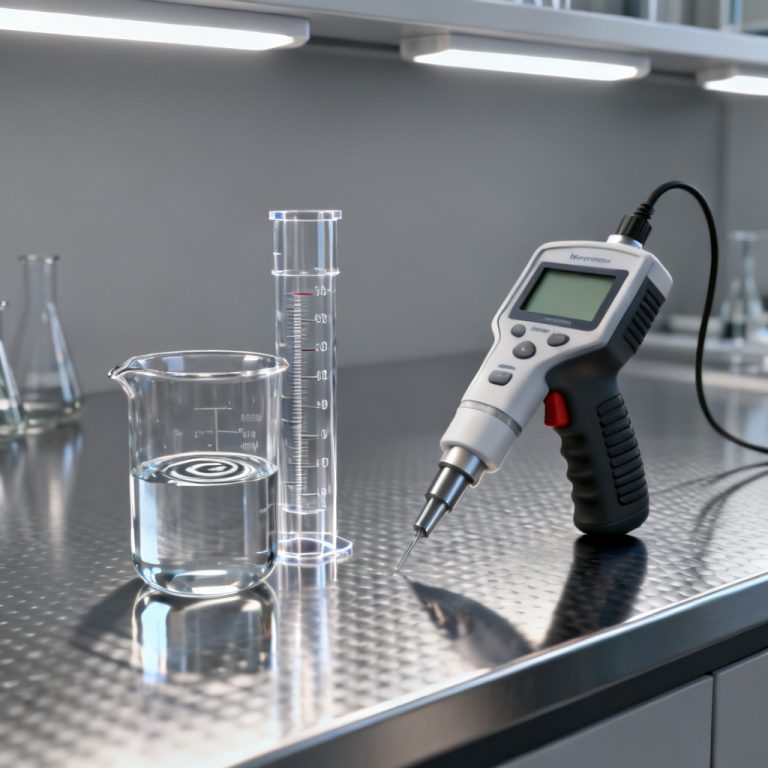
An optical dissolved oxygen sensor working principle relies on fluorescence quenching to measure oxygen concentration without consuming the analyte. This guide provides a comprehensive technical overview for B2B engineers and procurement professionals in PCB manufacturing and sensor system integration.
Dissolved oxygen measurement is critical in water quality monitoring, aquaculture, wastewater treatment, and environmental research. Traditional electrochemical sensors have limitations including membrane fouling, calibration drift, and oxygen consumption. Optical dissolved oxygen sensors have emerged as the gold standard due to high accuracy, minimal maintenance, and long-term stability.
Core Working Principle of Optical Dissolved Oxygen Sensor
Luminescence Phenomenon in Optical Dissolved Oxygen Sensor
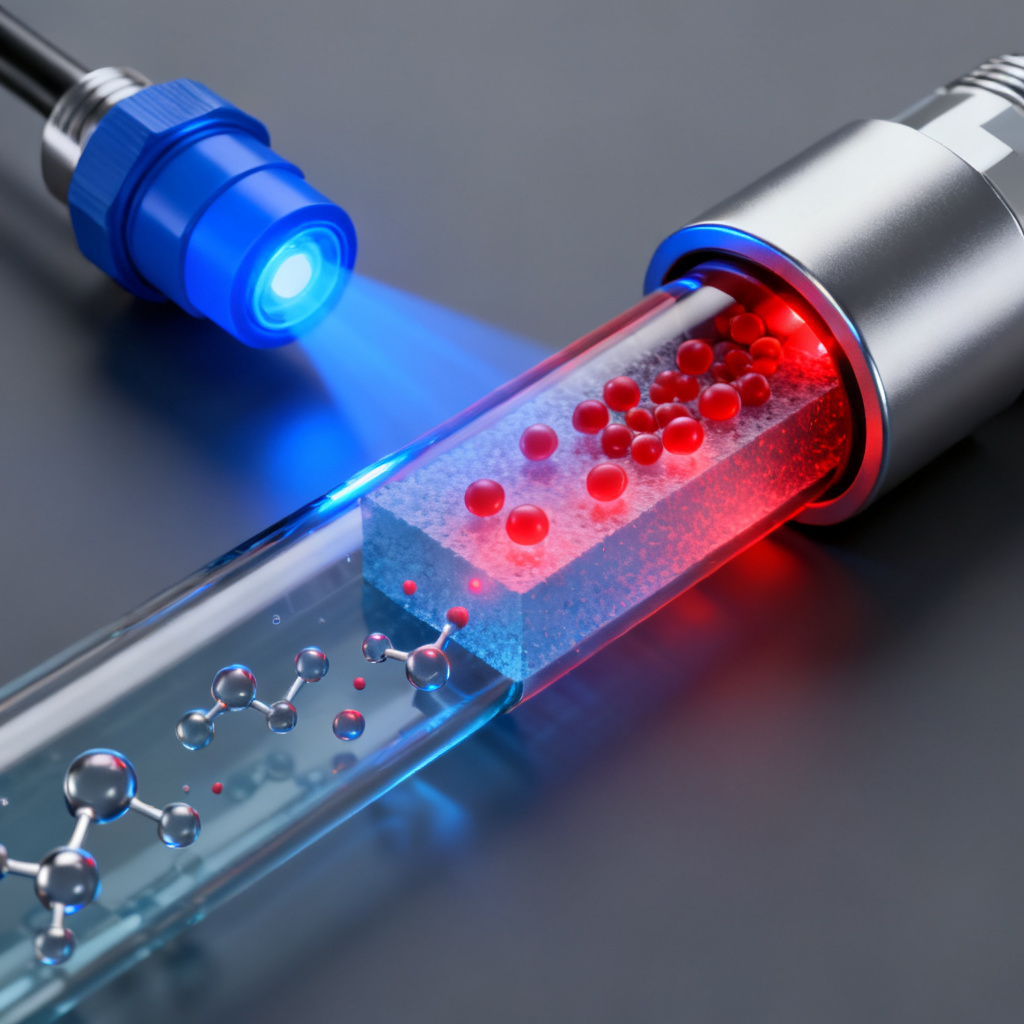
An optical dissolved oxygen sensor relies on fluorescence quenching. A special dye is immobilized in a gas-permeable sol-gel or polymer matrix. When excited by a blue LED, the dye emits red fluorescence. Oxygen molecules collide with excited dye molecules and quench the fluorescence, reducing both intensity and lifetime.
Quenching Mechanism of Optical Dissolved Oxygen Sensor
Oxygen is paramagnetic and acts as an efficient quencher. When oxygen diffuses through the sensing membrane and collides with an excited dye molecule, it non-radiatively transfers energy, causing the dye to return to ground state without emitting light. This dynamic quenching directly correlates oxygen concentration to signal reduction.
Stern-Volmer Equation for Optical Dissolved Oxygen Sensor
The Stern-Volmer equation describes the relationship: I₀/I = 1 + KSV·[O₂]. I₀ is fluorescence intensity without oxygen, I is intensity with oxygen, KSV is the quenching constant, and [O₂] is dissolved oxygen concentration. As oxygen increases, fluorescence decreases proportionally.
Measurement Methodologies for Optical Dissolved Oxygen Sensor
Intensity-Based Measurement for Optical Dissolved Oxygen Sensor
This method directly measures fluorescence amplitude. It suffers from photobleaching, LED aging, and optical fouling. Advantages include lower cost electronics and simpler PCB design. Disadvantages include frequent calibration and lower accuracy over long deployments.
Lifetime-Based Measurement for Optical Dissolved Oxygen Sensor
This industry-standard method measures the fluorescence decay time constant. The excited-state lifetime is inversely proportional to oxygen concentration. Key advantage: lifetime is intrinsic and immune to photobleaching, LED aging, and optical fouling.
Phase-Shift Method for Optical Dissolved Oxygen Sensor
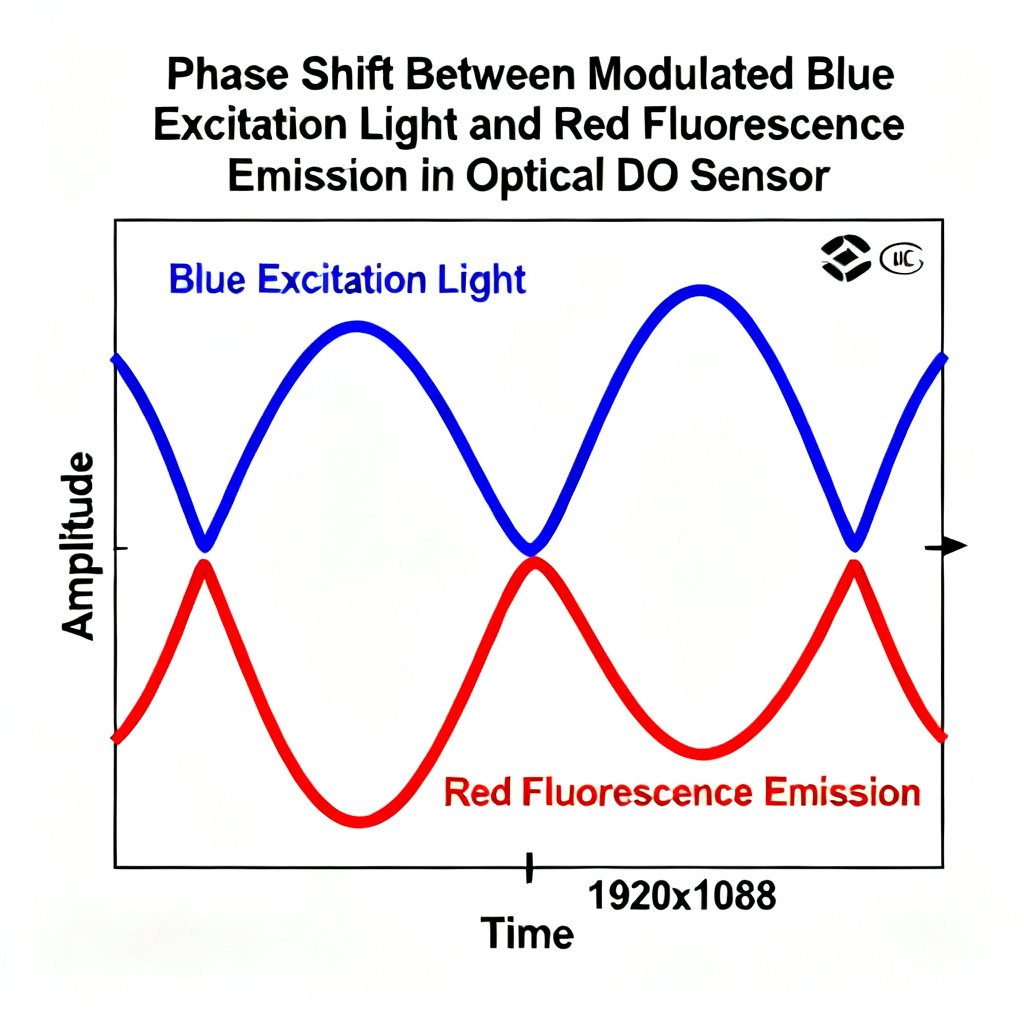
The sensor uses modulated excitation light. The emitted fluorescence lags behind excitation due to finite excited-state lifetime. Phase angle φ relates to lifetime τ by tan(φ) = ω·τ. As oxygen increases, lifetime decreases, causing smaller phase shift.
Frequency-Domain Method for Optical Dissolved Oxygen Sensor
The sensor sweeps through a range of modulation frequencies. The frequency response reveals lifetime, converted to oxygen concentration using the Stern-Volmer relationship. This method provides robust measurement across varying conditions.
Time-Domain Pulse Method for Optical Dissolved Oxygen Sensor
A short blue light pulse excites the dye. The sensor measures the exponential decay curve of red fluorescence. Fitting the curve extracts lifetime τ. This method is computationally intensive but provides the most direct lifetime measurement.
Sensor Architecture and Key Components of Optical Dissolved Oxygen Sensor
Sensing Element of Optical Dissolved Oxygen Sensor
The luminophore uses platinum or palladium porphyrins, ruthenium complexes, or BF₂-azadipyrromethene derivatives. These dyes have high quantum yield, long lifetimes of 1–100 µs, and high photostability. The matrix is a gas-permeable hydrophobic polymer allowing oxygen diffusion while blocking water.
Light Source for Optical Dissolved Oxygen Sensor
A blue LED at 450–475 nm provides high intensity narrow bandwidth excitation. The LED is pulsed or modulated to avoid excessive heating and photobleaching. A bandpass filter ensures only excitation light reaches the dye.
Photodetector for Optical Dissolved Oxygen Sensor
A silicon PIN photodiode with high sensitivity in the red region converts emitted fluorescence to current. A longpass filter blocks blue excitation while passing red emission. A transimpedance amplifier converts current to voltage with high bandwidth for lifetime measurements.
Temperature Sensor for Optical Dissolved Oxygen Sensor
The Stern-Volmer constant and dye lifetime are strongly temperature-dependent at 1–3% per °C. A precision thermistor or digital temperature sensor is embedded near the optode. The microcontroller applies temperature compensation algorithms.
Signal Processing Electronics for Optical Dissolved Oxygen Sensor PCB
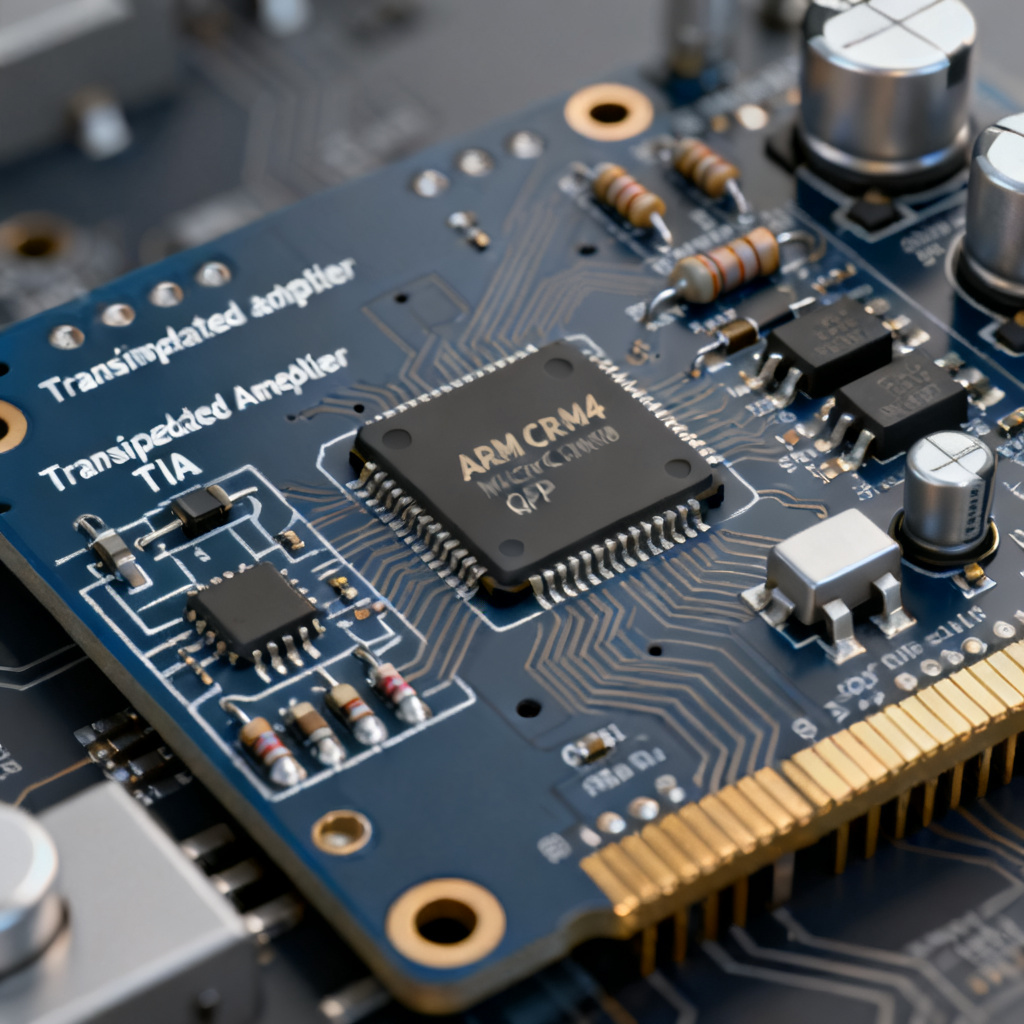
Signal processing requires careful PCB design. The LED driver uses constant-current with fast switching. The photodiode amplifier uses low-noise high-bandwidth op-amps with minimized parasitic capacitance. Phase detection uses lock-in amplifiers or digital quadrature demodulation. Time-to-digital converters provide picosecond resolution for lifetime measurement. A 32-bit ARM Cortex-M4 handles data processing and communication.
Communication Interface for Optical Dissolved Oxygen Sensor
Analog output uses 4–20 mA current loop. Digital output uses RS-485 Modbus RTU, I²C, or SDI-12. Wireless options include Bluetooth Low Energy or LoRaWAN for IoT applications.
Calibration and Maintenance of Optical Dissolved Oxygen Sensor
Calibration Procedure for Optical Dissolved Oxygen Sensor
Zero-oxygen point uses sodium sulfite solution to chemically remove all oxygen. Saturation point uses water-saturated air or air-saturated water. Temperature compensation adjusts the calibration curve. Two-point calibration is sufficient for most applications.
Maintenance Advantages of Optical Dissolved Oxygen Sensor
No membrane replacement is needed. No electrolyte replenishment is required. Lifetime-based sensors need calibration every 6–12 months compared to weekly for Clark-type sensors. No oxygen consumption makes them ideal for low-oxygen environments.
Applications of Optical Dissolved Oxygen Sensor in B2B Markets
Wastewater Treatment with Optical Dissolved Oxygen Sensor
Aeration control provides real-time feedback for blower control, reducing energy costs by 20–40%. Process monitoring ensures accurate DO levels for aerobic digestion and nitrification processes.
Aquaculture with Optical Dissolved Oxygen Sensor
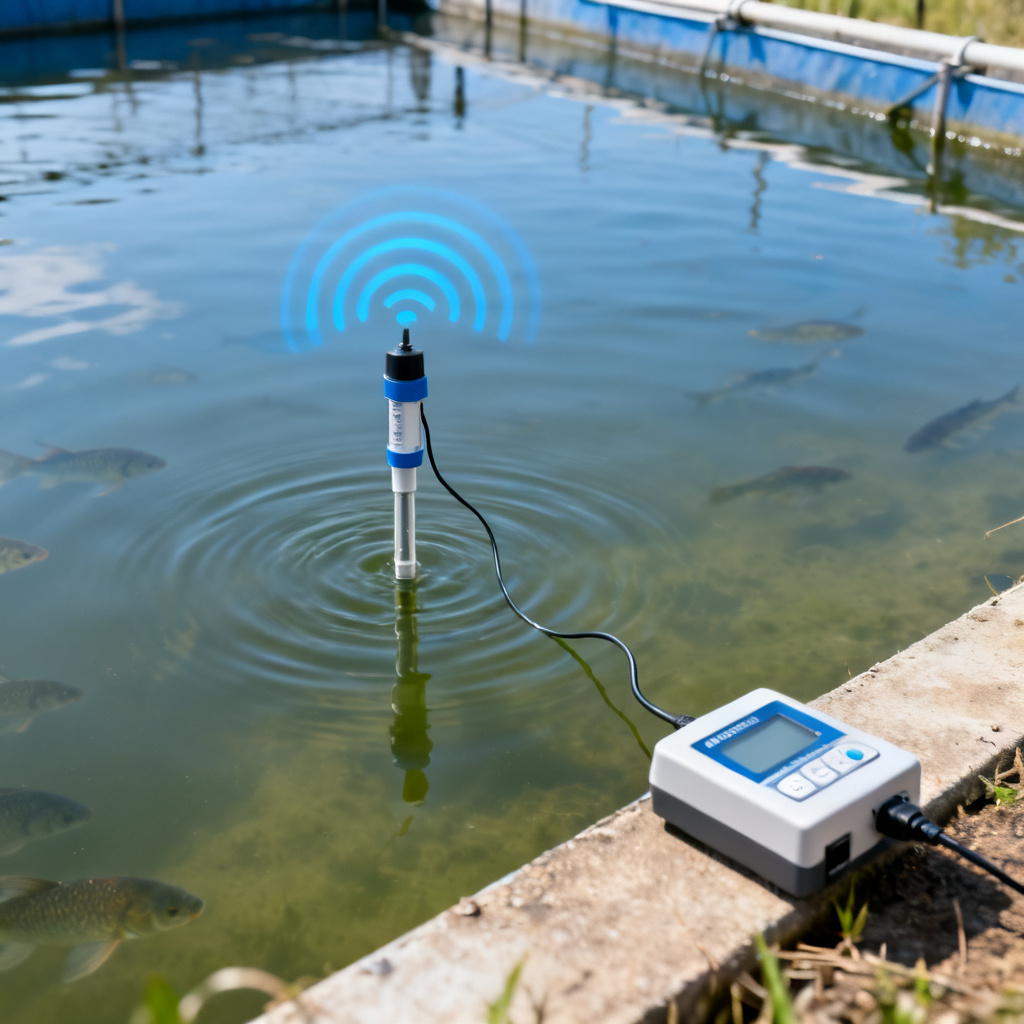
Fish health relies on proper DO levels. Optical sensors provide reliable drift-free monitoring in high-salinity and high-fouling environments. Feed optimization improves conversion ratios.
Environmental Monitoring with Optical Dissolved Oxygen Sensor
River and lake monitoring benefits from long-term deployment without frequent calibration. Groundwater studies require sensors that do not consume oxygen during low-flow sampling.
Pharmaceutical and Bioprocessing with Optical Dissolved Oxygen Sensor
Cell culture requires precise DO control for growth and product yield. Optical sensors can be sterilized by autoclaving or gamma irradiation without damage.
Comparison: Optical Dissolved Oxygen Sensor vs Electrochemical Sensor
| Parameter | Optical Dissolved Oxygen Sensor | Electrochemical Sensor |
|---|---|---|
| Measurement Principle | Fluorescence quenching | Electrochemical reduction of O₂ |
| Oxygen Consumption | None | Yes |
| Calibration Frequency | Every 6–12 months | Weekly to monthly |
| Membrane Replacement | Not required | Required every 1–6 months |
| Flow Dependence | No | Requires flow >5 cm/s |
| Response Time | <30 seconds T90 | 30–60 seconds T90 |
| Drift | <1% per year | <2% per month |
| Temperature Range | 0–50°C typical | 0–45°C |
| Cost | Higher initial cost | Lower initial, higher maintenance |
| Lifespan | 2–5 years optode | 1–2 years sensor |
Future Trends and PCB Integration for Optical Dissolved Oxygen Sensor
Miniaturization of Optical Dissolved Oxygen Sensor PCBs
Surface-mount technology integrates the entire optical front-end into a single SMD package. This reduces sensor size and cost for compact multi-parameter probes.
Digital Compensation for Optical Dissolved Oxygen Sensor
Advanced algorithms like Kalman filters and machine learning compensate for biofouling, temperature gradients, and cross-sensitivity to other gases. This requires powerful microcontrollers with floating-point units.
Wireless and IoT Readiness for Optical Dissolved Oxygen Sensor
Integrating low-power wireless modules like Bluetooth 5.0 or LoRa allows sensor network deployment. PCB design should include dedicated power management ICs and sleep-mode current below 10 µA.
Multi-Parameter Sensors with Optical Dissolved Oxygen Sensor
Combining optical DO with pH, conductivity, and turbidity sensors on a single PCB reduces system complexity and cost. Each parameter requires its own analog front-end with shared microcontroller and communication interface.
Glossary of Optical Dissolved Oxygen Sensor Terminology
Fluorescence quenching: Reduction in fluorescence intensity or lifetime due to molecular interactions with oxygen. Luminophore: Light-emitting dye molecule used in optical sensing. Sol-gel matrix: Porous glass-like material that immobilizes the dye while allowing gas diffusion. Phase shift: Angular delay between excitation and emission signals in modulated measurements. Time-to-digital converter: Electronic circuit that measures time intervals with picosecond precision for lifetime determination. Stern-Volmer constant: Proportionality factor relating oxygen concentration to fluorescence quenching efficiency.
Frequently Asked Questions About Optical Dissolved Oxygen Sensor Working Principle
What is the optical dissolved oxygen sensor working principle?
The optical dissolved oxygen sensor working principle is based on fluorescence quenching where oxygen molecules reduce the fluorescence intensity and lifetime of a specialized dye when excited by blue light, allowing precise oxygen measurement.
How does an optical dissolved oxygen sensor differ from electrochemical sensors?
An optical dissolved oxygen sensor does not consume oxygen, requires no membrane replacement, and needs calibration only every 6–12 months. Electrochemical sensors consume oxygen, require weekly calibration, and need frequent membrane changes.
What is the Stern-Volmer equation in optical dissolved oxygen sensors?
The Stern-Volmer equation I₀/I = 1 + KSV·[O₂] relates fluorescence intensity to oxygen concentration. It is fundamental to the optical dissolved oxygen sensor working principle for converting measured signals to oxygen values.
Why is lifetime measurement preferred in optical dissolved oxygen sensors?
Lifetime measurement is immune to photobleaching, LED aging, and optical fouling because lifetime is an intrinsic property of the dye. This makes the optical dissolved oxygen sensor more stable and accurate over long deployment periods.
What are the main applications of optical dissolved oxygen sensors?
Key applications include wastewater treatment aeration control, aquaculture fish health monitoring, environmental river and lake studies, and pharmaceutical bioprocessing cell culture. The optical dissolved oxygen sensor working principle suits all these demanding environments.