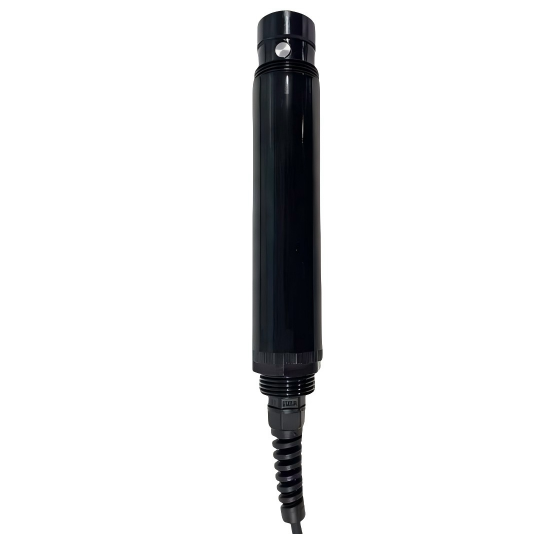
Dissolved Oxygen Sensor
The TDO100B provides the real-time, stable monitoring of the low dissolved oxygen content in precision, providing accuracy data the necessary to maintain critical thresholds in industrial water management. The transition from ppm to ppb-level precision is essential for preventing equipment damage and ensuring biological efficiency. While standard sensors monitor environmental health, a high-sensitivity dissolved oxygen sensor ppb is required to detect the minute oxygen concentrations that lead to pitting corrosion in high-pressure boilers or inhibit nitrogen removal in anaerobic zones.
Product Features
PPB Dissolved Oxygen Sensor Core Features
No Flow Dependency & Static Water Measurement
Unlike traditional electrochemical sensors, this fluorescence-based sensor does not consume oxygen during measurement. This allows for high-precision data even in static water or low-flow conditions, making it the optimal choice for monitoring dissolved oxygen in transport bins and temporary holding tanks.
High Stability Green Light Technology
The sensor utilizes modulated green light excitation to slow the decay of fluorescent substances, extending the lifespan of the sensor cap to 18 months and the body to 5 years. This provides a stable, reliable measurement method that is unaffected by water quality and typically requires no calibration.
Integrated Digital & Analog Communication
Equipped with full digital processing and a shielded stainless steel casing, the sensor directly outputs RS485 (Modbus-RTU) and 4-20mA signals. This ensures strong anti-interference and easy integration into hotel temporary rearing sensor solutions and SCADA systems.
Advanced Fluorescence Quenching Principle
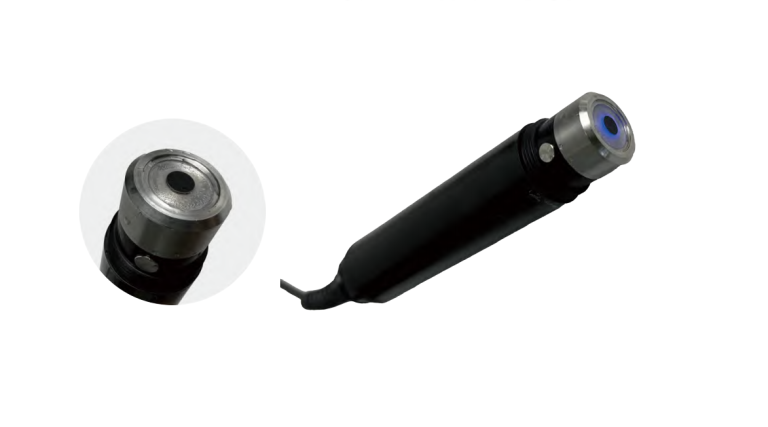
The TDO100B operates on the physical principle of fluorescence quenching, using an internal blue LED to excite a specialized luminophore material. As oxygen molecules interact with the sensing layer, they quench the fluorescence; the sensor calculates the oxygen concentration by measuring the phase shift of the returned red light. This optical method consumes no oxygen and requires no stirring, providing accurate results in both stagnant and flowing water.
Maintenance-Free, Solid-State Design
Unlike traditional electrochemical probes, the TDO100B dissolved oxygen sensor ppb is completely solid-state. It contains no electrolyte to replenish and no gas-permeable membranes to replace. The robust fluorescence cap typically lasts 1 to 2 years, significantly reducing the total cost of ownership for dissolved oxygen sensor wholesale customers and municipal plant operators.
Digital RS485 Modbus Connectivity
This sensor features a sophisticated dissolved oxygen sensor interface supporting the RS485 Modbus RTU protocol. It outputs fully compensated digital data, including dissolved oxygen concentration and temperature, allowing for direct integration into PLC, SCADA, or IoT-based smart water management systems.
Corrosion-Resistant 316L Construction
Built to withstand harsh industrial fluids, the TDO100B is housed in 316L stainless steel and high-performance polymer plastics. It is fully submersible with an IP68 rating, making it the ideal dissolved oxygen sensor high pressure solution for depths up to 20 meters and environments with chemical interferences like H2S or varying pH levels.
Technical Specifications
dissolved oxygen sensor specification
| Parameter | Details |
|---|---|
| Model Number | TDO100B Optical PPB Sensor |
| Measurement Method | Fluorescence Quenching (Optical) |
| Measurement Range | 0 – 2000 ppb (μg/L); 0 – 50 °C |
| Accuracy | ±1 ppb or 3% of reading (whichever is greater) |
| Resolution | 0.01 ppb (Oxygen); 0.01 °C (Temperature) |
| Detection Limit | 0.8 ppb |
| Response Time | T90 < 120s (typically < 60s in stable conditions) |
| Power Supply | 9-24VDC (12VDC Recommended) |
| Signal Output | RS-485, MODBUS RTU Protocol |
| Materials | 316L Stainless Steel & Polymer Plastic |
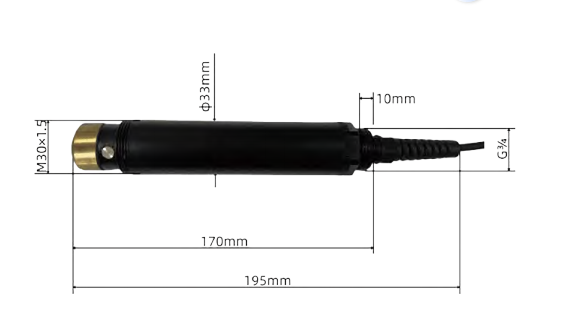
| Dimensions | 32mm Diameter × 180mm Length |
| Protection Rating | IP68 (Submersible up to 20m) |
Applications
Dissolved Oxygen Sensors 0-2000ppb
Wastewater Denitrification & Aeration
Precise DO control is the single largest factor in wastewater energy efficiency. The dissolved oxygen sensor for waste water treatment plant ensures that aeration basins are not “over-aerated,” saving up to 50% in electricity costs. In the denitrification stage, the sensor verifies the near-zero oxygen levels required for bacteria to effectively convert nitrates into nitrogen gas.
High-Pressure Boiler Feedwater
The dissolved oxygen sensor high pressure capability of the TDO100B is vital for thermal and nuclear power plants. It monitors the efficacy of mechanical deaerators and chemical oxygen scavengers, protecting turbines and boiler tubes from oxygen-driven metallic decay.
Semiconductor Ultrapure Water
In microelectronics manufacturing, trace oxygen in rinsing water can oxidize silicon wafers and destroy circuit architecture. The TDO100B monitors UPW loops to ensure dissolved oxygen remains well below the 10 ppb threshold required for advanced semiconductor fabrication.
Beverage and Brewing Flavor Stability
Brewmasters use the dissolved oxygen tension sensor logic to manage yeast health during propagation and prevent oxidation during the packaging of beer and wine. Low oxygen levels are critical for maintaining shelf-life and ensuring consistent product flavor.
FAQ
Optical Dissolved Oxygen Sensor 0.01 resolution
Can this sensor be used in stagnant or still water?
Yes. One of the primary advantages of the TDO100B is that it consume no oxygen during measurement. Therefore, it provides accurate ppb readings in still samples, groundwater bores, or low-flow pipes where Clark-style sensors would fail.
How is the TDO100B protected against chemical interference?
The optical sensing principle is naturally immune to common water contaminants such as Hydrogen Sulfide , pH fluctuations, and heavy metal ions. This robustness allows for reliable deployment in industrial chemical wastewater that would “poison” standard electrochemical sensors
What is the typical lifespan of the replaceable sensor cap?
The fluorescence cap is designed for long-term industrial use, typically lasting 1 to 2 years. Replacing the cap is a tool-free process that can be completed in the field in under a minute, ensuring minimal downtime for your monitoring system.
Ready to Impletment in Your Application?
To get a customized quote for bulk orders (global shipping available with competitive pricing), contact our sales team now!
Request a Quote
Get a customized solution for your application!