LoRaWAN vs. NB-IoT for Aquaculture DO Monitoring: Technical Comparison
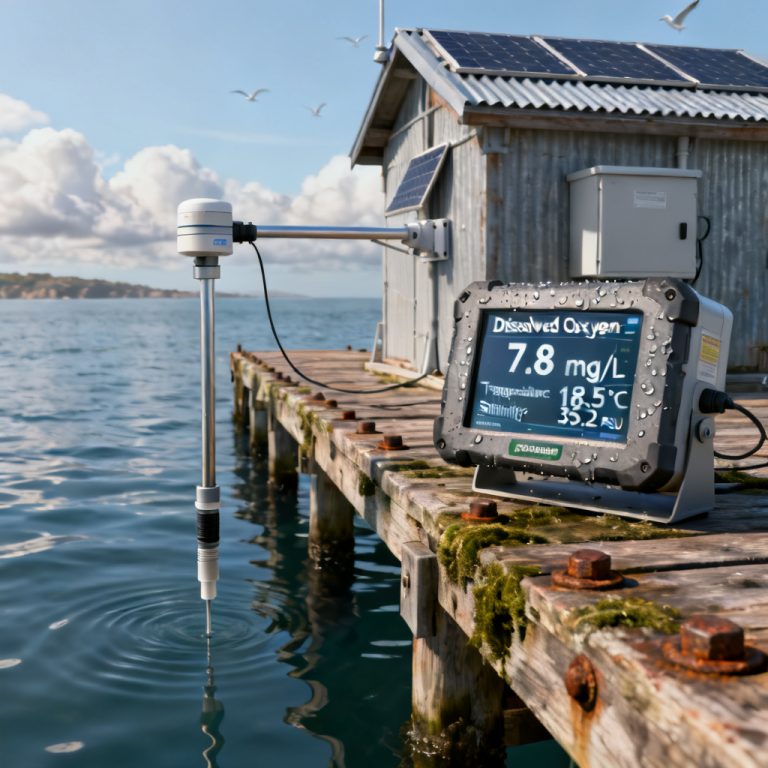
In modern aquaculture, real-time monitoring of Dissolved Oxygen (DO) levels is critical for fish health, feed efficiency, and mortality prevention. Welcome to our comprehensive LoRaWAN vs NB IoT for Aquaculture DO Monitoring Technical Comparison, where we help operators choose the right connectivity framework for their sensor deployment.
LoRaWAN vs. NB-IoT for Aquaculture DO Monitoring: Technology Fundamentals
How LoRaWAN Works for DO Sensors
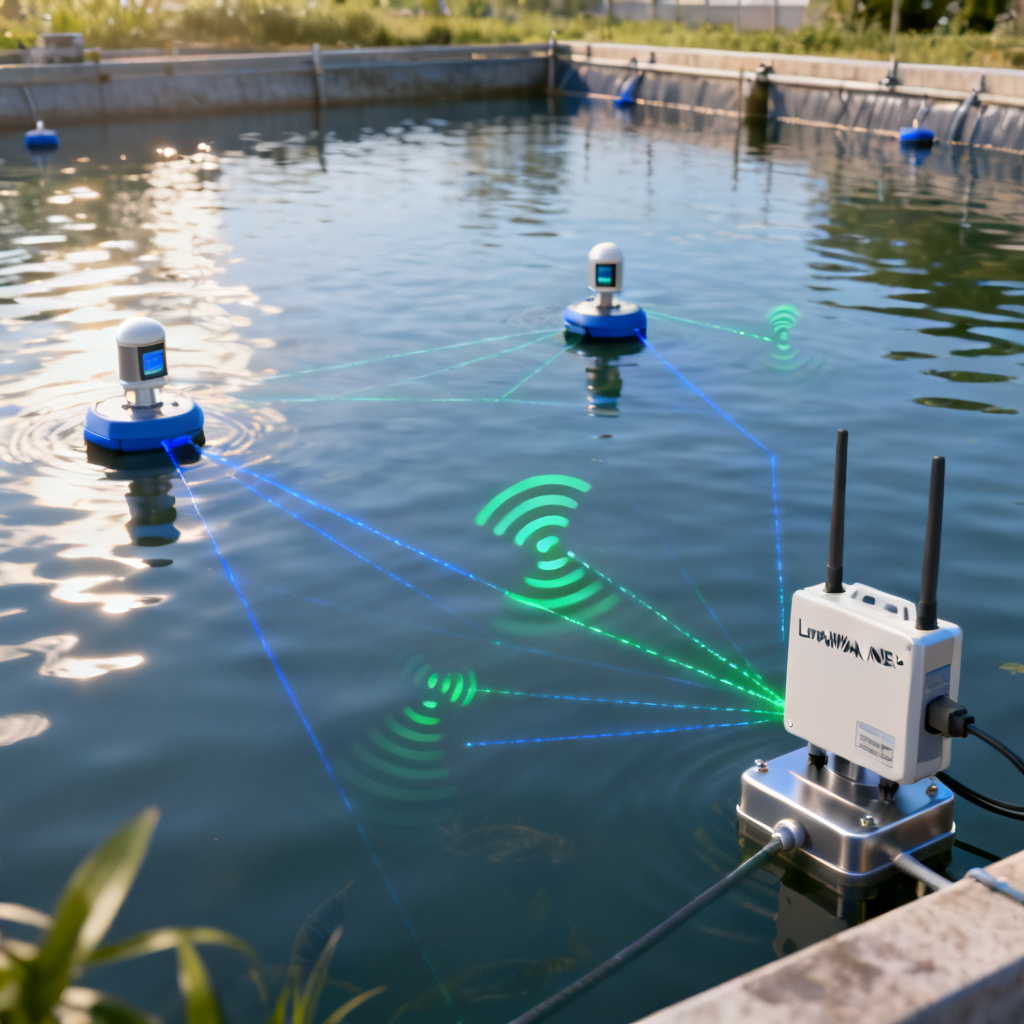
LoRaWAN for aquaculture DO monitoring uses unlicensed ISM bands (868 MHz EU, 915 MHz US, 923 MHz AS) with Chirp Spread Spectrum modulation. It operates on a star-of-stars topology: end-devices communicate with gateways, which forward data to a network server. Key characteristics include unlicensed spectrum (no SIM card), bi-directional communication optimized for uplink, Adaptive Data Rate (ADR) to balance range and data rate, and Class A, B, and C device types for different latency needs.
How NB-IoT Works for DO Sensors
NB-IoT for aquaculture DO monitoring is a 3GPP standardized cellular technology (Release 13) operating in licensed LTE spectrum. It deploys within existing cellular base stations using a narrow 200 kHz bandwidth. Key characteristics include licensed spectrum (requires SIM card), superior signal penetration (deep indoor/underground), guaranteed Quality of Service (QoS), and higher data rates (up to ~250 kbps) than LoRaWAN.
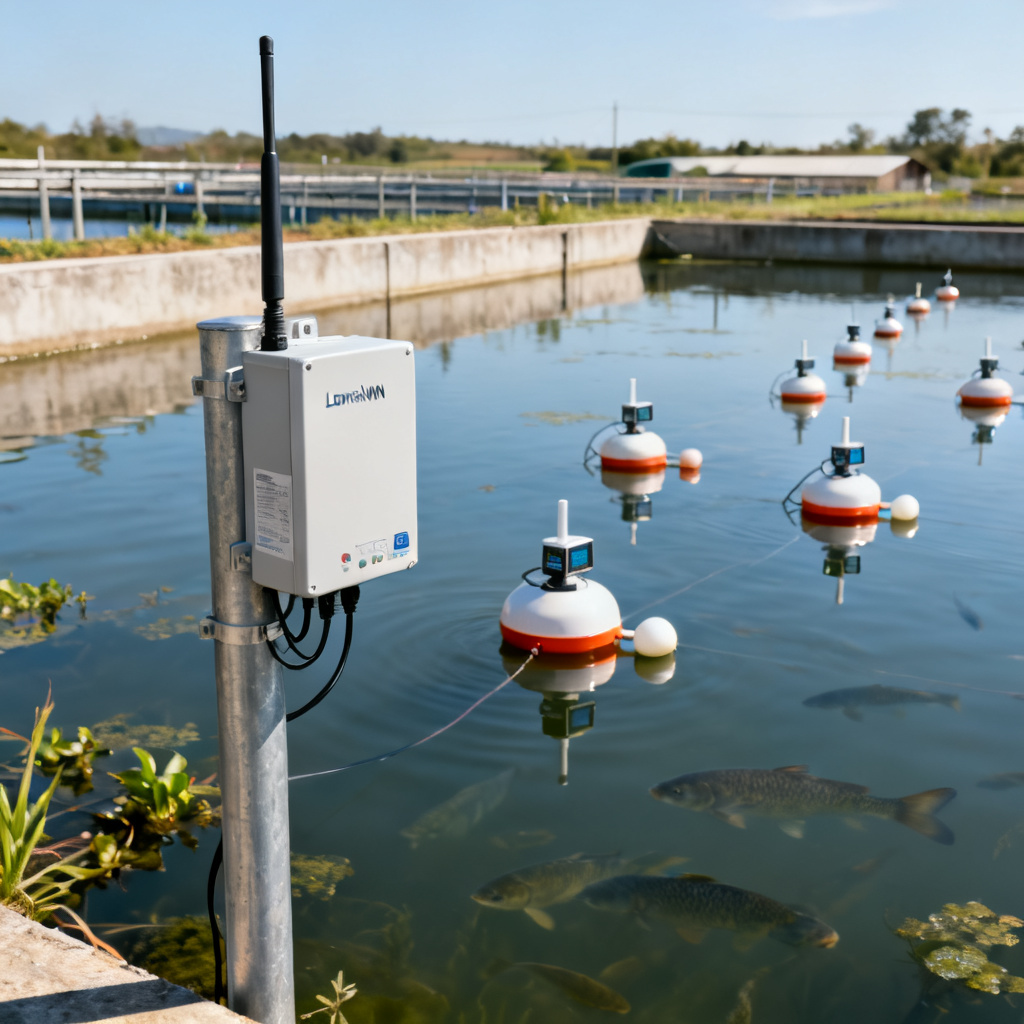
Technical Parameters: LoRaWAN vs. NB-IoT for Aquaculture DO Monitoring
| Parameter | LoRaWAN | NB-IoT |
|---|---|---|
| Frequency Spectrum | Unlicensed ISM bands (868/915/923 MHz) | Licensed LTE bands (varies by carrier) |
| Range (Open Field) | 2–15 km (line-of-sight) | 1–10 km (depends on base station density) |
| Indoor/Subsurface Penetration | Moderate (can penetrate ~1–2m of water) | Excellent (deep penetration; 3–5m of water or concrete) |
| Data Rate | 0.3–50 kbps (ADR dependent) | Up to 250 kbps (typical 50–100 kbps) |
| Latency | High (Class A: 1–10 seconds, Class C: <1 second) | Low (10–100 ms typical) |
| Power Consumption | Ultra-low (10+ years on 2 AA batteries) | Low (2–5 years on battery, higher in continuous mode) |
| Device Cost | Low ($10–$30 per module) | Higher ($15–$40 per module + SIM cost) |
| Network Cost | Private gateway ($100–$500) + no subscription | Subscription ($1–$5 per device/month) |
| Mobility Support | No (handover not supported) | Yes (handover between cells) |
| Security | AES-128 encryption (end-to-end) | 3GPP LTE security (SIM-based) |
| Scalability | High (up to 10,000+ devices per gateway) | High (carrier network capacity) |
Critical Factors for DO Monitoring in Aquaculture: LoRaWAN vs. NB-IoT
Coverage and Penetration in Water Environments
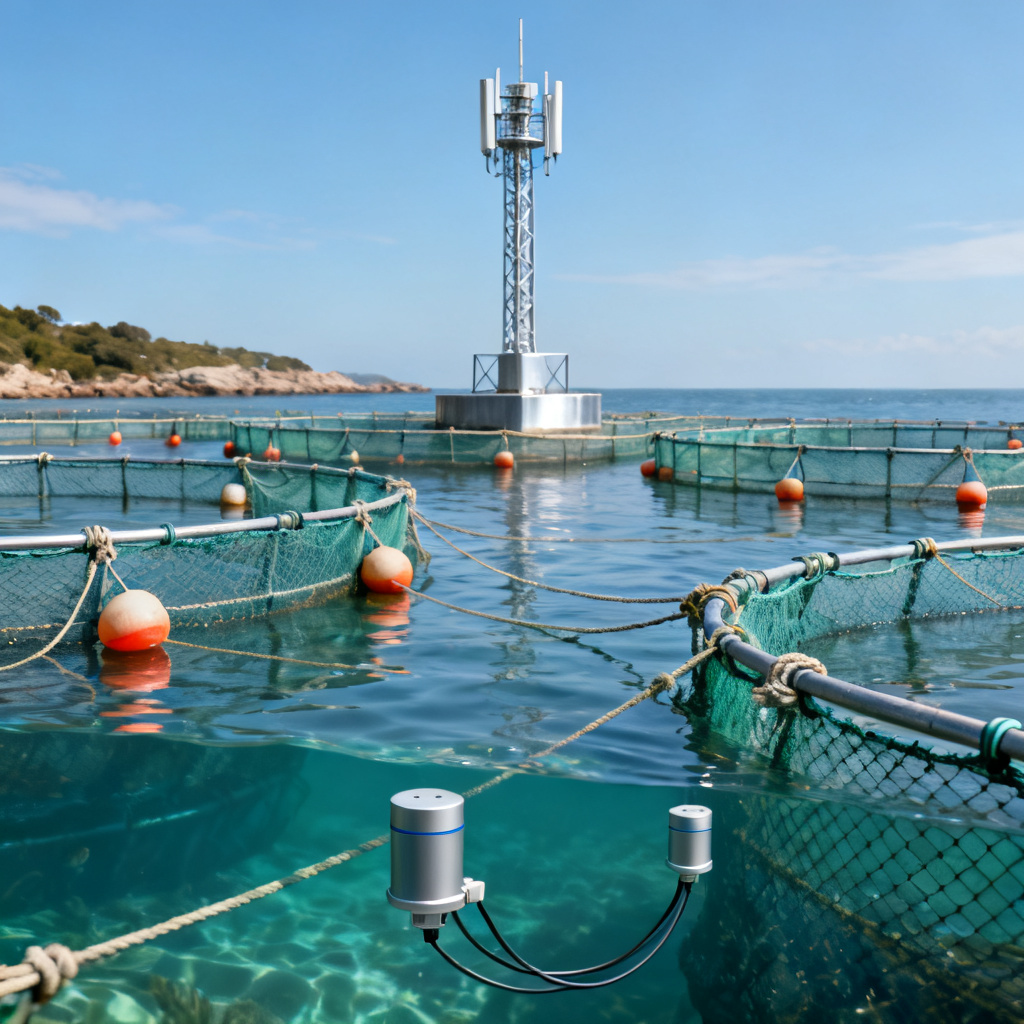
LoRaWAN for aquaculture DO monitoring signals can penetrate shallow water (1–2m) but degrade rapidly with depth. In open pond aquaculture, a gateway placed near the pond edge can cover 2–5 km. However, in deep ponds (>3m) or enclosed recirculating aquaculture systems (RAS), signal attenuation becomes significant. The use of a floating buoy with a raised antenna can improve performance. NB-IoT for aquaculture DO monitoring provides superior penetration through water, concrete, and metal, reliably communicating with sensors submerged 3–5m deep, making it ideal for deep-water cages or indoor RAS facilities.
Power Consumption and Battery Life
LoRaWAN for aquaculture DO monitoring offers ultra-low power consumption. A typical DO sensor can operate for 3–5 years on a single 18650 battery (e.g., 10-minute transmission interval), spending >99% of time in deep sleep mode. NB-IoT for aquaculture DO monitoring consumes 10–100x more power during transmission due to higher data rate and complex synchronization. To achieve 2–3 year battery life, the sensor must use Power Saving Mode (PSM) and extended Discontinuous Reception (eDRX). Frequent DO readings (every 5 minutes) will drain the battery within 6–12 months.
Data Rate and Latency for Real-Time Alerts
LoRaWAN for aquaculture DO monitoring with a typical data rate of 0.3–5 kbps is sufficient for periodic DO readings (e.g., 2 bytes of DO value + 4 bytes of timestamp). However, Class A latency (1–10 seconds) is acceptable for hourly monitoring but not for real-time control (e.g., automatic aeration activation within 1 second). NB-IoT for aquaculture DO monitoring delivers low latency (10–100 ms) enabling near-real-time control loops. If DO drops below 4 mg/L, the sensor can trigger an aeration pump within milliseconds, critical for high-density aquaculture.
Total Cost of Ownership (TCO)
LoRaWAN for aquaculture DO monitoring has lower upfront cost for devices and gateways with no recurring subscription fees. It is ideal for large-scale deployments (100+ sensors) where per-device cost is critical. However, you must manage the gateway and network server infrastructure. NB-IoT for aquaculture DO monitoring has higher per-device cost (module + SIM) plus monthly/annual subscription. For a small number of sensors (e.g., 5–10), NB-IoT may be cheaper overall because no gateway investment is needed. For 100+ sensors, LoRaWAN is significantly cheaper over 5 years.
Mobility and Multi-Site Management
LoRaWAN for aquaculture DO monitoring has no native handover support. If a DO sensor moves between ponds or is on a floating platform that drifts, communication may break, limiting mobile monitoring buoys. NB-IoT for aquaculture DO monitoring supports handover between cells, allowing a sensor on a moving boat or drifting buoy to maintain connectivity across a farm or even across regions.
Real-World Deployment Scenarios for LoRaWAN vs. NB-IoT for Aquaculture DO Monitoring
Scenario A: Small-Scale Pond Farm (5–10 ponds, 1–5 ha)
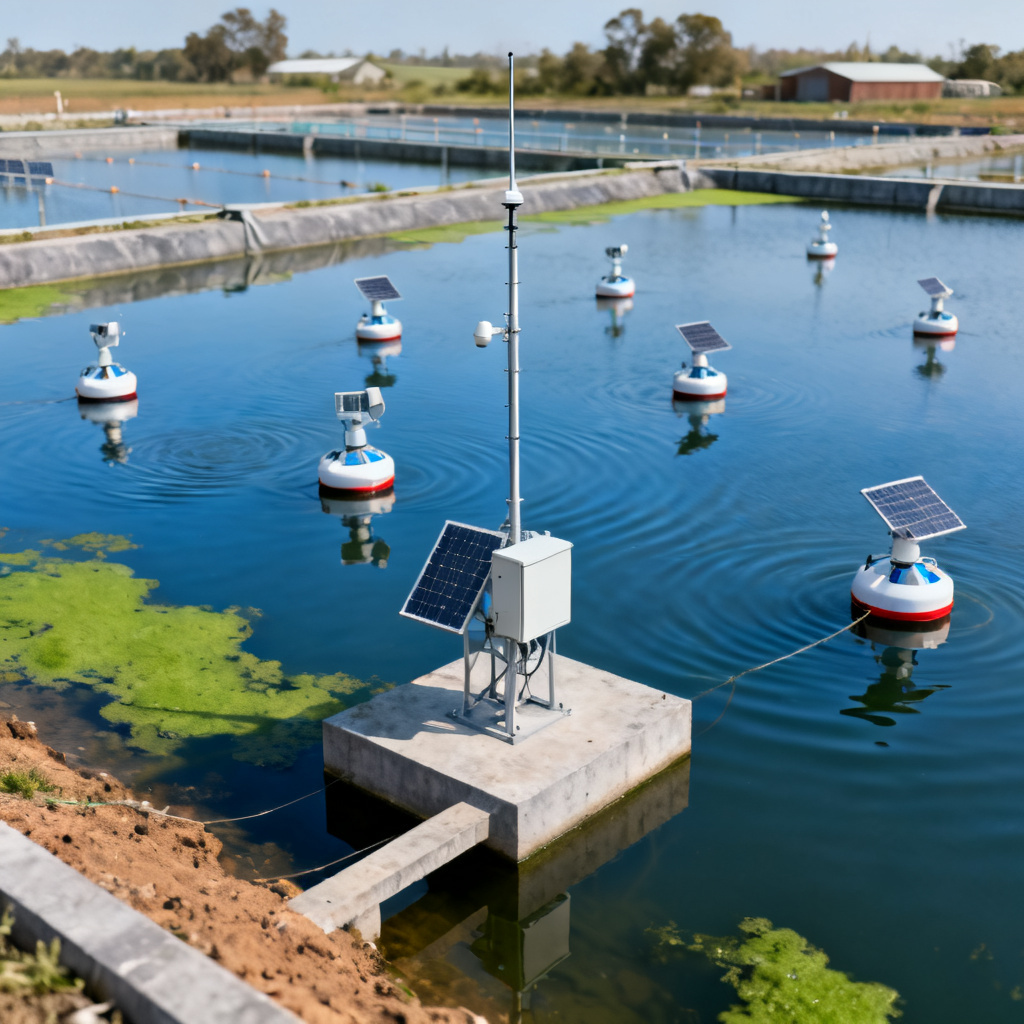
Recommendation: LoRaWAN. Low device cost, no subscription fees, and sufficient range (1–2 km) for a compact farm. A single gateway can cover all ponds. Battery life of 3–5 years reduces maintenance.
Scenario B: Large-Scale Offshore Cage Farm (10+ cages, 10–50 ha)
Recommendation: NB-IoT. Deep water penetration (3–5m) ensures reliable communication from submerged sensors. Cellular coverage is often available near coastal areas. Real-time latency allows immediate aeration activation.
Scenario C: Indoor RAS Facility (Concrete tanks, multiple floors)
Recommendation: NB-IoT. Superior signal penetration through concrete and steel. NB-IoT can communicate from sensors inside tanks located in basements or shielded rooms where LoRaWAN may fail.
Scenario D: Mixed Deployment (Ponds + RAS + Remote Sites)
Recommendation: Hybrid LoRaWAN + NB-IoT. Use LoRaWAN for ponds (cost-effective) and NB-IoT for indoor RAS (reliability). A unified dashboard (e.g., ThingsBoard or AWS IoT) can aggregate data from both networks.
Technical Challenges and Mitigations for LoRaWAN vs. NB-IoT for Aquaculture DO Monitoring
Interference in Unlicensed Spectrum (LoRaWAN)
Challenge: ISM bands are crowded (Wi-Fi, Bluetooth, Zigbee). In urban areas, packet collisions may occur. Mitigation: Use ADR to lower data rate (increase range). Implement frequency hopping (LoRaWAN default). Deploy multiple gateways for redundancy.
Battery Drain in NB-IoT with Frequent Transmissions
Challenge: High power consumption during network attach and synchronization. Mitigation: Use PSM with long sleep intervals (e.g., 24 hours). For frequent readings (every 10 min), consider a solar-powered sensor with a rechargeable battery.
Gateway Dependency (LoRaWAN)
Challenge: Single point of failure if the gateway goes offline. Mitigation: Deploy redundant gateways. Use a cellular backup gateway (e.g., 4G) for remote sites.
Carrier Coverage Gaps (NB-IoT)
Challenge: NB-IoT is not available in all rural/coastal areas. Mitigation: Check carrier coverage maps before deployment. Use a multi-band NB-IoT module. Consider a fallback to LTE-M or LoRaWAN.
Future Trends and Ecosystem Evolution for LoRaWAN vs. NB-IoT for Aquaculture DO Monitoring
LoRaWAN Enhancements
LoRaWAN 1.1 improves roaming and multi-tenant support. TS-011 (Relay) extends range by using intermediate nodes. LoRaWAN with MIMO is emerging research on multiple antennas for better penetration.
NB-IoT Evolution
NB-IoT Release 16 reduces power consumption (eDRX improvements). NB-IoT Release 17 supports non-terrestrial networks (satellite backhaul) for remote ocean aquaculture. 5G mMTC will integrate with future massive Machine-Type Communications for ultra-dense sensor networks.
Convergence
Dual-Mode Modules from manufacturers like Semtech and Quectel now support both LoRaWAN and NB-IoT, allowing dynamic switching based on signal strength or cost.
Decision Framework: LoRaWAN vs. NB-IoT for Aquaculture DO Monitoring
| If your priority is… | Choose… |
|---|---|
| Lowest per-device cost (100+ sensors) | LoRaWAN |
| Deep water penetration (>3m) | NB-IoT |
| No recurring subscription fees | LoRaWAN |
| Real-time control (<1 second latency) | NB-IoT |
| Indoor/underground deployment | NB-IoT |
| Large, open pond farm (2–10 km) | LoRaWAN |
| Mobile sensors (buoys, boats) | NB-IoT |
| Small deployment (1–10 sensors) | NB-IoT (no gateway cost) |
| Long battery life (>5 years) | LoRaWAN |