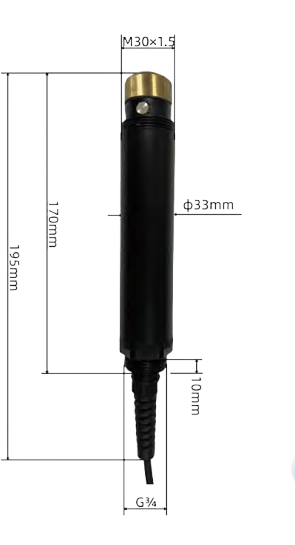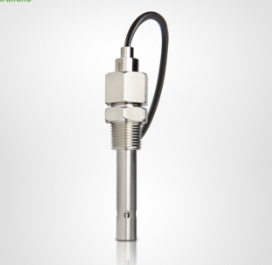
Dissolved Oxygen Sensor Types: Industrial Selection & Application Guide
Dissolved Oxygen Sensor Types are critical for accurate water quality measurement across industrial, environmental, and aquaculture applications. Measured in mg/L, ppm, or % saturation, the right Dissolved Oxygen Sensor Types directly impacts regulatory compliance and operational efficiency.
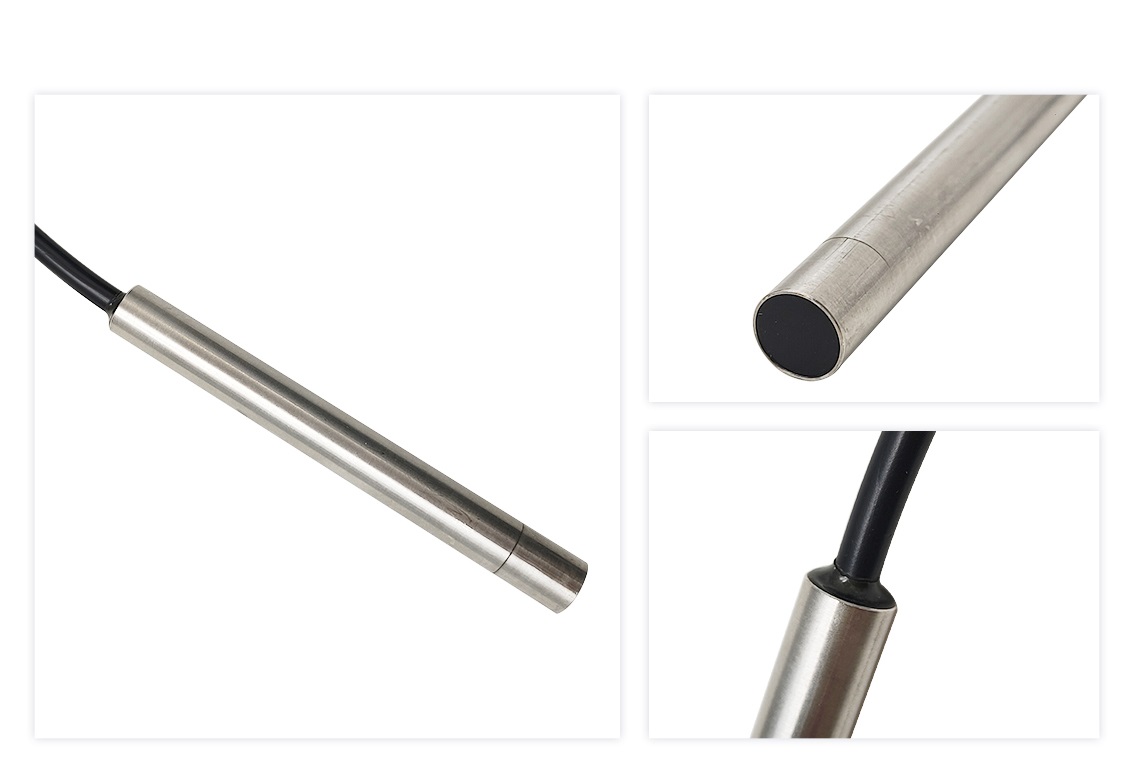
Introduction: Dissolved Oxygen Sensor Definition & Measurement Units
A dissolved oxygen sensor is an analytical instrument that measures the concentration of free oxygen molecules dissolved in water or other liquids. Measured in mg/L, ppm, or % saturation, the right Dissolved Oxygen Sensor Types directly impacts regulatory compliance and operational efficiency。
Selecting the wrong Dissolved Oxygen Sensor Types can lead to measurement drift, non-compliance with EPA/EU standards, unplanned downtime, and increased costs. This guide breaks down every DO sensor type, its principles, advantages, limitations, and ideal applications to support informed selection decisions.
What Is Dissolved Oxygen (DO) & Why Accurate Measurement Matters
Dissolved Oxygen Sensor Types rely on measuring free oxygen molecules in water, whose solubility varies with temperature, salinity, and pressure—key for calibration accuracy. The solubility relationship follows Henry’s Law, where gas concentration is proportional to partial pressure at equilibrium.
Accurate measurement with the right Dissolved Oxygen Sensor Types is non-negotiable for:
- Regulatory Compliance: Wastewater discharges and environmental monitoring require DO reporting per global standards. EPA Method 360.1 and ASTM D888-09 define approved measurement procedures for wastewater compliance reporting.
- Industrial Process Control: Boiler feed water and pharmaceutical production need ultra-precise low-ppb DO measurement from reliable Dissolved Oxygen Sensor Types to prevent pitting corrosion and ensure biological efficiency.
- Aquaculture Monitoring: DO levels impact fish survival, making the right dissolved oxygen sensor for aquaculture critical for farming operations. Threshold levels below 4 mg/L can result in hypoxia, stunted growth, and even mortality.
- Environmental Research: Long-term ecosystem monitoring depends on consistent data from appropriate Dissolved Oxygen Sensor Types.
Minor errors from poor Dissolved Oxygen Sensor Types selection can lead to fines, product recalls, or invalid research data—making sensor choice a critical project decision.
For regulatory details, explore our global dissolved oxygen sensor regulatory compliance guide.
Core Dissolved Oxygen Measurement Technologies: An Overview of DO Measurement Methods
Dissolved Oxygen Sensor Types fall into in-situ industrial sensors (real-time/portable) and laboratory reference methods (validation/calibration). The three common technologies for DO measurement are polarographic, galvanic, and optical.
The Clark polarographic electrode (1956) is the foundation of electrochemical Dissolved Oxygen Sensor Types, while optical sensors use fluorescence quenching—preferred for low-maintenance long-term monitoring. Traditional DO measurement methods like Winkler titration remain the gold standard for validation.
This guide covers all commercial Dissolved Oxygen Sensor Types:
- Electrochemical DO Sensors: Galvanic, polarographic, and pulsed polarographic types
- Optical (Luminescent) DO Sensors: Fluorescence lifetime/intensity measurement types
- Laboratory Reference Methods: Winkler titration and colorimetric measurement
Clark-Type Electrode — The original polarographic Dissolved Oxygen Sensor Types, invented in 1956, uses external voltage for redox reactions, forming the basis of modern electrochemical sensors.
Electrochemical Dissolved Oxygen Sensor Types: Galvanic vs Polarographic vs Pulsed Polarographic
Electrochemical Dissolved Oxygen Sensor Types are the most widely used for portable/industrial/field measurement, with 70+ years of validated performance. All operate on oxygen diffusion through a membrane to drive redox reactions, generating current proportional to DO concentration. Electrochemical sensors require periodic membrane replacement and electrolyte replenishment.
Below is a breakdown of each electrochemical Dissolved Oxygen Sensor Types subtype, including principles, advantages, limitations, and best practices.
3.1 Galvanic (Self-Polarizing) Dissolved Oxygen Sensors
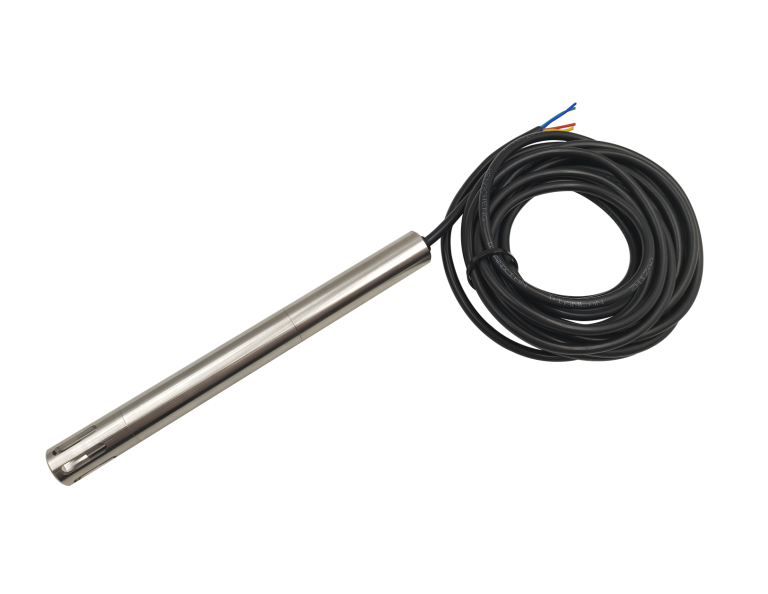
Galvanic Dissolved Oxygen Sensor Types consist of an inert noble metal cathode (gold/platinum) and active metal anode (lead/zinc/cadmium) in buffered electrolyte, separated by a PTFE membrane. The lead anode is slowly consumed during operation, converting to lead oxide.
Internal structure of a galvanic (self-polarizing) Dissolved Oxygen Sensor Types
Working Principle of Galvanic DO Sensors
Galvanic Dissolved Oxygen Sensor Types generate their own electrical potential via spontaneous redox reactions, no external voltage or warm-up time needed. A galvanic electrode produces its own current, with a silver or gold cathode and a lead/zinc anode.
- Oxygen diffuses through the membrane into the fill solution.
- At the cathode: O₂ + 2H₂O + 4e⁻ → 4OH⁻
- At the anode: 2Pb + 4OH⁻ → 2PbO + 2H₂O + 4e⁻
- Current magnitude is proportional to DO concentration—enabling precise measurement with these Dissolved Oxygen Sensor Types.
Core Advantages of Galvanic DO Sensors
- Instant readiness: Ideal for portable spot testing with these Dissolved Oxygen Sensor Types.
- Low power consumption: Suitable for battery-powered remote monitoring.
- Simple operation: Minimal setup for basic measurements.
- Lower upfront cost: More affordable than optical Dissolved Oxygen Sensor Types.
- Fast response time: T90 as low as 20 seconds—faster than optical types.
Key Limitations of Galvanic DO Sensors
- Anode consumption: Limits lifespan (1-2 years) of these Dissolved Oxygen Sensor Types.
- Flow/stirring dependence: Requires constant sample flow to avoid oxygen depletion.
- Higher calibration frequency: Prone to drift, needing 1-2 week calibration cycles.
- Poor chemical resistance: Vulnerable to H₂S, acids, bases, and heavy metals.
- Membrane fragility: Thin PTFE membrane needs regular inspection/replacement.
3.2 Polarographic (Clark-Type) Dissolved Oxygen Sensors
Polarographic Dissolved Oxygen Sensor Types are the original Clark-type electrode (1956), the industry reference for laboratory/high-precision industrial measurements. Structure matches galvanic types, with noble metal cathode and silver anode in electrolyte, separated by a membrane—the silver anode is not consumed during operation.
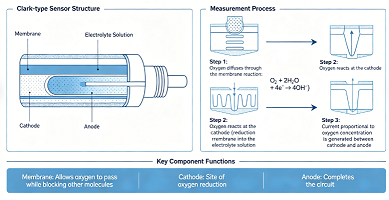
Working principle diagram of a polarographic (Clark-type) Dissolved Oxygen Sensor Types
Working Principle of Polarographic DO Sensors
Polarographic Dissolved Oxygen Sensor Types require an external polarizing voltage (0.8V) to drive redox reactions—unlike galvanic types. Polarographic electrodes have a silver anode surrounded by a gold cathode, with power supplied by the DO meter.
- Applied voltage makes the cathode negative relative to the anode, driving oxygen reduction and silver oxidation.
- Oxygen diffuses through the membrane, generating current proportional to DO concentration.
- 5-15 minutes warm-up is mandatory for stable measurements with these Dissolved Oxygen Sensor Types.
Core Advantages of Polarographic DO Sensors
- Superior precision: Higher accuracy than galvanic Dissolved Oxygen Sensor Types for laboratory use.
- Longer anode lifespan: Silver anode is not consumed during operation.
- Better low-concentration performance: Reliable for low DO measurement below 0.5 mg/L and ppb levels.
- Mature technology: 70+ years of use, approved for compliance reporting. EPA dissolved oxygen sensor approval includes polarographic methods for wastewater and drinking water compliance.
Key Limitations of Polarographic DO Sensors
- Mandatory warm-up time: Unsuitable for emergency spot testing with these Dissolved Oxygen Sensor Types.
- Flow/stirring dependence: Requires continuous sample flow/stirring.
- Higher power consumption: Needs constant external voltage, poor for battery-powered monitoring.
- Chemical interference vulnerability: Susceptible to H₂S and chlorine.
- Regular maintenance: Electrolyte/membrane replacement every 3-6 months.
3.3 Pulsed Polarographic Dissolved Oxygen Sensors
Pulsed polarographic Dissolved Oxygen Sensor Types are advanced Clark-type sensors, addressing flow dependence and high power consumption of standard electrochemical types.
Working Principle of Pulsed Polarographic DO Sensors
These Dissolved Oxygen Sensor Types apply intermittent voltage pulses (instead of constant voltage), allowing oxygen re-saturation at the membrane surface—eliminating flow dependence.
Core Advantages of Pulsed Polarographic DO Sensors
- No flow/stirring dependence: Ideal for stagnant/low-flow water measurements.
- Reduced power consumption: Suitable for remote battery-powered monitoring.
- Longer lifespan: Reduced electrode polarization extends sensor life.
- Retained precision: Maintains accuracy of traditional polarographic types.
Key Limitations of Pulsed Polarographic DO Sensors
- Higher upfront cost than standard galvanic/polarographic Dissolved Oxygen Sensor Types.
- Slightly slower response time than galvanic types.
- Less widely available than traditional electrochemical types.
3.4 Galvanic vs. Polarographic DO Sensor Types: Head-to-Head Breakdown
| Parameter | Galvanic DO Sensor Types | Polarographic DO Sensor Types |
|---|---|---|
| Core Operating Principle | Spontaneous redox reaction, self-polarizing | Externally applied voltage drives redox reaction |
| Required Warm-Up Time | None | 5-15 minutes |
| Anode Material | Active metal (lead, zinc) | Inert silver |
| Anode Consumption | Continuous consumption limits lifespan | No anode consumption |
| Power Consumption | Very low | Higher |
| Typical T90 Response Time | 20-30 seconds | 30-45 seconds |
| Calibration Frequency | Every 1-2 weeks | Every 1-2 weeks |
| Ideal Use Cases | Portable spot testing, battery-powered monitoring | Laboratory analysis, high-precision industrial control |
For a comprehensive comparison, see our guide on Optical vs. Electrochemical DO Sensors for Aquaculture and explore our dissolved oxygen sensors membrane type collection for more details.
Optical Dissolved Oxygen Sensor Types: Fluorescence Quenching Technology & Industrial Applications
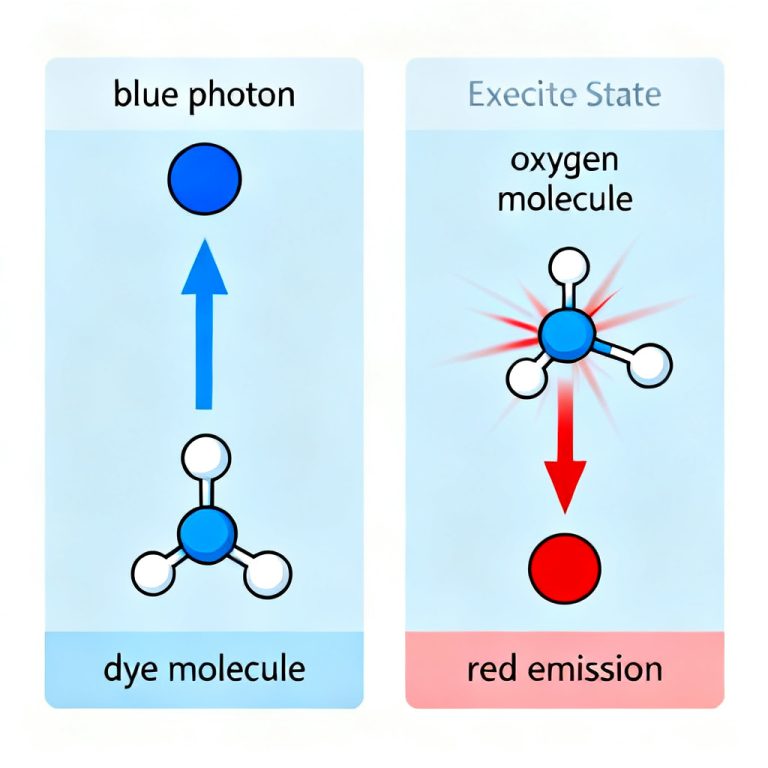
Optical Dissolved Oxygen Sensor Types are the industry standard for low-maintenance long-term monitoring, with superior chemical resistance vs electrochemical types. Luminescent dissolved oxygen sensors operate on the principle of fluorescence quenching—measuring oxygen concentration through the reduction in fluorescence intensity and lifetime.
Core Structure & Working Principle of Optical DO Sensors
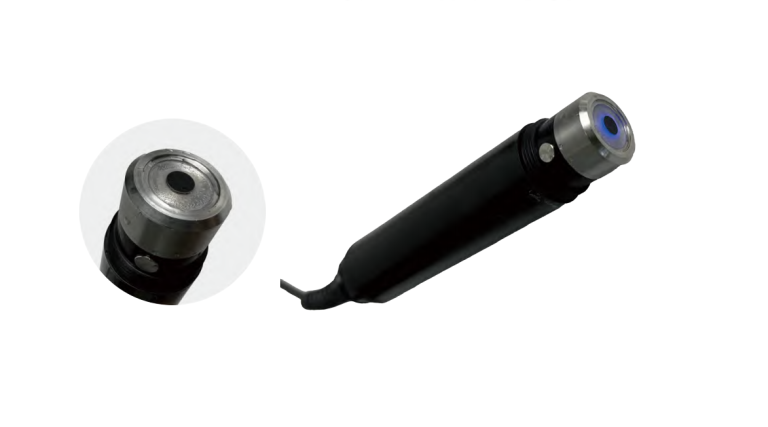
Optical Dissolved Oxygen Sensor Types include a luminescent dye-coated cap (ruthenium-based), blue LED, red reference LED, photodetector, and signal processor—operating on fluorescence quenching. An optical dissolved oxygen sensor uses fluorescence technology for oxygen measurement, offering benefits such as low drift, fast response time, and less maintenance compared to electrochemical sensors.
Core structure of an optical (fluorescence quenching) Dissolved Oxygen Sensor Types
- Blue LED illuminates the dye, causing red fluorescent emission.
- Oxygen quenches fluorescence—intensity/lifetime decreases with DO concentration.
- Red reference LED eliminates interference; fluorescence lifetime (industry standard) is calculated via the Stern-Volmer equation: τ₀/τ = 1 + K_SV [O₂].
Two measurement methods for Optical Dissolved Oxygen Sensor Types:
- Fluorescence lifetime: Industry standard, low drift/interference.
- Fluorescence intensity: Lower-cost, prone to drift (rare in industrial types).
Explore our advanced optical measurement solutions: Optical Dissolved Oxygen Sensor and Luminescent Dissolved Oxygen Sensor for precision monitoring in demanding environments.
Core Advantages of Optical DO Sensor Types
- No flow/stirring dependence: No oxygen consumption—key advantage over electrochemical Dissolved Oxygen Sensor Types.
- No warm-up time: Instant readiness for measurement.
- Low calibration frequency: Every 3-6 months (vs 1-2 weeks for electrochemical types).
- Superior chemical resistance: Immune to H₂S, acids, bases (damaging to electrochemical types).
- Low maintenance: No electrolyte replacement; optical cap lifespan 12 months.
- Better low-DO performance: Accurate for low DO measurement below 0.5 mg/L and trace ppb levels (ideal for wastewater and boiler feed water).
- Long-term monitoring suitability: Minimal maintenance for remote applications.
Key Limitations of Optical DO Sensor Types
- Higher upfront cost than electrochemical Dissolved Oxygen Sensor Types.
- Slower response time: T90 40-60 seconds (2-4x slower than galvanic types).
- Higher power consumption than galvanic types: Needs power for LED/photodetector.
- Photobleaching risk: Dye degrades over time (cap replacement every 12-24 months).
- Fluorescent compound interference: Minor impact from organic dyes/humic substances.
- Poor high-temperature performance: Dye degrades above 60°C.
Laboratory Reference DO Measurement Methods: Winkler Titration & Colorimetric DO Measurement
Laboratory reference methods validate/calibrate industrial Dissolved Oxygen Sensor Types and support regulatory compliance reporting. DO measurement methods approved by EPA include Winkler titration (Method 360.2), membrane electrode (Method 360.1), and luminescent DO methods.
5.1 Winkler Titration Method: The Gold Standard for DO Validation
Winkler titration (1888) is the global reference standard for DO measurement, validating Dissolved Oxygen Sensor Types data for EPA/ISO/EU compliance. EPA Method 360.2 specifies the modified Winkler procedure for determining dissolved oxygen in wastewaters and streams.
Laboratory Winkler titration method for DO measurement and Dissolved Oxygen Sensor Types calibration
Working Principle of Winkler Titration
This method fixes DO in the sample into manganese oxide precipitate, then acidifies and titrates with sodium thiosulfate to determine exact concentration—gold standard for validating Dissolved Oxygen Sensor Types. The sample is treated with manganous sulfate, potassium hydroxide and potassium iodide, and finally sulfuric acid.
Core Advantages of Winkler Titration
- Highest accuracy: ±0.02 mg/L (gold standard for validating Dissolved Oxygen Sensor Types).
- No drift/interference: Unaffected by issues plaguing in-situ sensors.
- Universal regulatory approval: Accepted for all compliance reporting.
Key Limitations of Winkler Titration
- Time-consuming: 30-60 minutes per sample (laboratory-only).
- Not field-usable: Requires lab equipment/trained personnel.
- Sample preservation challenges: Immediate on-site fixing needed.
- Not for continuous monitoring: Only discrete sample analysis.
5.2 Colorimetric DO Measurement: Field-Validating DO Sensors
Colorimetric DO measurement (indigo carmine method) is a lab/field method using color-changing reagents to validate Dissolved Oxygen Sensor Types data.
Working Principle of Colorimetric DO Measurement
Reagent reacts with DO to produce a blue complex—color intensity proportional to DO concentration. Measured via spectrophotometer (lab) or color comparator (field) to validate Dissolved Oxygen Sensor Types.
Core Advantages of Colorimetric DO Measurement
- Simple operation: Minimal training for field validation of Dissolved Oxygen Sensor Types.
- No power required: Suitable for remote field use.
- Immune to electrical interference: No overlap with electrochemical sensor issues.
Key Limitations of Colorimetric DO Measurement
- Narrow range: Accurate only for 0-10 mg/L DO (limits validation of some Dissolved Oxygen Sensor Types).
- Lower precision: Less accurate than titration/sensor-based methods.
- Single-use reagents: Higher cost per test for large sample volumes.
- Turbidity/color interference: Skews readings for colored/turbid samples.
Full Cross-Type Comparison: All Dissolved Oxygen Sensor Types Side-by-Side
This table consolidates critical parameters for all industrial DO sensor technologies to simplify selection.
Side-by-side comparison of galvanic, polarographic, pulsed polarographic, and optical Dissolved Oxygen Sensor Types
| Parameter | Galvanic DO Sensor Types | Polarographic DO Sensor Types | Pulsed Polarographic DO Sensor Types | Optical DO Sensor Types |
|---|---|---|---|---|
| Core Working Principle | Spontaneous redox reaction | Externally polarized Clark-type electrode | Intermittent pulsed voltage | Fluorescence quenching |
| Required Warm-Up Time | None | 5-15 minutes | None | None |
| Flow/Stirring Dependence | High | High | None | None |
| Typical T90 Response Time | 20-30 seconds | 30-45 seconds | 30-40 seconds | 40-60 seconds |
| Typical Measurement Accuracy | ±0.1 mg/L | ±0.05 mg/L | ±0.05 mg/L | ±0.03 mg/L |
| Calibration Frequency | Every 1-2 weeks | Every 1-2 weeks | Every 2-4 weeks | Every 3-6 months |
| Primary Consumable | Membrane/electrolyte | Membrane/electrolyte | Membrane/electrolyte | Optical cap |
| Consumable Lifespan | 6 months | 3-6 months | 6-12 months | 12 months |
| Typical Sensor Lifespan | 1-2 years | 2-5 years | 3-5 years | 3-5 years |
| Power Consumption | Very low | High | Low | Medium |
| Chemical Interference Resistance | Poor | Poor | Moderate | Excellent |
| Upfront Purchase Cost | Low | Low-Medium | Medium-High | High |
| Typical Warranty Period | 6 months | 12 months | 12 months | 12-24 months |
| Ideal Applications | Portable spot testing, battery monitoring | Laboratory analysis, industrial control | Groundwater monitoring, stagnant water | Long-term industrial/environmental monitoring |
Frequently Asked Questions (FAQs)
1. What are the most reliable Dissolved Oxygen Sensor Types for aquaculture?
How to choose right dissolved oxygen sensor for aquaculture? Galvanic Dissolved Oxygen Sensor Types are ideal for portable spot testing in aquaculture, while optical Dissolved Oxygen Sensor Types are preferred for long-term continuous monitoring due to low maintenance and no flow dependence. DO sensors for aquaculture must provide accurate readings in high-salinity and variable-temperature environments.
2. How often should I calibrate different Dissolved Oxygen Sensor Types?
Galvanic and polarographic Dissolved Oxygen Sensor Types require calibration every 1-2 weeks, pulsed polarographic types every 2-4 weeks, and optical Dissolved Oxygen Sensor Types only every 3-6 months.
3. Which Dissolved Oxygen Sensor Types are resistant to hydrogen sulfide (H₂S) in wastewater?
Optical Dissolved Oxygen Sensor Types are immune to H₂S interference, while electrochemical Dissolved Oxygen Sensor Types (galvanic/polarographic) are highly vulnerable to irreversible damage from H₂S.
4. What Dissolved Oxygen Sensor Types are approved for EPA compliance reporting?
Polarographic Dissolved Oxygen Sensor Types (Clark-type) and optical Dissolved Oxygen Sensor Types are EPA approved for wastewater compliance reporting, with Winkler titration (lab method) as the gold standard for validating sensor data.
5. What is the lifespan of different Dissolved Oxygen Sensor Types?
Galvanic Dissolved Oxygen Sensor Types have a 1-2 year lifespan, polarographic types 2-5 years, pulsed polarographic types 3-5 years, and optical Dissolved Oxygen Sensor Types 3-5 years (with annual optical cap replacement).
6. Can Dissolved Oxygen Sensor Types be used for high-temperature industrial applications?
Electrochemical Dissolved Oxygen Sensor Types perform better at high temperatures (up to 80°C) than optical types, which degrade above 60°C due to luminescent dye breakdown.
{ “@context”: “https://schema.org”, “@type”: “FAQPage”, “mainEntity”: [ { “@type”: “Question”, “name”: “What are the most reliable Dissolved Oxygen Sensor Types for aquaculture?”, “acceptedAnswer”: { “@type”: “Answer”, “text”: “Galvanic Dissolved Oxygen Sensor Types are ideal for portable spot testing in aquaculture, while optical Dissolved Oxygen Sensor Types are preferred for long-term continuous monitoring due to low maintenance and no flow dependence.” } }, { “@type”: “Question”, “name”: “How often should I calibrate different Dissolved Oxygen Sensor Types?”, “acceptedAnswer”: { “@type”: “Answer”, “text”: “Galvanic and polarographic Dissolved Oxygen Sensor Types require calibration every 1-2 weeks, pulsed polarographic types every 2-4 weeks, and optical Dissolved Oxygen Sensor Types only every 3-6 months.” } }, { “@type”: “Question”, “name”: “Which Dissolved Oxygen Sensor Types are resistant to hydrogen sulfide (H₂S) in wastewater?”, “acceptedAnswer”: { “@type”: “Answer”, “text”: “Optical Dissolved Oxygen Sensor Types are immune to H₂S interference, while electrochemical Dissolved Oxygen Sensor Types (galvanic/polarographic) are highly vulnerable to irreversible damage from H₂S.” } }, { “@type”: “Question”, “name”: “What Dissolved Oxygen Sensor Types are approved for EPA compliance reporting?”, “acceptedAnswer”: { “@type”: “Answer”, “text”: “Polarographic Dissolved Oxygen Sensor Types (Clark-type) and optical Dissolved Oxygen Sensor Types are EPA-approved, with Winkler titration (lab method) as the gold standard for validating sensor data.” } }, { “@type”: “Question”, “name”: “What is the lifespan of different Dissolved Oxygen Sensor Types?”, “acceptedAnswer”: { “@type”: “Answer”, “text”: “Galvanic Dissolved Oxygen Sensor Types have a 1-2 year lifespan, polarographic types 2-5 years, pulsed polarographic types 3-5 years, and optical Dissolved Oxygen Sensor Types 3-5 years (with annual optical cap replacement).” } } ] }