Understanding the true dissolved oxygen sensor cost breakdown is critical for industrial buyers. While the initial purchase price of a dissolved oxygen sensor often dictates budget decisions, the long-term total cost of ownership (TCO) — including maintenance, calibration, consumables, and downtime — can significantly exceed the upfront investment.
This comprehensive guide analyzes both initial and long-term expenses across galvanic, polarographic, and optical technologies, empowering you to make a data-driven purchase for wastewater, aquaculture, or pharmaceutical applications.
Dissolved Oxygen Sensor Initial Cost Components
Sensor Type and Technology
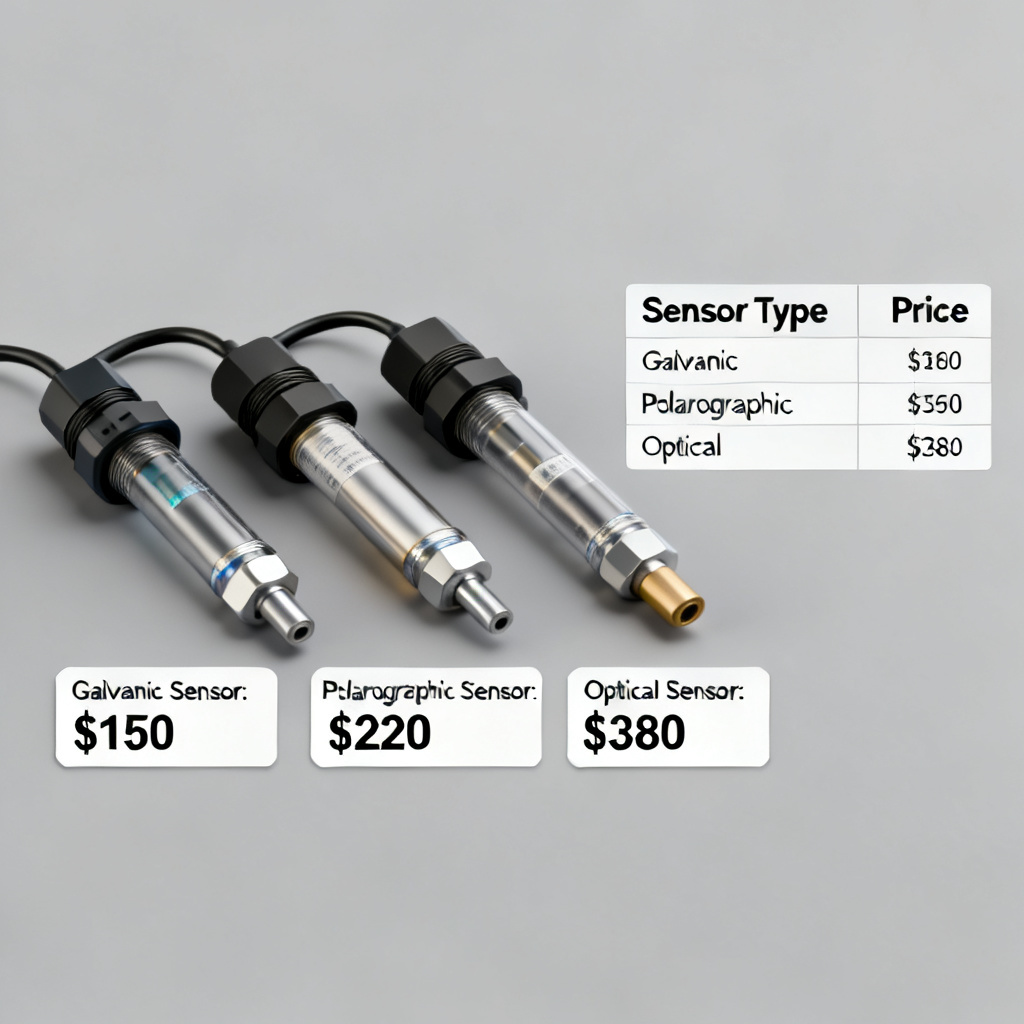
The initial cost of a dissolved oxygen sensor varies significantly by technology. Galvanic (electrochemical) sensors are the most affordable upfront, typically ranging from $150 to $600 per sensor. They use a lead anode and silver cathode, with a simple design that reduces manufacturing cost.
However, they require periodic replacement of the membrane cap and electrolyte solution. Polarographic (Clark-Type) sensors, priced between $300 and $1,200, offer better accuracy and stability than galvanic types. They use a platinum cathode and silver anode, requiring a polarizing voltage. Initial cost includes the sensor body, membrane, and electrolyte refill kit. Optical (luminescent) sensors represent the highest initial investment, ranging from $800 to $3,000 per sensor. They use a luminescent dye and LED light source, eliminating the need for membrane replacement and electrolyte refills. The higher upfront cost is offset by lower long-term maintenance.
Transmitter/Controller and Cabling
For most industrial installations, the dissolved oxygen sensor requires a compatible transmitter or controller. Basic controllers range from $200 to $800 for simple 4-20 mA or RS485 output models. Advanced controllers range from $800 to $2,500 for models with data logging, PID control, and multi-parameter capabilities. Cables and connectors cost $50 to $200, depending on length and shielding requirements. Specialized cables for submersible or high-temperature applications cost more.
Installation and Commissioning
Standard installation costs $100 to $500 for simple inline or submersion mounting, including labor and basic fittings. Complex installations cost $500 to $2,000 for systems requiring flow cells, automatic cleaning mechanisms, or integration with existing SCADA systems. Calibration and initial setup cost $100 to $300 for professional calibration using certified standards (e.g., water-saturated air or Winkler titration). Many manufacturers offer free initial calibration with purchase.
Accessories and Spare Parts
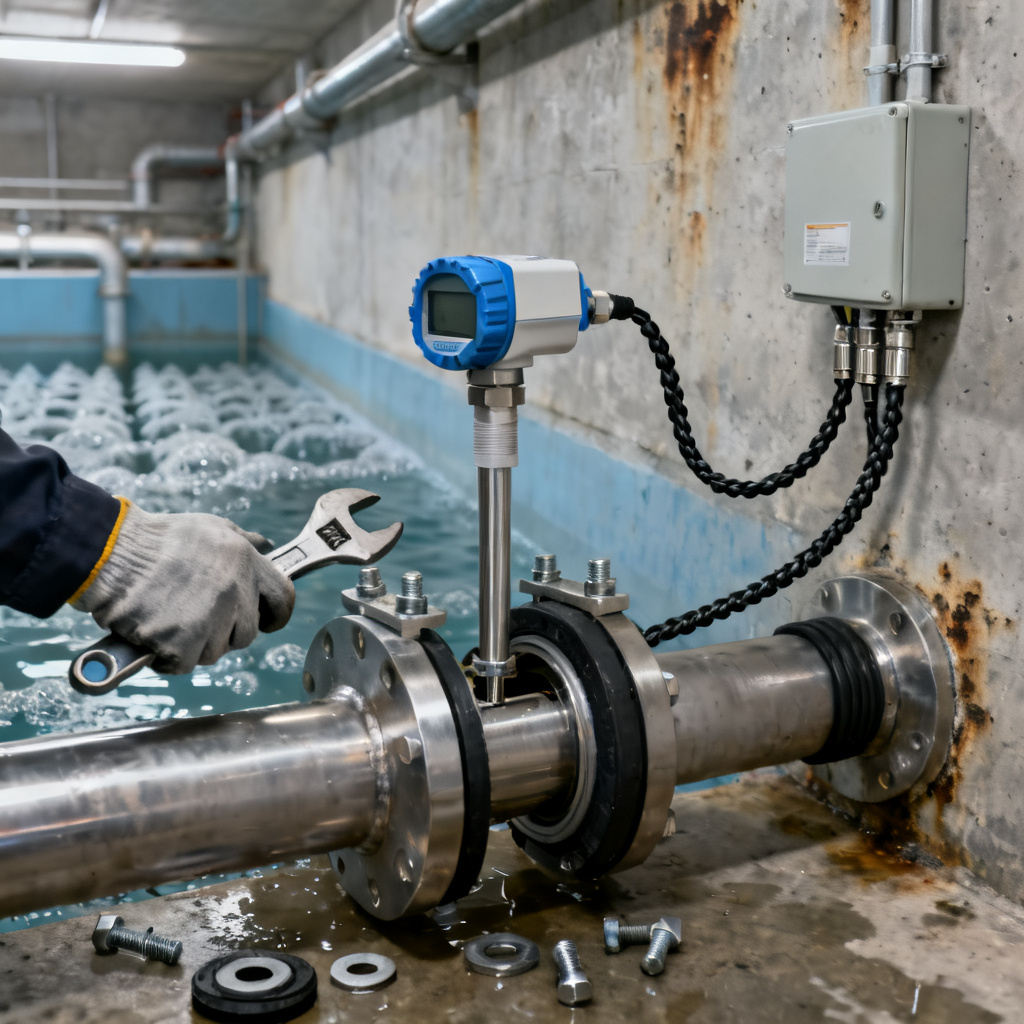
Membrane caps for galvanic/polarographic sensors cost $20 to $60 each, typically sold in packs of 5–10. Electrolyte solution costs $15 to $40 per bottle, sufficient for 5–10 refills. Optical sensor caps for luminescent sensors cost $80 to $200 each, with a lifespan of 1–2 years. Cleaning tools and wipers cost $50 to $150 for automatic cleaning systems, essential for fouling-prone environments like wastewater.
Dissolved Oxygen Sensors Market Insights for B2B Buyers
Before diving into the total cost of ownership (TCO), understanding the current global dissolved oxygen sensors market layout helps buyers avoid obsolete technology:
The Technology Shift: While electrochemical sensors (Galvanic and Polarographic) still hold a volume share due to low upfront costs, the market is aggressively pivoting toward Optical (Luminescent) sensors: due to their drift-free stability and lower maintenance overheads, the market seem a trends toward, this could be seem if you research for dissolved oxygen meter ysi grow in the market.
According to market tracking data from industry leaders like Hach, YSI (Xylem), Mettler Toledo, and Endress+Hauser, the shift toward smart sensors with predictive analytics is the leading trend in 2026.
Market Momentum: Driven by wastewater management, bio-pharmaceutical sterilization (CIP/SIP), and smart aquaculture, the global DO sensor market has expanded significantly, with optical DO sensing technologies witnessing a stellar CAGR of over 10%.
The key driver for the dissolved oxygen sensors market in 2026 is the stringent global environmental regulations on wastewater aeration control and the high maintenance cost of traditional galvanic cells."
Dissolved Oxygen Sensor Long-Term Cost Considerations
Maintenance and Consumables
Long-term costs are dominated by consumables and labor. Galvanic sensors require membrane cap replacement every 3–6 months ($20–$60) and electrolyte refill every 2–4 months ($15–$40). Annual consumable cost: $100–$300 per sensor. Polarographic sensors are similar to galvanic, but with more frequent calibration (weekly to monthly) and membrane replacement every 4–8 months. Annual cost: $120–$350. Optical sensors only require sensor cap replacement every 1–2 years ($80–$200). No electrolyte or membrane changes. Annual cost: $40–$200, significantly lower than electrochemical types. Labor: skilled technician time for calibration, cleaning, and replacement averages $50–$150 per hour. For a typical dissolved oxygen sensor, annual labor cost is $200–$600, depending on frequency.
Calibration Frequency and Standards
Electrochemical sensors require calibration every 1–4 weeks, depending on application. Each calibration uses certified standards (e.g., zero-oxygen solution, air-saturated water) costing $10–$30 per session. Optical sensors calibrate every 1–3 months, reducing labor and standard costs. Annual calibration cost: $50–$150, versus $150–$400 for electrochemical types. On-site vs. lab calibration: on-site calibration saves time but requires portable standards ($100–$500). Lab calibration reduces field labor but adds shipping costs ($20–$50 per unit).
Sensor Lifespan and Replacement
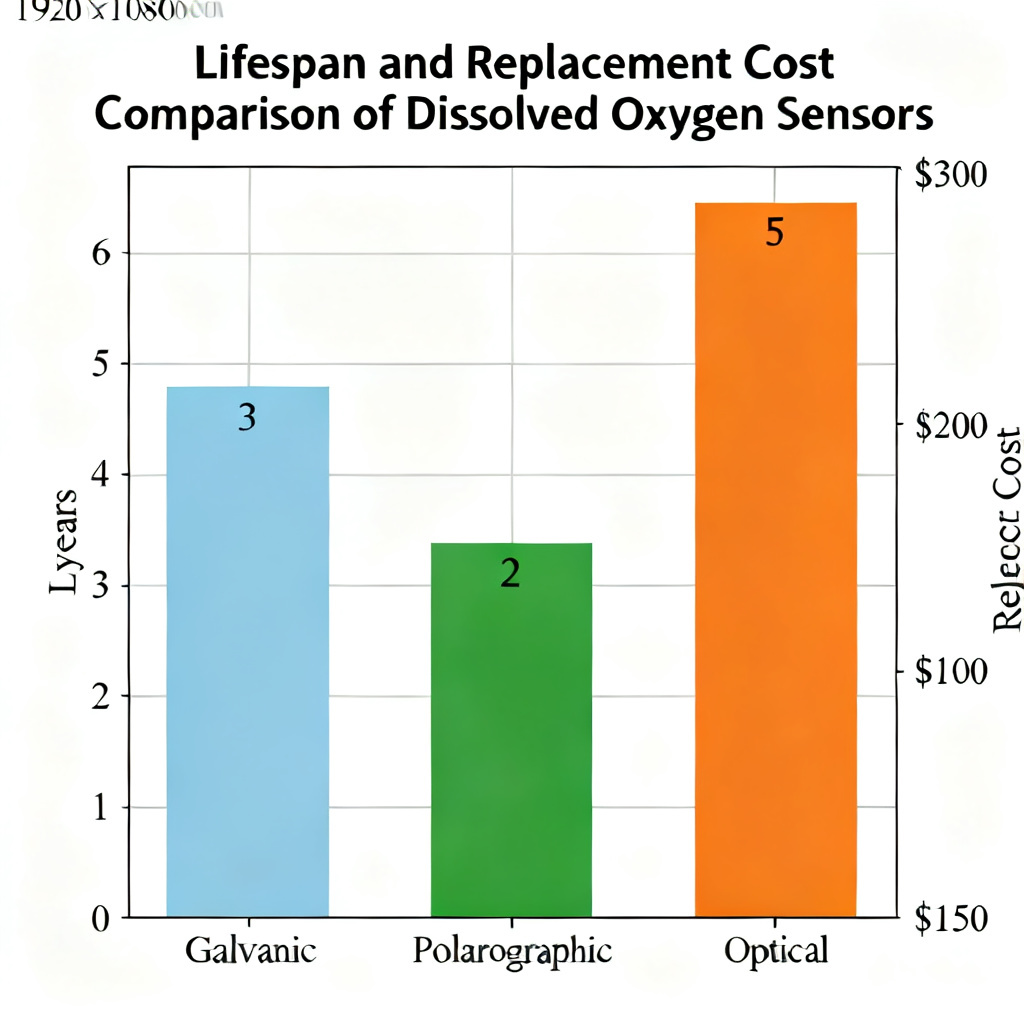
Galvanic sensors have a typical lifespan of 1–2 years before the lead anode is exhausted. Replacement cost: $150–$600. Polarographic sensors last 2–3 years, with gradual drift requiring more frequent recalibration. Replacement cost: $300–$1,200. Optical sensors last 3–5 years, with the luminescent dye degrading slowly. Replacement cost: $800–$3,000, but lower annualized cost due to longer life. Total replacement cost over 5 years: for a single dissolved oxygen sensor, galvanic systems may require 2–3 replacements ($300–$1,800), polarographic 1–2 replacements ($300–$2,400), and optical 1 replacement ($800–$3,000).
Downtime and Process Impact
Electrochemical sensors are more prone to drift and failure, causing process interruptions. Each failure can cost $500–$5,000 in lost production, especially in critical applications like bioreactors or effluent monitoring. Optical sensors offer higher reliability with fewer failures, reducing downtime. However, if a cap fails, replacement requires 1–2 hours of process pause. Preventive maintenance scheduling: optical sensors allow longer intervals between maintenance, reducing unplanned downtime by up to 50% compared to electrochemical types.
Energy and Operational Costs
Polarographic sensors require a constant polarizing voltage (0.6–0.8 V), consuming 0.1–0.5 W per sensor. For 100 sensors, annual energy cost: $50–$200. Galvanic sensors need no external power for the sensor itself, but the transmitter consumes 1–5 W. Annual energy cost: $10–$50 per system. Optical sensors require LED excitation, consuming 0.5–2 W per sensor. Annual energy cost: $20–$100 per sensor. Cleaning and air supply: some systems use compressed air for automatic cleaning, adding $100–$500 annually in compressed air costs.
Comparative Dissolved Oxygen Sensor Cost Analysis Over 5 Years
Total Cost of Ownership (TCO) Model
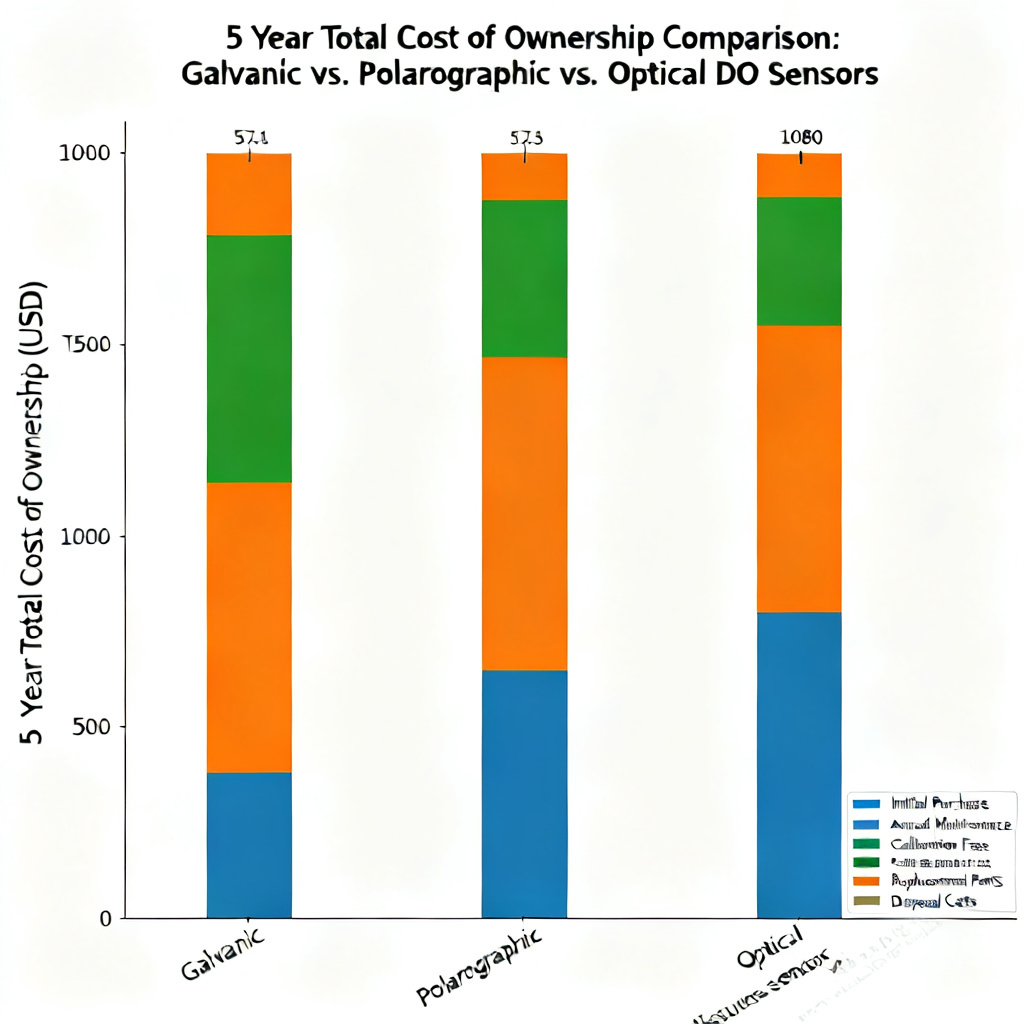
Based on industry data from leading manufacturers (e.g., YSI, Hach, Endress+Hauser), a 5-year TCO for a single dissolved oxygen sensor in a typical wastewater application is:
| Cost Component | Galvanic Sensor | Polarographic Sensor | Optical Sensor |
|---|---|---|---|
| Initial sensor | $300 | $600 | $1,500 |
| Transmitter & cabling | $400 | $500 | $600 |
| Installation & calibration | $200 | $300 | $250 |
| Year 1 total | $900 | $1,400 | $2,350 |
| Consumables (5 years) | $1,000 | $1,200 | $400 |
| Calibration (5 years) | $750 | $1,000 | $250 |
| Labor (5 years) | $1,500 | $2,000 | $800 |
| Replacement (5 years) | $600 (2 sensors) | $900 (1.5 sensors) | $1,500 (1 sensor) |
| Downtime costs (5 years) | $2,000 | $1,500 | $500 |
| Total 5-year cost | $6,750 | $8,000 | $5,800 |
| Annualized cost | $1,350 | $1,600 | $1,160 |
Note: Costs are estimates based on average market prices and typical maintenance schedules. Actual costs vary by application, environment, and supplier.
Break-Even Point
Optical sensors break even with galvanic sensors in 2–3 years due to lower consumable and labor costs. For high-accuracy applications (e.g., pharmaceutical, lab research), polarographic sensors may have lower initial cost but higher long-term risk of drift and downtime.
Factors That Influence Long-Term Dissolved Oxygen Sensor Costs
Application Environment
Clean water (e.g., drinking water, aquaculture): lower fouling, so electrochemical sensors last longer (2–3 years vs. 1–2 in wastewater). Optical sensors still have an advantage in stability. Wastewater and sludge: high fouling and chemical exposure accelerate membrane degradation. Optical sensors are more resilient, reducing replacement frequency. High temperature or pressure: electrochemical sensors degrade faster; optical sensors maintain accuracy but may require specialized caps. Sterile environments (e.g., bioreactors): optical sensors are preferred due to no electrolyte leakage risk and compatibility with SIP/CIP cycles.
Sensor Quality and Brand
Premium brands (YSI, Hach, Mettler Toledo): higher initial cost ($200–$500 more) but offer longer warranties (2–5 years), better technical support, and more reliable performance, reducing long-term costs. Budget brands: lower upfront cost but shorter lifespan, higher failure rates, and limited support. Over 5 years, total cost may be 20–30% higher than premium brands.
Integration with Automation Systems
Plug-and-play sensors with digital communication (Modbus, Profibus) reduce installation and calibration time, lowering labor costs by 10–20%. Analog sensors (4-20 mA) are cheaper initially but require manual configuration and are more prone to signal drift, increasing maintenance.
Dissolved Oxygen Sensor Cost-Saving Strategies
Choose the Right Technology for Your Application
For low-budget, short-term projects (e.g., temporary monitoring), galvanic sensors are cost-effective. For long-term, high-accuracy needs (e.g., regulatory compliance, process control), invest in optical sensors to minimize total cost.
Implement Preventive Maintenance
Schedule regular cleaning and calibration based on manufacturer recommendations (e.g., weekly for wastewater, monthly for clean water). Use automatic cleaning systems (e.g., air blast or wiper) to extend sensor life by 30–50% in fouling environments.
Buy in Bulk and Negotiate Contracts
Purchase sensor caps, electrolyte, and spare parts in bulk to reduce per-unit cost by 15–25%. Sign annual service contracts with manufacturers for discounted calibration and replacement labor.
Leverage Digital Monitoring and Predictive Analytics
Use smart sensors with self-diagnostics to predict failures before they cause downtime. Remote monitoring reduces on-site visits, saving labor costs by 20–40%.
Real-World Case Studies on Dissolved Oxygen Sensor Costs
Case Study 1: Wastewater Treatment Plant
Initial setup: 50 galvanic sensors at $300 each + transmitters ($20,000 total). Annual maintenance: $15,000 in consumables, $10,000 in labor, $5,000 in downtime. After switching to 50 optical sensors ($1,500 each + $25,000 transmitters): annual maintenance dropped to $5,000, labor to $4,000, downtime to $1,000. Payback period: 2.5 years.
Case Study 2: Pharmaceutical Bioreactor
Initial investment: 10 polarographic sensors at $800 each + $5,000 controllers. Annual cost: $3,000 in calibration, $2,000 in labor, $10,000 in batch losses due to drift. Switch to optical sensors: initial cost $2,000 each + $6,000 controllers. Annual calibration $500, labor $1,000, batch losses $2,000. Payback in 1.5 years.
FAQ: Dissolved Oxygen Sensor Cost Questions
What is the average initial cost of a dissolved oxygen sensor?
The initial cost of a dissolved oxygen sensor ranges from $150 for basic galvanic models to $3,000 for advanced optical sensors, depending on technology and features.
Which dissolved oxygen sensor dominates the high-growth market segment and has the lowest long-term cost?
ptical dissolved oxygen sensors dominate the high-growth market sectors (such as municipal wastewater and biotechnology). While their initial purchase price is higher ($800 – $3,000), they offer the lowest 5-year total cost of ownership (averaging $1,160/year) and reduce operational downtime by 50%.
How often do dissolved oxygen sensors need calibration?
Electrochemical dissolved oxygen sensors require calibration every 1–4 weeks, while optical sensors need calibration every 1–3 months, significantly reducing long-term labor costs.
Can I reduce dissolved oxygen sensor maintenance costs?
Yes, using optical technology, automatic cleaning systems, and bulk purchasing of consumables can reduce dissolved oxygen sensor maintenance costs by 20–30% annually.
What factors most affect dissolved oxygen sensor TCO?
Application environment (e.g., wastewater vs. clean water), sensor quality, calibration frequency, and downtime costs are the primary drivers of dissolved oxygen sensor TCO.
What are the primary drivers of the dissolved oxygen sensors market size expansion?
The market expansion is heavily driven by stringent environmental compliance, the rising adoption of IoT-based smart water quality monitoring, and the industrial shift from analog (4-20 mA) to digital smart protocols (like Modbus and Profibus) that offer predictive diagnostics.
2026 Industry Glossary & Market References
To provide clarity for international B2B buyers evaluating the dissolved oxygen sensors market, SensorMass complies with standard industrial and analytical definitions:
- Luminescence Quenching (Fluorescence Quenching): The foundational physical principle driving modern optical DO sensors, measuring light phase shift to calculate precise oxygen partial pressure without consuming O₂.
- Gas-Permeable Membrane (PTFE/Silicone): The critical consumable barrier used in polarographic and galvanic electrochemical cells that regulates oxygen reduction reaction but requires frequent manual maintenance.
- Total Cost of Ownership (TCO) Model: A holistic procurement metric balancing initial capital expenditure (CapEx)—such as sensors, transmitters, and cabling—against 5-year operational expenditure (OpEx), including calibration standards, technician hours, and process downtime.