style code after header 20260423 nosynced
Recognizing the early signs your electrochemical DO sensor needs a new membrane is critical for maintaining accurate dissolved oxygen readings. In B2B operations—from wastewater treatment to pharmaceutical fermentation—a failing membrane leads to costly process upsets and compliance risks. This guide consolidates expert insights from YSI, Hach, and Mettler Toledo to help you identify membrane failure before it impacts your data.
Sign #1: Calibration Failure in Your Electrochemical DO Sensor
The most definitive sign your electrochemical DO sensor needs a new membrane is a failure during calibration. YSI emphasizes that if your sensor cannot achieve a stable calibration in 100% water-saturated air or 0% oxygen solution, the membrane is likely compromised. Key indicators include an inability to reach 100% saturation, a calibration slope deviating more than 15-20% from factory default, and zero point instability where the reading settles above 0.2 mg/L.
Hach adds a critical nuance: if the sensor calibrates only at very low temperatures, the membrane permeability has changed due to aging or partial clogging. Mettler Toledo highlights that calibration with a faulty membrane may pass but exhibit high hysteresis, meaning the reading does not return to its original value after a step change in oxygen concentration. If your calibration data shows this “memory effect,” replace the membrane immediately.
Sign #2: Slow Response Time (T90 Drift) in DO Sensor Membranes
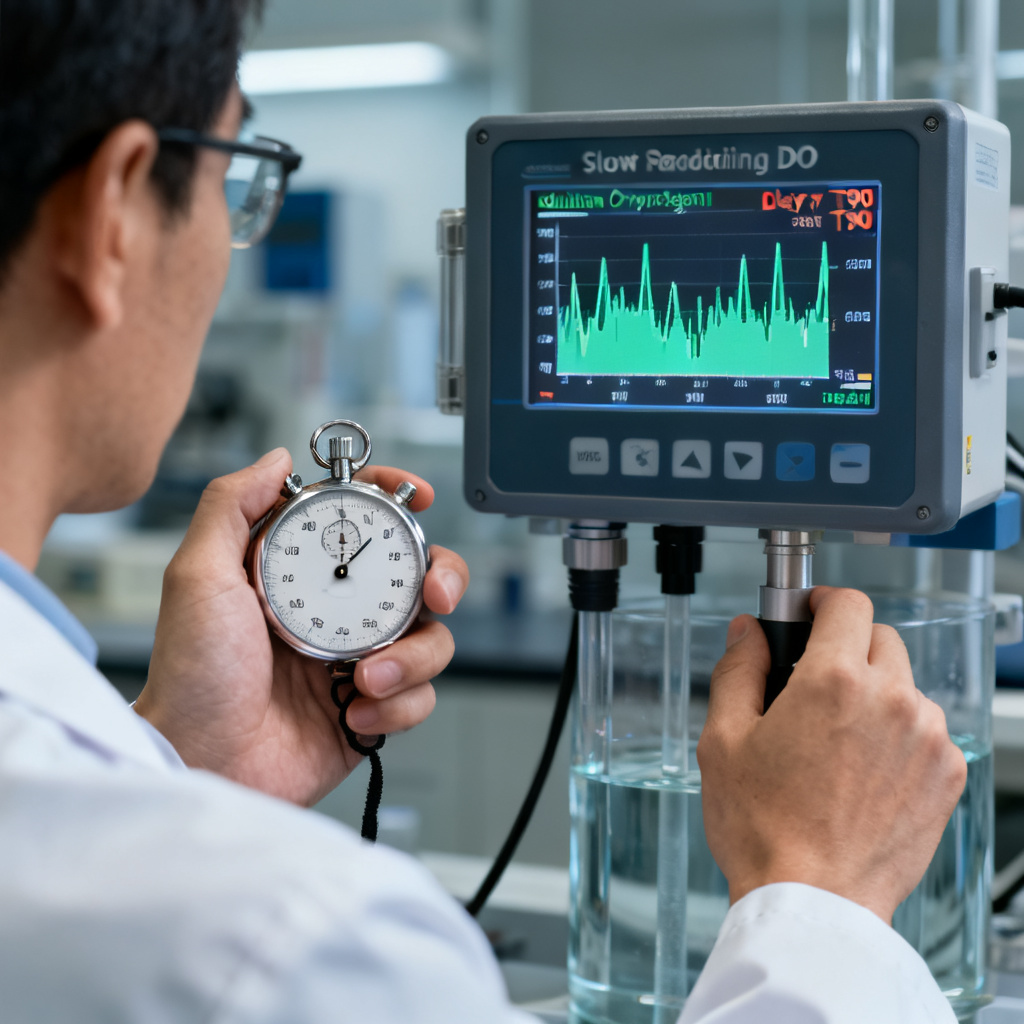
A healthy electrochemical DO sensor should achieve 90% of the final reading (T90) within 30-90 seconds. YSI states that a T90 time exceeding 2 minutes is a red flag, often caused by membrane fouling from biofilm, grease, or scale, or membrane stretching that reduces the diffusion rate. Hach provides a practical field test: perform a step-change test moving the sensor from air into a nitrogen-purged solution; if stabilization takes more than 3 minutes, the membrane is failing. Hach also notes that a slow response is often accompanied by a sticky feeling when the membrane is touched, indicating chemical degradation.
Mettler Toledo adds that a slow response is the first sign of membrane aging, even before calibration fails, and recommends tracking T90 as a key performance indicator. If T90 increases by 50% from baseline, schedule a replacement.
Sign #3: Erratic or Noisy Readings from Your DO Sensor
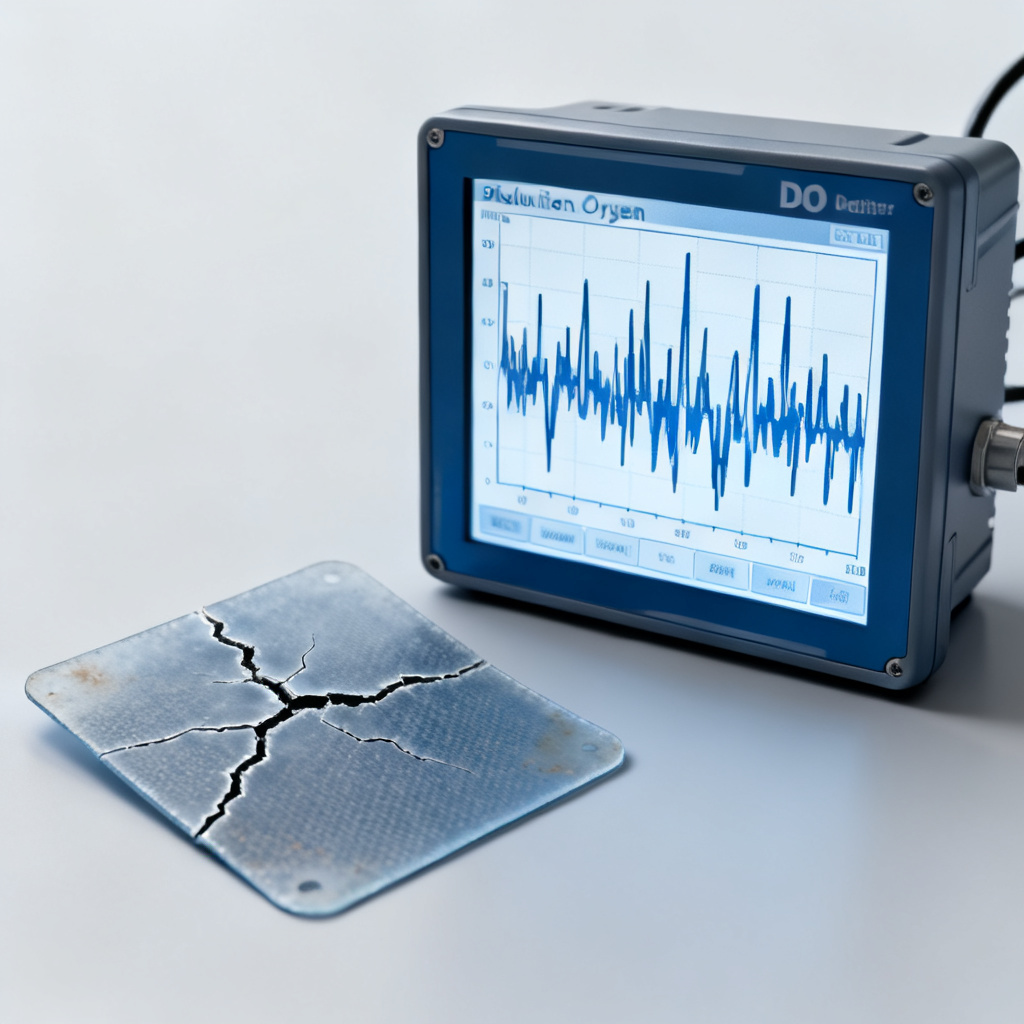
A steady DO reading indicates a healthy membrane. YSI identifies random, high-frequency noise as a classic symptom of a compromised membrane, occurring when microscopic tears allow liquid electrolyte to leak into the sample, causing short-circuit currents or air bubbles. Hach explains that noise often appears as ±0.5 mg/L fluctuation that disappears in a zero-oxygen solution, confirming the noise is oxygen-diffusion related. Mettler Toledo describes a specific pattern: the reading jumps when the sensor is tapped or moved, indicating the membrane is no longer securely bonded to the cathode, allowing electrolyte to slosh—a critical sign of imminent failure.
Sign #4: Physical Damage to the Electrochemical DO Sensor Membrane
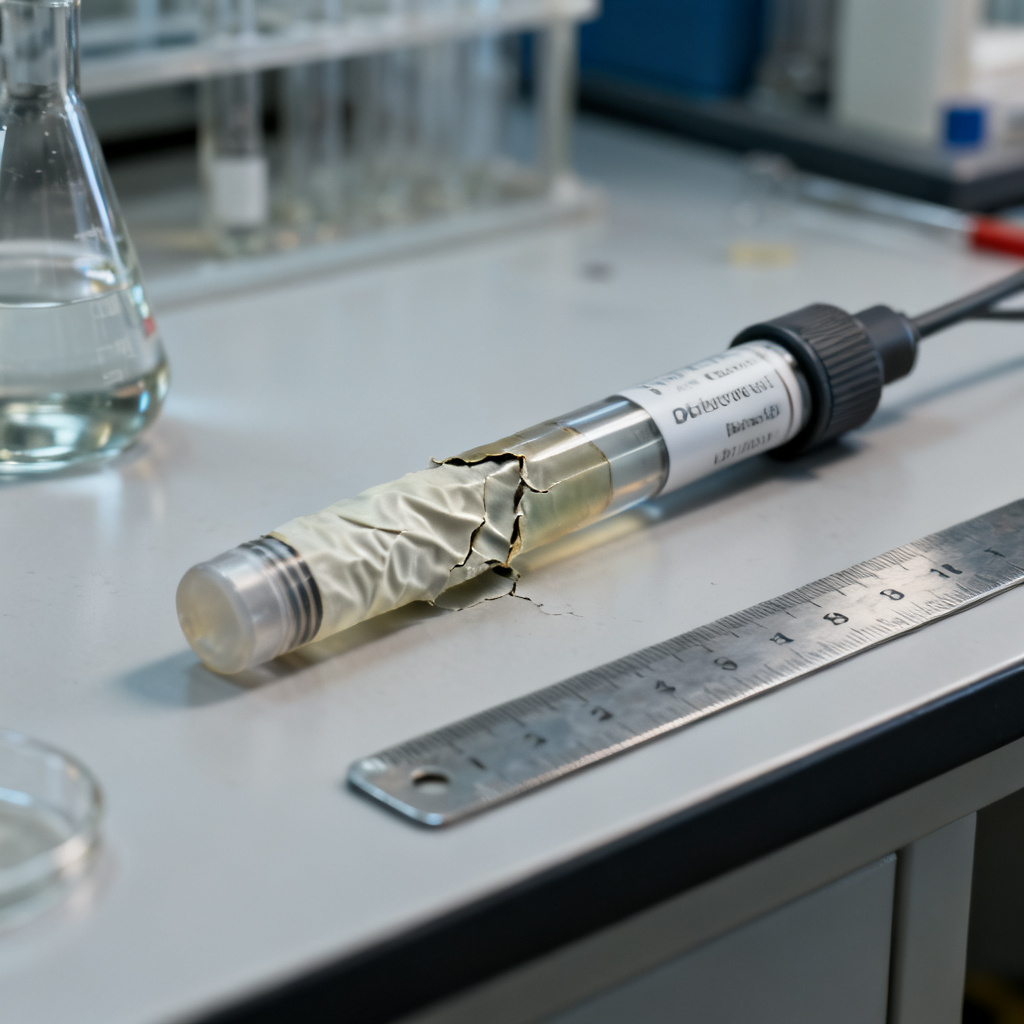
YSI recommends visual inspection before every use. Look for wrinkles or creases that create uneven diffusion paths, air bubbles under the membrane that block oxygen diffusion, tears or pinholes that cause massive oxygen leaks, and discoloration indicating chemical attack. Hach emphasizes that membrane damage is often caused by improper handling, including scratches from cleaning brushes, dents from dropping the sensor, and crystallized salt deposits indicating electrolyte leakage. Mettler Toledo adds that a bulging membrane is a sign of overpressure or internal gas generation, common in high-pressure applications, and must be replaced immediately as it is about to burst.
Sign #5: Drifting Zero and Span Readings in DO Sensors
A properly maintained sensor should hold stable zero and span for at least 24 hours. YSI notes that zero drift of more than 0.1 mg/L per day is abnormal, often caused by electrolyte depletion or membrane fouling. Hach provides a specific timeline: after 2-4 weeks of continuous use, a gradual span drift of 2-5% is normal, but a sudden 10% drop in span overnight indicates membrane failure. Mettler Toledo adds that drift is often accompanied by a change in the sensor’s temperature coefficient; if the reading changes more than expected with a 1°C temperature change, the membrane’s permeability has been altered by chemical exposure.
Sign #6: Chemical Attack on Your DO Sensor Membrane
YSI states that membranes are vulnerable to strong acids, bases, and organic solvents. Signs of chemical attack include swelling or softening of the membrane, loss of transparency, and cracking when flexed. Hach warns that even low concentrations of chlorine (0.5 ppm) can accelerate membrane degradation, and hydrogen sulfide will blacken the membrane and cause permanent damage. Mettler Toledo provides a practical test: if the membrane feels sticky or tacky to the touch, it has been chemically attacked. They also note that membranes exposed to high levels of CO2 can become brittle, requiring replacement and consideration of chemically resistant materials like FEP or ETFE.
Sign #7: Electrolyte Depletion or Contamination in DO Sensors
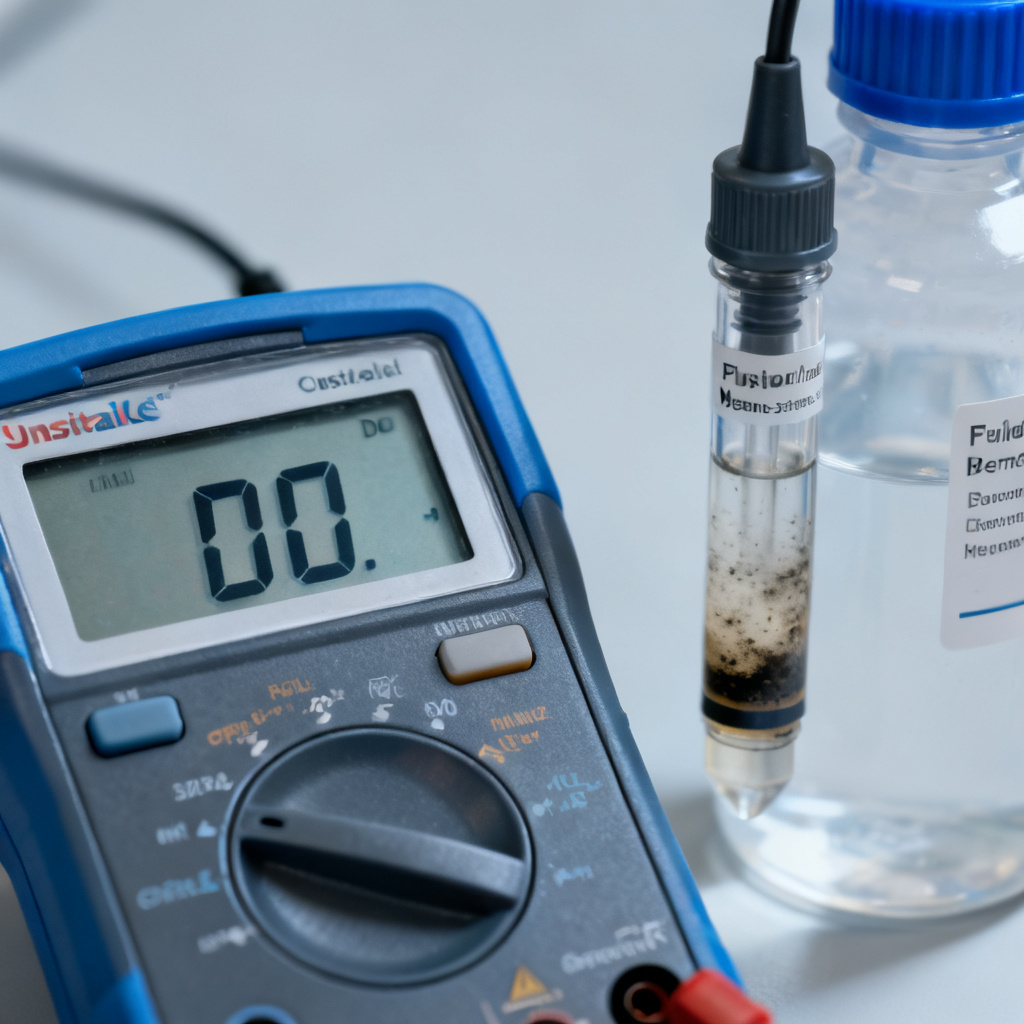
YSI explains that the electrolyte is the sensor’s fuel. Signs of electrolyte depletion include low readings even in saturated air, downward drift over time, and increasingly frequent calibration needs. Hach recommends inspecting the electrolyte visually: fresh electrolyte is clear; cloudy, yellow, or particulate-laden electrolyte indicates contamination from a membrane leak. Mettler Toledo adds that when changing the membrane, you must also change the electrolyte, and reusing old electrolyte leads to immediate calibration failure. They also recommend checking the O-ring seal—if flattened or cracked, the new membrane will also fail prematurely.
When to Replace Your Electrochemical DO Sensor Membrane
| Symptom | Likely Cause | Action | Source |
|---|---|---|---|
| Calibration slope >15% off | Membrane fouling or aging | Replace membrane & electrolyte | YSI, Hach |
| T90 > 2 minutes | Membrane clogging or stretching | Replace membrane | YSI, Mettler Toledo |
| Erratic noise (±0.5 mg/L) | Micro-tear or electrolyte leak | Replace membrane & O-ring | Hach, Mettler Toledo |
| Visible bubbles or wrinkles | Physical damage or improper installation | Replace membrane immediately | YSI, Hach |
| Zero drift > 0.1 mg/L/day | Electrolyte depletion or membrane leak | Replace membrane & electrolyte | YSI, Mettler Toledo |
| Sticky or swollen membrane | Chemical attack (chlorine, H2S) | Replace membrane; consider chemical-resistant type | Hach, Mettler Toledo |
| Cloudy electrolyte | Membrane leak or contamination | Replace membrane & electrolyte | Hach, Mettler Toledo |
Key Terminology for Electrochemical DO Sensor Maintenance
- T90 Response Time
- The time required for the sensor to reach 90% of the final reading after a step change in oxygen concentration. A T90 exceeding 2 minutes indicates membrane degradation.
- Calibration Slope
- The ratio of sensor output to oxygen concentration. A slope deviation greater than 15-20% from factory default signals membrane failure.
- Zero Drift
- The change in sensor output in a zero-oxygen environment over time. Drift above 0.1 mg/L per day indicates electrolyte depletion or membrane leakage.
- Hysteresis
- The difference in sensor readings when approaching a concentration from higher vs. lower values. High hysteresis suggests a compromised membrane.
Electrochemical vs. Optical DO Sensors: Membrane Considerations
While this guide focuses on electrochemical DO sensors, understanding the alternative—optical DO sensors—provides context for maintenance decisions. Electrochemical sensors rely on a consumable membrane and electrolyte that require periodic replacement every 2-8 weeks depending on application. Optical sensors use a luminescent coating that does not require membranes but may suffer from photobleaching over longer periods. For B2B operations with high fouling or chemical exposure, electrochemical sensors offer proven robustness, provided the membrane is proactively maintained according to the signs outlined above. Our electrochemical DO sensor solutions include OEM-quality membrane kits designed for extended service life in demanding environments.
Frequently Asked Questions About Electrochemical DO Sensor Membranes
How often should I replace my electrochemical DO sensor membrane?
Can I clean a fouled DO sensor membrane instead of replacing it?
What happens if I ignore the signs my electrochemical DO sensor needs a new membrane?
Proactive Membrane Replacement for Reliable DO Data
Ignoring the signs of a failing membrane is the fastest way to compromise your process control and data integrity. As highlighted by YSI, Hach, and Mettler Toledo, the membrane is a consumable component with a finite lifespan. Establish a baseline by recording T90, slope, and zero offset for every new membrane. Track trends using a maintenance log to detect gradual degradation before failure. Replace membranes in pairs for consistency across sensors. Always use OEM-recommended membranes and electrolyte for your specific sensor model. By recognizing these seven signs early, you can avoid costly downtime, prevent process upsets, and ensure your electrochemical DO sensor delivers accurate, reliable data for the long haul.
Need a replacement membrane kit for your YSI, Hach, or Mettler Toledo sensor? Contact us for OEM-quality membranes and electrolyte solutions tailored to your industrial application.