RAS Biofilter Management The Critical Role of Dissolved Oxygen
In Recirculating Aquaculture Systems (RAS), proper RAS biofilter dissolved oxygen management is the heart of water quality control and the single most critical variable for nitrification efficiency. Without maintaining adequate DO levels, nitrifying bacteria cannot efficiently convert toxic ammonia into nitrates, leading to catastrophic system crashes and severe fish stress.
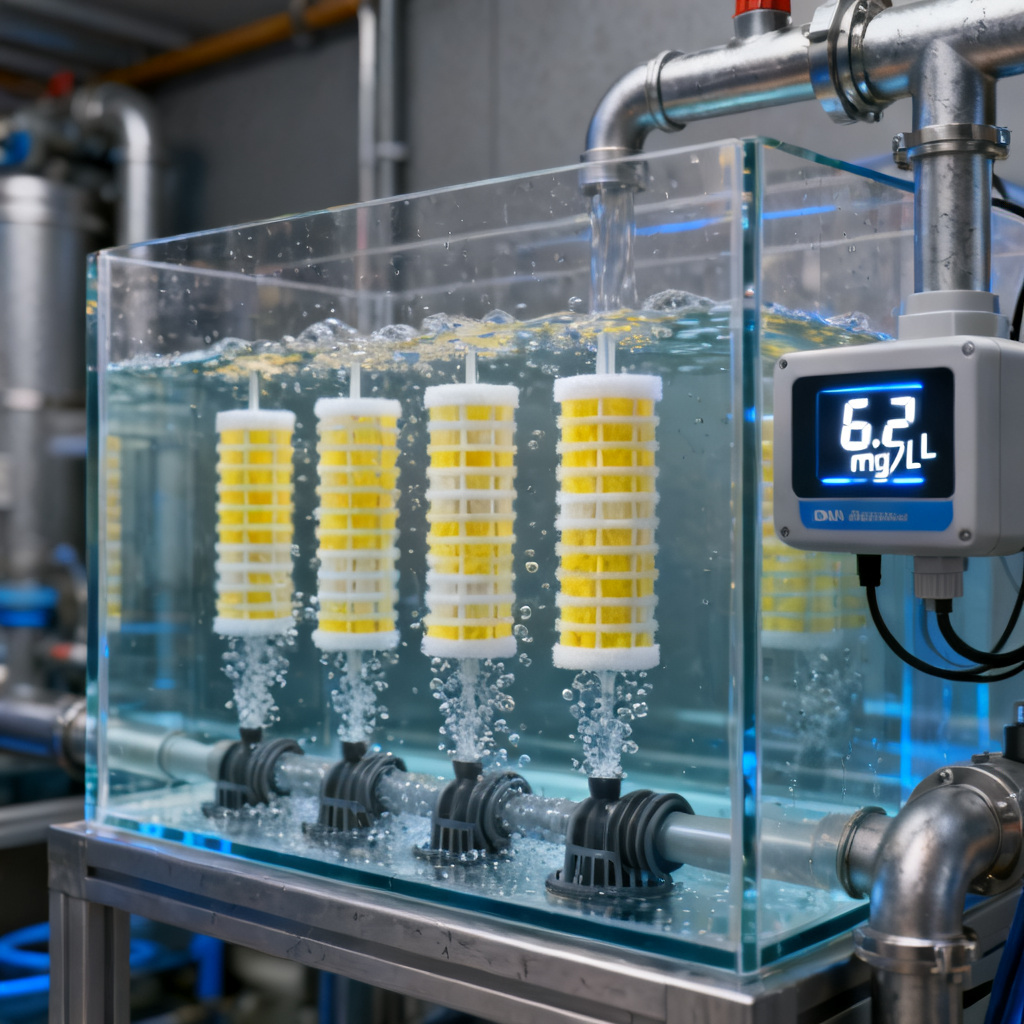
Why Dissolved Oxygen is Critical for Biofiltration
The Biochemistry of Nitrification and Dissolved Oxygen
Dissolved Oxygen is the terminal electron acceptor for nitrifying bacteria. For every gram of ammonia nitrogen converted to nitrate, approximately 4.6 grams of oxygen are consumed. This makes the biofilter one of the largest oxygen sinks in a RAS.
Dissolved Oxygen as a Rate-Limiting Factor
Dissolved Oxygen levels directly control nitrification rates. When DO falls below 2–3 mg/L, activity declines sharply. Below 1 mg/L, nitrification stops entirely. In thick biofilms, oxygen diffusion gradients can create hypoxia even if bulk water DO appears adequate.
Optimal Dissolved Oxygen Ranges for RAS Biofilters
| Parameter | Optimal Dissolved Oxygen Range | Critical Threshold | Notes |
|---|---|---|---|
| Bulk water DO | 5–8 mg/L | <3 mg/L (reduced activity) | Higher end for high-load systems |
| Biofilm interior DO | >2 mg/L (estimated) | <1 mg/L (anaerobic zones form) | Requires adequate bulk DO and turbulence |
| Post-biofilter DO | >4 mg/L | <2 mg/L (risk of nitrite accumulation) | Ensures downstream water quality |
Many RAS operators manage Dissolved Oxygen solely for fish health, but the biofilter requires 5–6 mg/L or more for peak efficiency.
Factors Affecting Dissolved Oxygen in Biofilters
System Loading and Organic Matter
High feed rates increase ammonia production, which raises Dissolved Oxygen demand. Organic matter also consumes oxygen, competing with nitrifiers. A balanced carbon-to-nitrogen ratio (C:N) prevents heterotrophic dominance.
Temperature
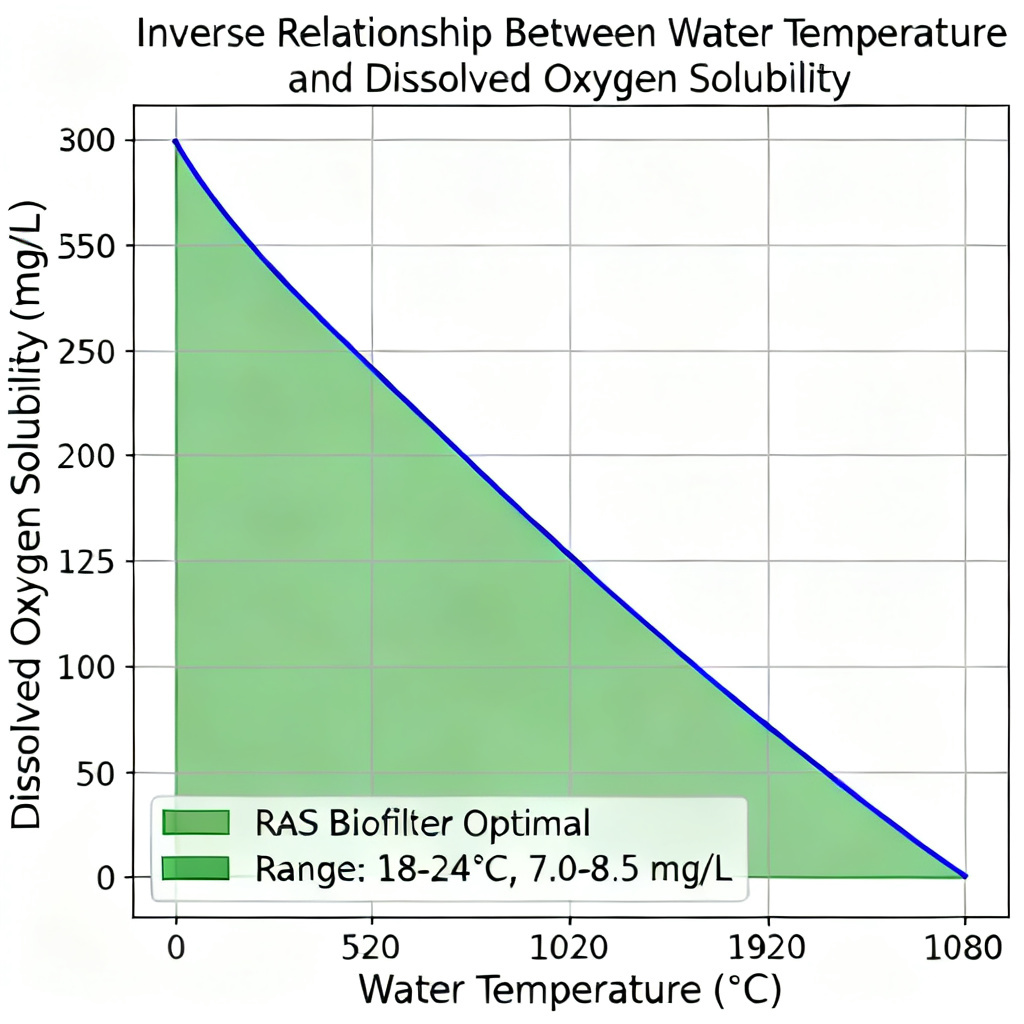
As temperature rises, Dissolved Oxygen solubility decreases, while bacterial metabolism increases. At 30°C, water holds 7.5 mg/L DO versus 8.3 mg/L at 25°C, creating a double bind for operators.
Biofilm Thickness and Age
Thicker biofilms increase oxygen diffusion resistance. Older biofilms may develop anaerobic zones, indicating insufficient Dissolved Oxygen penetration.
Water Flow and Turbulence
Higher flow improves oxygen transfer by reducing boundary layer thickness. However, excessive flow can strip biofilm. A balance is needed for optimal Dissolved Oxygen diffusion.
Salinity and Altitude
Saline water holds less Dissolved Oxygen. At 30 ppt salinity, saturation is 6.5 mg/L versus 8.3 mg/L in freshwater. Altitude also reduces DO saturation.
Monitoring and Control Strategies for Dissolved Oxygen
Real-Time Dissolved Oxygen Sensors
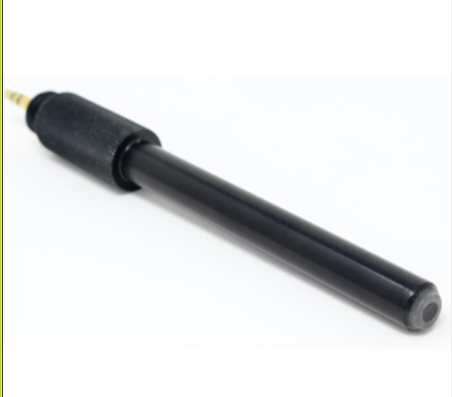
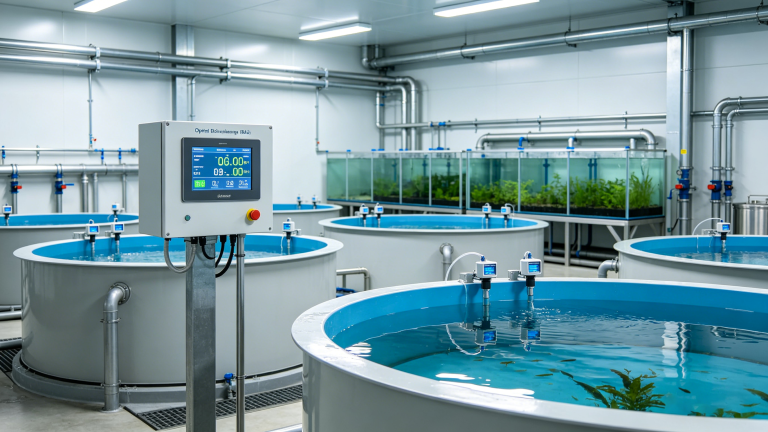
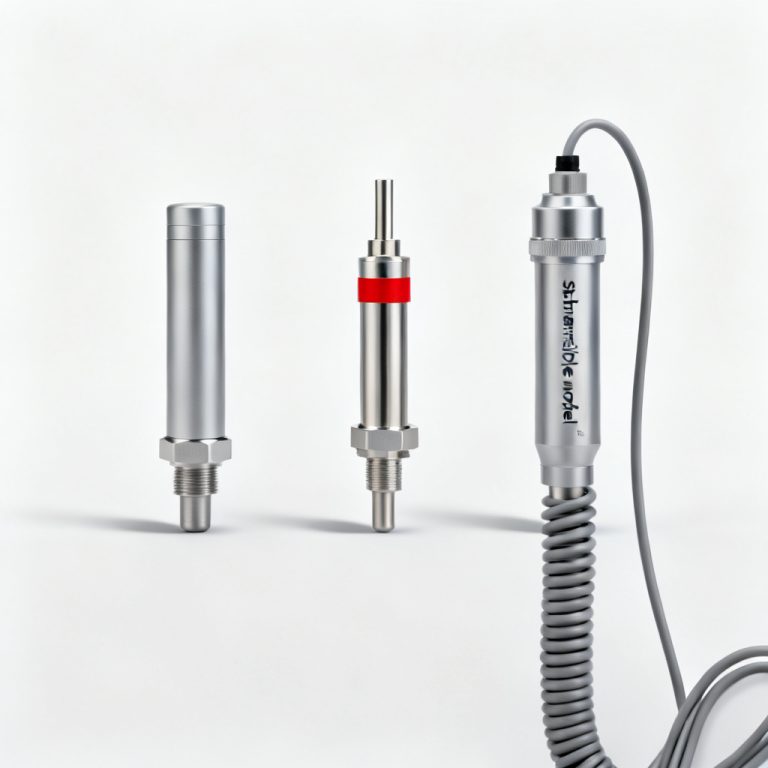
Optical Dissolved Oxygen sensors are preferred for accuracy and low drift. Place sensors immediately after the biofilter to measure oxygen consumption during nitrification.
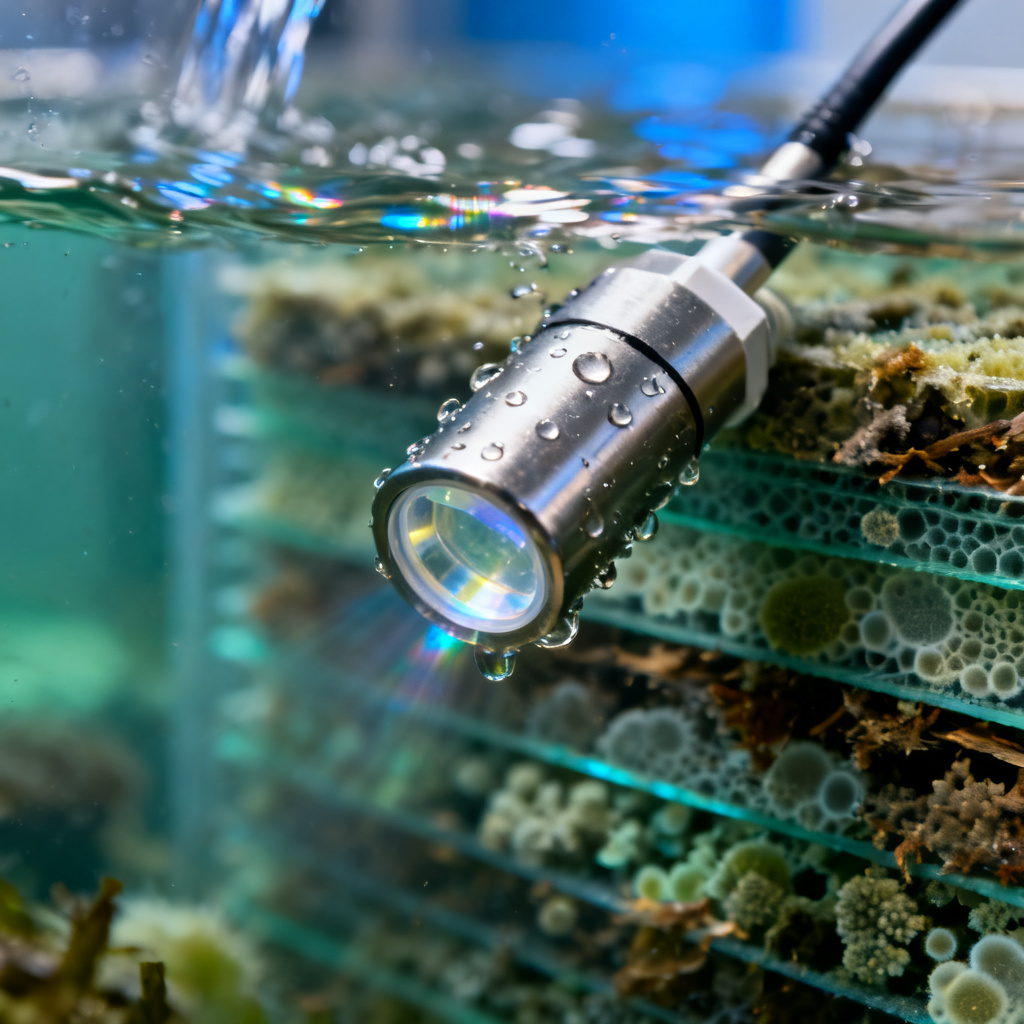
Aeration vs. Oxygenation
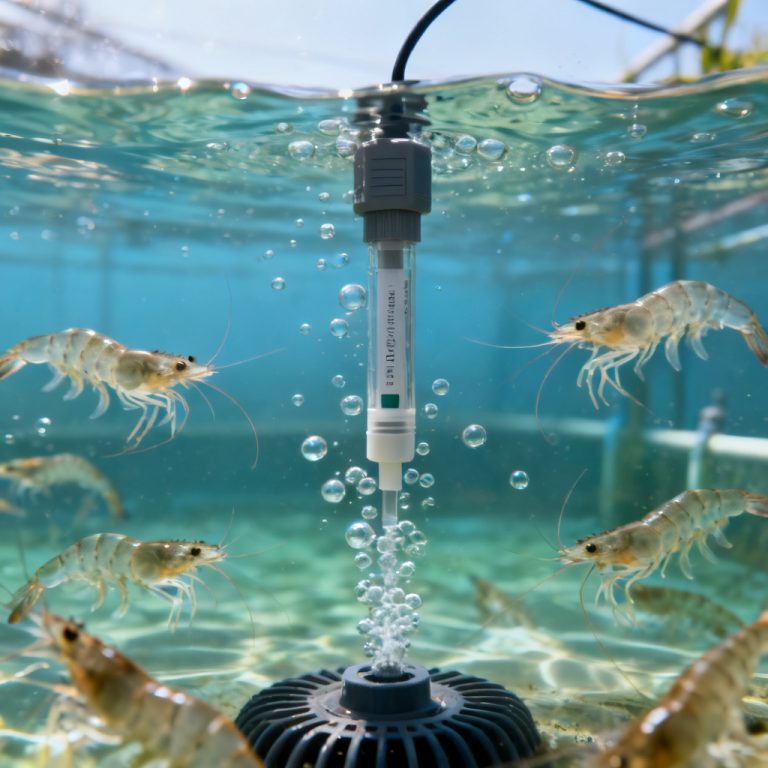
Aeration raises DO to saturation (8–9 mg/L), while oxygenation (pure oxygen) can achieve 20–40 mg/L. For biofilters, pure oxygen injection into influent ensures Dissolved Oxygen stays above 5 mg/L.
Automated Control Systems
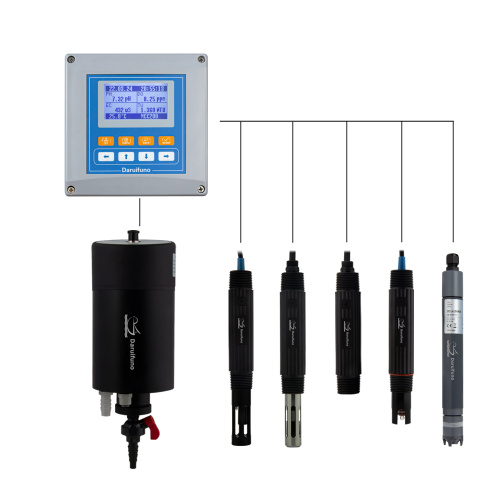
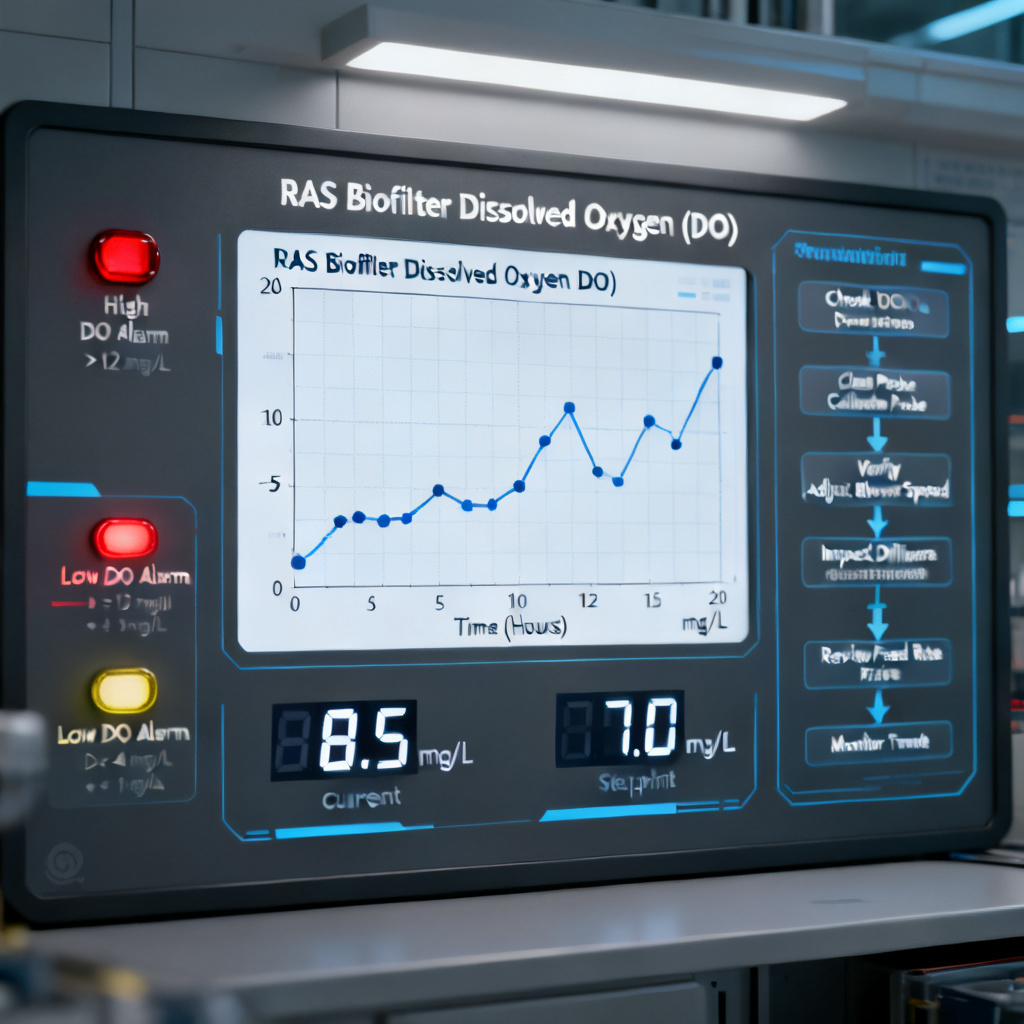
Integrate DO sensors with PLC controllers that adjust oxygen input. Set alarms for Dissolved Oxygen below 4 mg/L to prevent nitrification failure.
Consequences of Low Dissolved Oxygen in Biofilters
Nitrification Inhibition
Low Dissolved Oxygen causes nitrite accumulation, which is highly toxic to fish. This is a common failure mode in RAS.
Anaerobic Zone Formation
Hypoxia in biofilm interiors allows hydrogen sulfide and methane production, both toxic and corrosive to system components.
Biofilm Sloughing
Severe hypoxia causes mass biofilm detachment, clogging downstream components and releasing organic debris.
System Recovery Challenges
Recovery from prolonged low Dissolved Oxygen can take days to weeks due to slow bacterial growth rates.
Troubleshooting Low Dissolved Oxygen in Biofilters
| Symptom | Likely Cause | Solution |
|---|---|---|
| High ammonia, low nitrite | Low Dissolved Oxygen inhibits Nitrosomonas | Increase aeration/oxygenation; check DO sensor calibration |
| High nitrite, low nitrate | Low Dissolved Oxygen inhibits Nitrobacter | Boost DO to >5 mg/L; consider adding pure oxygen |
| Biofilm sloughing or foul odor | Anaerobic zones in biofilm | Increase water flow turbulence; reduce organic loading; clean media |
| DO drop across biofilter >3 mg/L | Excessive nitrification load | Increase oxygen supply; reduce feeding rate temporarily |
| Consistently low DO despite aeration | High temperature, salinity, or organic load | Use pure oxygen; improve heat exchange; reduce feed |
Best Practices for RAS Biofilter Dissolved Oxygen Management
- Design for Redundancy: Install backup oxygen systems to prevent Dissolved Oxygen crashes during power outages.
- Monitor Both Inlet and Outlet DO: The difference (ΔDO) indicates biofilter activity. A ΔDO of 1–2 mg/L is typical.
- Maintain Proper C:N Ratio: Keep carbon-to-nitrogen ratio below 10:1 to discourage heterotrophic bacteria.
- Regular Biofilm Management: Control biofilm thickness by adjusting media movement or backwashing.
- Use Advanced Sensors: Optical Dissolved Oxygen sensors with automatic cleaning reduce maintenance.
- Consider Biofilter Media Selection: High-specific-surface-area media promote thin biofilms, reducing oxygen diffusion limitations.
Frequently Asked Questions about Dissolved Oxygen in RAS Biofilters
What is the ideal Dissolved Oxygen level for a RAS biofilter?
The ideal Dissolved Oxygen level is 5–8 mg/L in bulk water to ensure peak nitrification efficiency.
How does low Dissolved Oxygen affect nitrification?
Low Dissolved Oxygen inhibits both ammonia-oxidizing and nitrite-oxidizing bacteria, leading to toxic ammonia and nitrite accumulation.
Can I use aeration alone to maintain Dissolved Oxygen in a biofilter?
Aeration can maintain Dissolved Oxygen up to saturation (8–9 mg/L), but high-density RAS often requires pure oxygenation for levels above 5 mg/L.
What sensors are best for monitoring Dissolved Oxygen in RAS?
Optical Dissolved Oxygen sensors are recommended for accuracy, low drift, and resistance to interference.
How often should I calibrate my Dissolved Oxygen sensor?
Calibrate optical Dissolved Oxygen sensors monthly or according to manufacturer guidelines.
What causes Dissolved Oxygen to drop in a biofilter?
Common causes include high organic loading, elevated temperature, salinity, thick biofilm, or insufficient aeration/oxygenation.
How long does it take for a biofilter to recover from low Dissolved Oxygen?
Recovery can take days to weeks, depending on the severity and system conditions.
What is the relationship between Dissolved Oxygen and biofilm thickness?
Thicker biofilms create diffusion gradients, requiring higher bulk water Dissolved Oxygen to penetrate the inner layers.