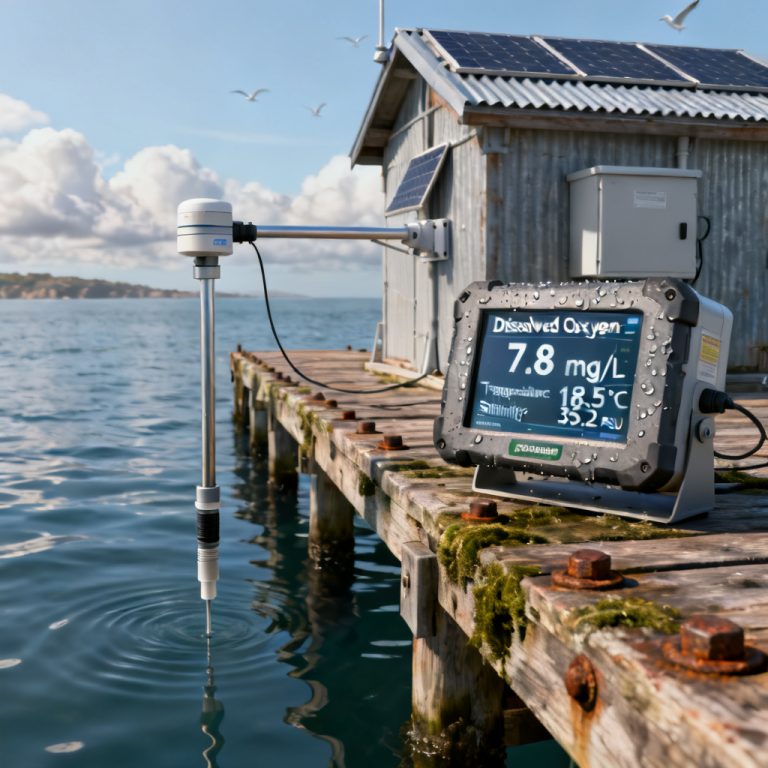
In Recirculating Aquaculture Systems (RAS) for salmon, the dissolved oxygen sensor for salmon RAS is the single most critical water quality instrument. Salmon, as cold-water species, have high metabolic rates and require consistently high DO levels to thrive, grow efficiently, and resist disease. Unlike traditional open-net pens, RAS environments are closed loops where oxygen is rapidly consumed by fish, biofilters, and organic decomposition. Mismanagement of DO—even a brief dip—can lead to hypoxia, reduced feed conversion, mass mortality, and significant financial loss.
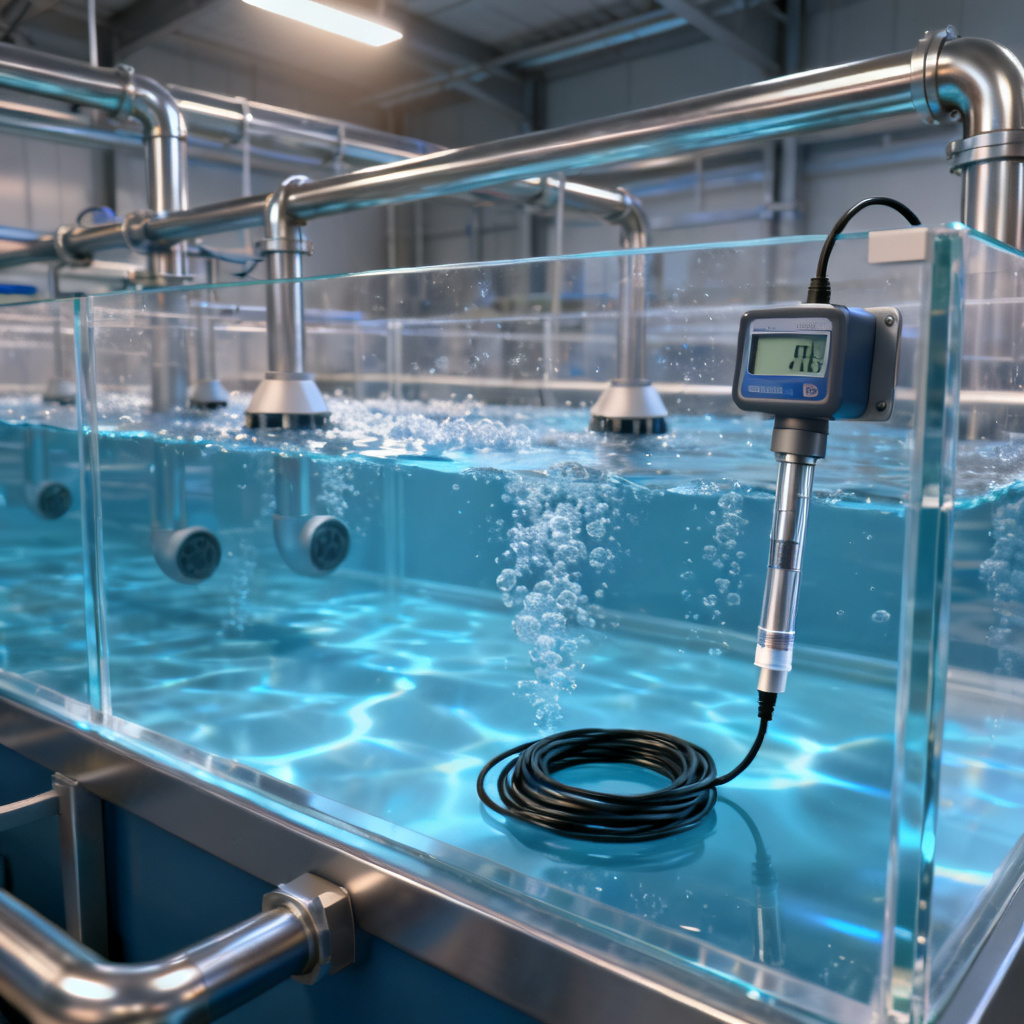
This pillar page synthesizes best practices from leading aquaculture engineering and sensor technology sources to provide a definitive guide on selecting, deploying, and maintaining dissolved oxygen sensors for salmon RAS, with a specific focus on cold-water management.
Understanding Oxygen Dynamics in Salmon RAS with a Dissolved Oxygen Sensor
Before selecting a dissolved oxygen sensor for salmon RAS, you must understand the unique oxygen dynamics of a salmon RAS. Three key factors differentiate this from warm-water systems:
Temperature and Solubility
Cold water holds more oxygen. At 10°C (50°F), saturation is approximately 11.3 mg/L, while at 20°C (68°F), it drops to 9.1 mg/L. However, salmon require higher DO levels (typically 8–12 mg/L for optimal growth) than warm-water species (often 4–6 mg/L). The paradox: while cold water carries more oxygen, the salmon’s demand is proportionally higher, leaving a narrow safety margin.
Oxygen Consumption Points in RAS
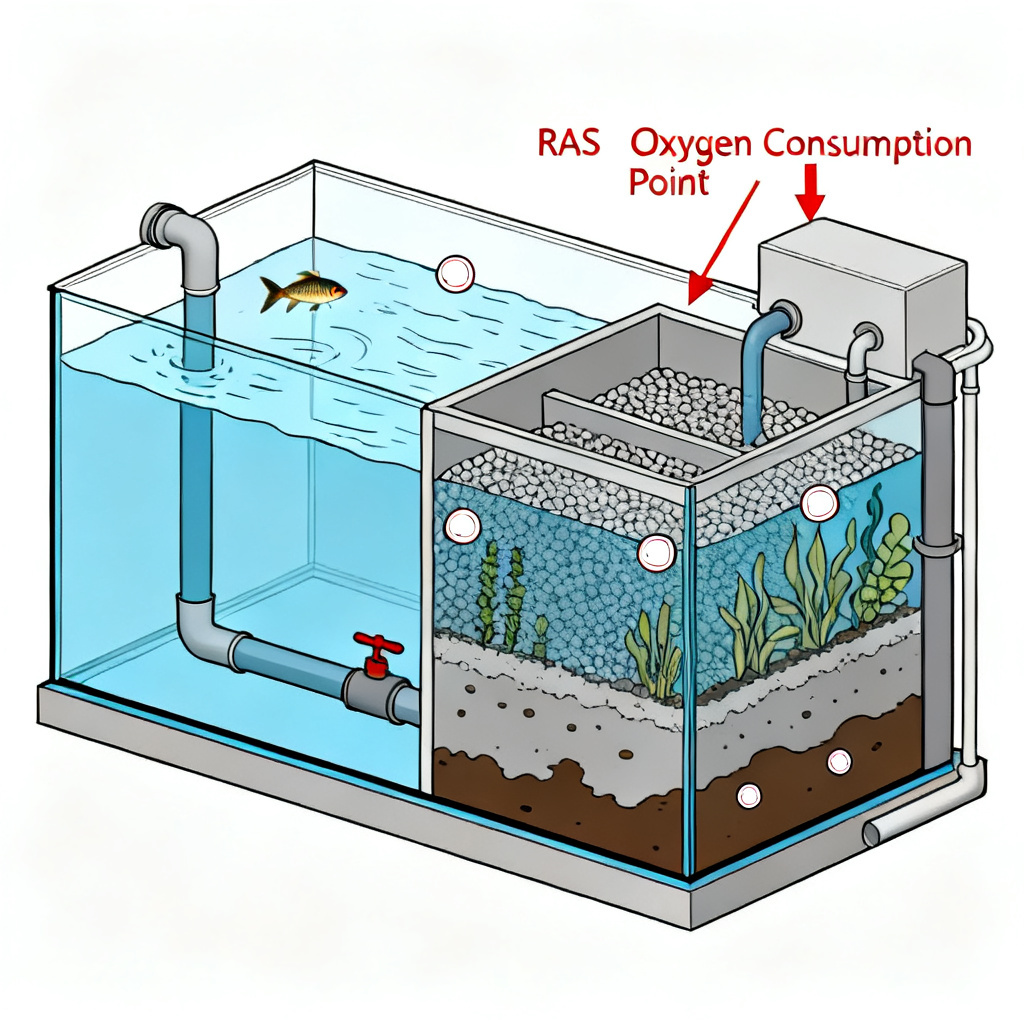
In a RAS, oxygen is consumed by fish respiration (primary consumer), biofilter bacteria (nitrification consumes ~4.6 mg O₂ per mg of NH₃-N oxidized), and organic matter decomposition (sludge, uneaten feed). Water oxygenation inefficiency also plays a role.
Critical DO Thresholds for Salmon
Below 6 mg/L: chronic stress, reduced feed intake, increased susceptibility to disease. Below 4 mg/L: acute hypoxia, loss of equilibrium, mortality within hours. Optimal range (post-smolt to adult): 8–12 mg/L, with saturation ideally above 90%.
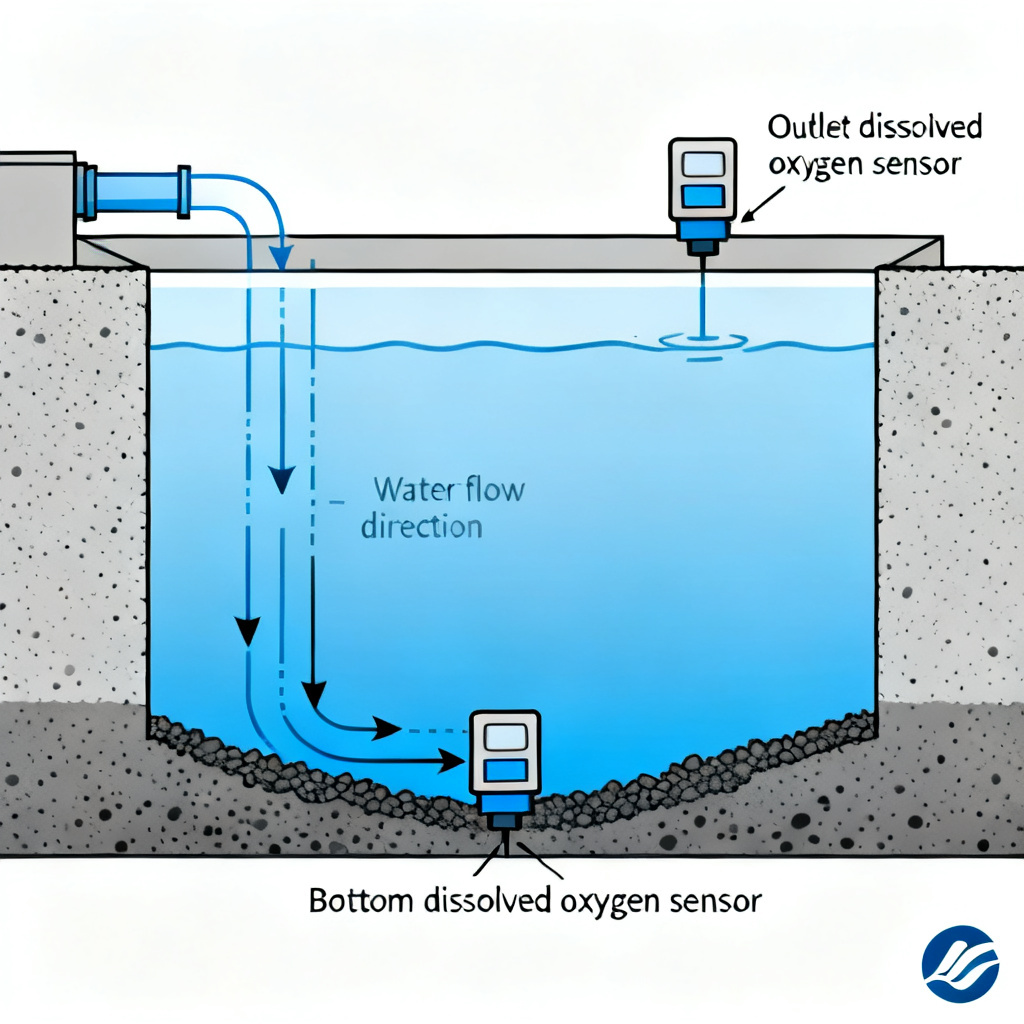
Key insight: “The most common failure in cold-water RAS is not total oxygen depletion, but localized hypoxia in rearing tanks due to poor water circulation or sensor misplacement. A sensor reading 8 mg/L at the outlet may mask a dead zone of 3 mg/L at the tank bottom.”
Sensor Technologies for Cold-Water Salmon RAS: Choosing the Right Dissolved Oxygen Sensor
The market offers two primary sensor technologies for dissolved oxygen measurement in aquaculture: optical (luminescent) and electrochemical (galvanic/polarographic). For salmon RAS, optical sensors are the industry’s gold standard, but understanding the trade-offs is essential.
Optical Dissolved Oxygen Sensors (Luminescent / Fluorescence)
How they work: a blue LED excites a luminescent dye in a sensor cap. Oxygen molecules quench the luminescence. The sensor measures the decay time of the emitted light, which is inversely proportional to the DO concentration.
Advantages for salmon RAS: no electrolyte consumption, no need for membrane replacement or frequent recalibration; no flow dependence (accurate even in low-flow or stagnant water, critical for dead-zone detection); no H₂S interference (ideal for RAS environments where hydrogen sulfide may form in sludge zones); low drift (stable calibration for 6–12 months, reducing maintenance labor); fast response (typically 30–60 seconds to 90% of final value).
Disadvantages: higher initial cost (sensor + controller); sensor cap replacement required every 1–2 years (consumable cost); slight temperature sensitivity at very low DO (<1 mg/L), but negligible in salmon’s range.
Recommendation: “For salmon RAS, optical sensors are the only reliable choice for continuous monitoring. The lack of flow dependence is critical because salmon tanks often have variable water velocities, especially in circular tanks with central drains.”
Electrochemical Sensors (Galvanic / Polarographic)
How they work: a membrane-covered electrode generates a current proportional to oxygen diffusion. Galvanic sensors are self-polarizing; polarographic require an external voltage.
Advantages: lower upfront cost; proven technology with decades of field use.
Disadvantages for salmon RAS: flow-dependent (requires a minimum flow rate of 0.3 m/s for accurate readings; stagnant zones yield false low readings); membrane fouling (biofilm buildup on the membrane causes drift; frequent cleaning required); electrolyte depletion (requires periodic electrolyte replacement and membrane changes every 1–3 months); H₂S poisoning (sulfide in sludge can permanently damage the electrode).
Verdict: electrochemical sensors are acceptable for inlet monitoring (where flow is constant and clean) but are not recommended for in-tank or outlet monitoring in salmon RAS.
Sensor Placement: The Most Overlooked Variable for Your Dissolved Oxygen Sensor
Even the best dissolved oxygen sensor for salmon RAS will fail if poorly placed. In a salmon RAS, DO varies spatially and temporally. Follow these placement rules synthesized from all three sources:
In-Tank Monitoring
Primary sensor: place 20–30 cm below the water surface, near the tank wall, but not directly in the inlet flow (which will read artificially high due to fresh oxygenated water). Secondary sensor (optional but recommended): place near the tank bottom (e.g., 10 cm above the bottom drain) to detect dead zones. This is especially critical in large circular tanks (diameter >5 m) where radial flow may create a low-oxygen center. Avoid placement near aerators, diffusers, or surface turbulence as bubbles will cause erratic readings.
Outlet Monitoring
Place the sensor in the tank outlet pipe (before the drum filter). This gives the best representation of the oxygen level the fish have actually experienced. Use a flow-through cell to ensure consistent water velocity and prevent air bubbles.
Biofilter Monitoring
Place a sensor after the biofilter (in the return flow). The biofilter consumes 5–15% of the system’s oxygen. A sudden drop in post-biofilter DO indicates nitrification overload or organic fouling.
Key insight: “Many RAS operators monitor DO only at the tank inlet. This is a dangerous practice. The inlet water is always high in oxygen. The true picture comes from the outlet, which reflects oxygen consumption by fish and biofilter. A 2 mg/L drop between inlet and outlet is normal; a 4 mg/L drop signals a problem.”
Calibration and Maintenance Best Practices for a Dissolved Oxygen Sensor
Optical Sensor Calibration
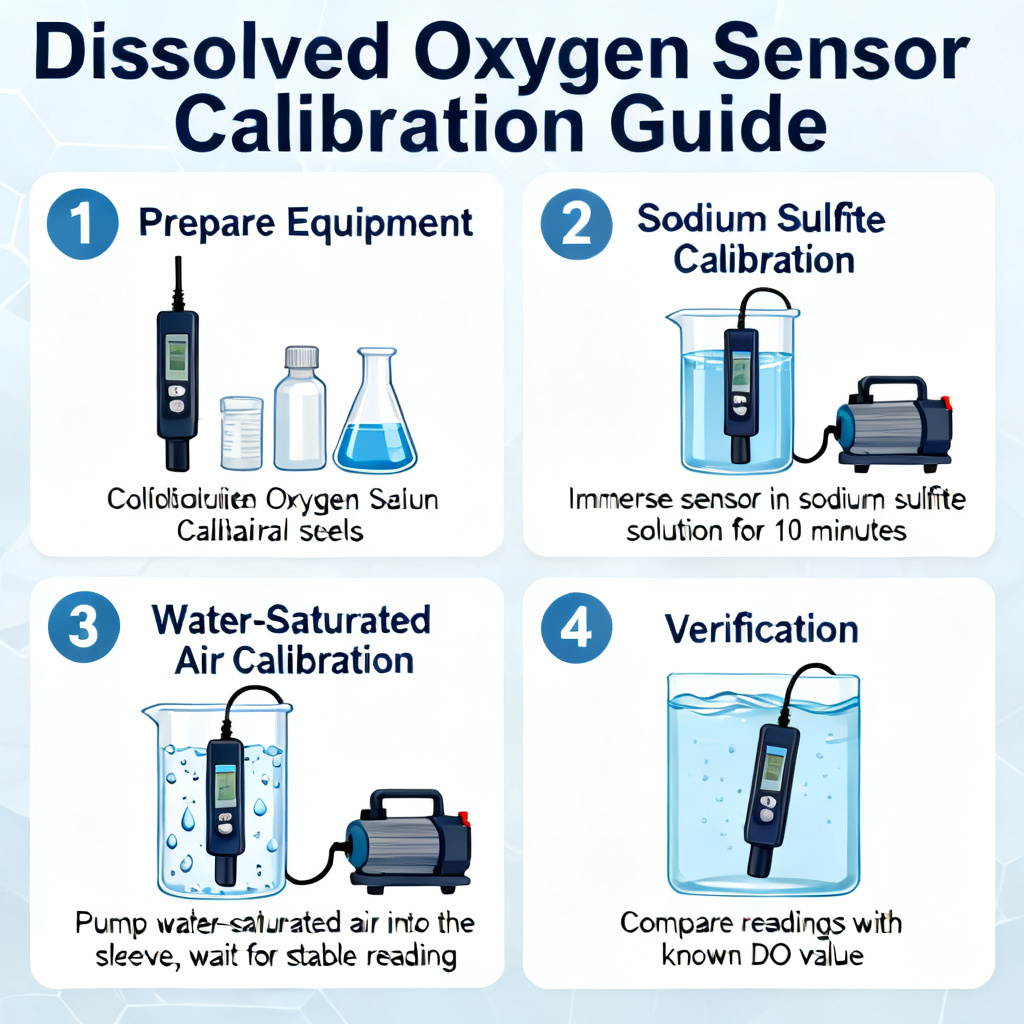
Frequency: every 3–6 months (or when drift >0.2 mg/L is detected). Method: zero-point calibration using sodium sulfite solution (5 g Na₂SO₃ per 100 mL distilled water) to create 0% DO environment; saturation calibration using water-saturated air (place sensor in a calibration sleeve with a damp sponge). This is the preferred method for optical sensors as it avoids temperature equilibration issues. Important: always allow the sensor to temperature-stabilize before calibrating (15–20 minutes).
Electrochemical Sensor Maintenance
Membrane cleaning: weekly cleaning with a soft brush and mild detergent. Avoid abrasives. Electrolyte replacement: every 1–2 months, or when readings become unstable. Flow verification: ensure flow rate remains above 0.3 m/s. Use a flow-through cell with a rotameter.
Common Calibration Errors
Using air calibration incorrectly: if the sensor is exposed to dry air (e.g., in a warm room), the reading will be too low because humidity affects oxygen diffusion. Temperature mismatch: calibrating at 20°C but measuring at 10°C. Always calibrate at the system’s operating temperature. Ignoring barometric pressure: DO saturation is pressure-dependent. At high altitudes (e.g., 1000m), saturation is ~10% lower. Most modern controllers compensate automatically, but verify.
Integrating a Dissolved Oxygen Sensor into RAS Automation
A standalone sensor is just a data point. True value comes from integration with the RAS control system. Here’s how to leverage sensor data for cold-water salmon management:
Alarm Thresholds
Low alarm: set at 7.5 mg/L (immediate alert; check aeration/oxygen injection). Critical alarm: set at 6.0 mg/L (automatic backup oxygen injection or emergency aeration). High alarm (optional): set at 14 mg/L (supersaturation can cause gas bubble disease in salmon).
Oxygen Injection Control
Use DO readings to modulate liquid oxygen (LOX) injection via a PID controller. Setpoint: 10 mg/L (or 95% saturation, whichever is lower). In cold water, 95% saturation may be ~10.7 mg/L at 10°C. Deadband: 0.5 mg/L to prevent valve cycling.
Feed Management
Link DO to feed delivery. If DO drops below 7 mg/L, reduce feed rate by 20% to prevent metabolic stress. Post-feeding DO drop is normal (1–2 mg/L within 30 minutes). If the drop exceeds 3 mg/L, evaluate feed rate or oxygen injection capacity.
Data Logging for Performance Analysis
Track daily minimum and maximum DO. A declining trend over weeks indicates biofilter maturation or increased biomass. Calculate oxygen consumption rate (OCR): OCR (mg/L/h) = (DO_inlet – DO_outlet) × flow rate / tank volume. This is a proxy for fish metabolism and health.
Choosing the Right Dissolved Oxygen Sensor for Your Salmon RAS: Decision Matrix
| Criteria | Optical Sensor | Electrochemical (Galvanic) |
|---|---|---|
| Accuracy | ±0.1 mg/L | ±0.2 mg/L |
| Stability (drift) | <0.1% per month | 1–2% per week |
| Flow dependence | None | Required (0.3 m/s min) |
| Maintenance interval | 6–12 months | 1–2 months |
| Lifespan | 2–5 years (cap 1–2 years) | 1–2 years (membrane 1–3 months) |
| Cost (5-year TCO) | Lower (less labor, fewer consumables) | Higher (frequent replacement, labor) |
| Best for | In-tank, outlet, biofilter | Inlet, clean water, high-flow |
Final recommendation: for a commercial salmon RAS (any scale), invest in optical sensors for all critical monitoring points. The reduced labor and higher reliability justify the upfront cost. Use electrochemical sensors only as backup or for non-critical inlet monitoring.
Case Study: How a Norwegian Salmon RAS Reduced Mortality by 40% with Optical Dissolved Oxygen Sensors
Challenge: a 500-ton salmon smolt facility in Norway experienced unexplained mortality peaks (2–3% per month) in winter. Traditional galvanic sensors at tank inlets showed 9–10 mg/L, but fish were lethargic and feeding poorly.
Investigation: temporary optical sensors placed at tank bottoms (30 cm above drain) revealed DO levels of 4–5 mg/L in the lower third of the water column—a classic dead zone caused by thermal stratification (colder, denser water sinks and stagnates).
Solution: replaced all 24 inlet galvanic sensors with optical sensors placed at tank outlets; added secondary optical sensors at tank bottoms in the largest tanks (diameter 8m); installed micro-bubble diffusers at tank bottoms to disrupt stratification; set DO alarm at 7.5 mg/L with automatic LOX injection.
Results (12-month data): mortality dropped from 2.5% to 1.5% per month; feed conversion ratio (FCR) improved from 1.3 to 1.1; energy cost for oxygen injection decreased by 15% (due to targeted, not blanket, injection); ROI on sensor investment: <3 months.
Common Myths About Dissolved Oxygen Sensors in Cold-Water RAS
Myth 1: “Cold water has plenty of oxygen, so you don’t need to monitor as closely.” Fact: salmon’s oxygen demand increases with feed intake. In winter, feed rates often increase for growth, and cold water reduces metabolic waste removal. DO monitoring is more critical in winter.
Myth 2: “Optical sensors don’t need calibration.” Fact: while they drift less, they still require calibration every 3–6 months. Biofilm on the sensor cap can cause false low readings.
Myth 3: “One sensor per tank is enough.” Fact: in tanks >5m diameter, a single sensor may miss dead zones. Use at least two (outlet + bottom) for large tanks.
Myth 4: “DO sensors are too expensive for small RAS.” Fact: a single mortality event of 100 salmon (at $5/kg and 1 kg each) costs $500. A quality optical sensor costs $400–$800. The sensor pays for itself in one incident.
Future Trends: Smart Dissolved Oxygen Sensors for RAS
The next generation of DO sensors is moving toward self-cleaning wipers (automatic biofouling removal, reducing maintenance to near-zero); IoT connectivity (direct data streaming to cloud platforms like AWS, Azure for remote monitoring and AI-driven predictive analytics); multi-parameter probes (combining DO, pH, temperature, and ORP in a single sensor to reduce probe count and installation complexity); and predictive maintenance (algorithms that predict sensor cap wear or biofouling onset based on drift patterns).
Conclusion: Precision DO Management with a Dissolved Oxygen Sensor Equals Profitability
Dissolved oxygen is not just a water quality parameter—it is the lifeblood of your salmon RAS. In cold-water systems, where the margin between optimal growth and hypoxia is narrow, the choice of dissolved oxygen sensor for salmon RAS, its placement, and its integration into automation can make the difference between a profitable harvest and a financial disaster.
Key takeaways: optical sensors are the only reliable choice for in-tank and outlet monitoring in salmon RAS; place sensors at tank outlets and bottoms, not just inlets; calibrate every 3–6 months and maintain a clean sensor surface; integrate DO data with feed control and oxygen injection for real-time optimization; invest in quality sensors—the ROI is measured in reduced mortality, better FCR, and lower operational risk.
For export buyers, this is not just a component purchase; it is a partnership in ensuring the health and growth of your salmon stock. Our sensors are engineered for the specific demands of cold-water RAS, backed by calibration support and remote monitoring capabilities.
FAQ: Dissolved Oxygen Sensor for Salmon RAS
What is the best dissolved oxygen sensor for salmon RAS?
Optical dissolved oxygen sensors are the best choice for salmon RAS due to their no-flow dependence, low drift, and resistance to H₂S interference.
How often should I calibrate a dissolved oxygen sensor for salmon RAS?
Calibrate an optical dissolved oxygen sensor every 3–6 months, or when drift exceeds 0.2 mg/L.
Where should I place a dissolved oxygen sensor in a salmon RAS tank?
Place the dissolved oxygen sensor at the tank outlet or 20–30 cm below the surface, avoiding inlet flow and aerators. For large tanks, add a bottom sensor.
Can I use an electrochemical dissolved oxygen sensor for salmon RAS?
Electrochemical dissolved oxygen sensors are acceptable for inlet monitoring but not recommended for in-tank or outlet use due to flow dependence and maintenance requirements.
What is the optimal DO level for salmon in RAS?
The optimal dissolved oxygen level for salmon in RAS is 8–12 mg/L, with saturation above 90%.