Ecosense DO200A: Key Specifications & Features
The Ecosense DO200A dissolved oxygen meter is YSI’s workhorse handheld instrument, designed for professionals who need fast, EPA-compliant DO measurements without the premium price tag of optical systems. Here are the specifications that matter most:
| Specification | Value |
|---|---|
| Measurement Principle | Steady-state polarographic (PE membrane) |
| DO Range (% Saturation) | 0 – 200% |
| DO Range (mg/L) | 0 – 20 ppm (mg/L) |
| DO Accuracy | ±2% of reading or ±2% air saturation / ±0.2 ppm (whichever greater) |
| DO Resolution | 0.1% air saturation / 0.01 ppm |
| Temperature Range | -6 to 46°C (21.2 to 114.8°F) |
| Temperature Accuracy | ±0.3°C |
| Waterproof Rating | IP67 |
| Battery Life | 500 hours (9V battery) |
| Data Memory | 50 data sets |
| Cable Options | 1 m, 4 m, 10 m |
| Salinity Compensation | Manual, 0.0 – 40.0 ppt |
| Pressure Compensation | Manual, 600 – 1100 mbar |
| Auto Shutoff | After 30 minutes of inactivity |
| Warranty | 1 year (instrument, probe & cable) |
| EPA Compliance | Approved for wastewater BOD/CBOD/DO reporting |
| Instrument Price (US) | ~$441 (cables sold separately) |
Standout features that make the Ecosense DO200A a practical choice:
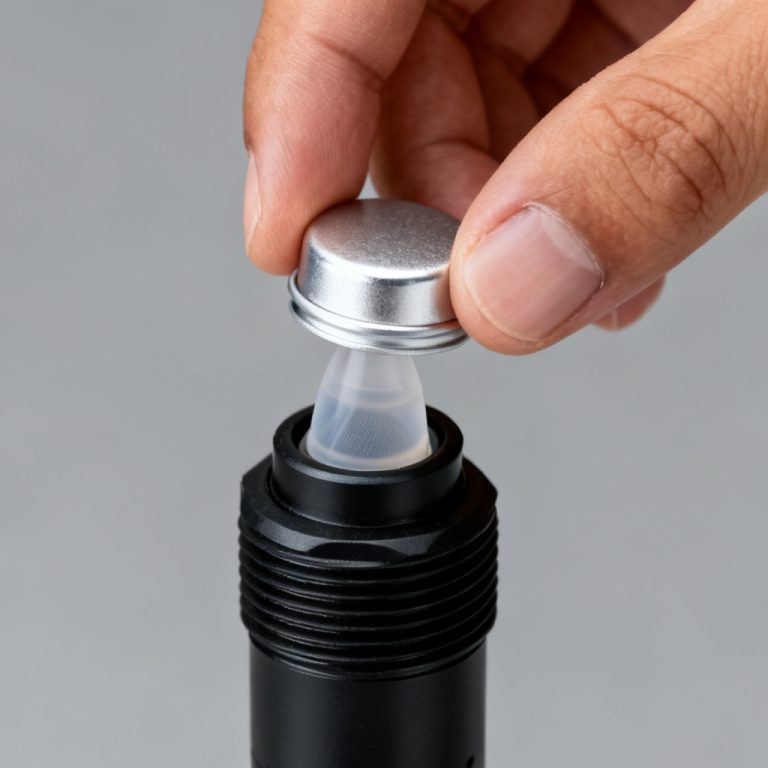
- Screw-on PE membranes — faster response times and dramatically reduced stirring dependence compared to traditional membranes. Membrane changes take seconds, not minutes.
- Lab + field versatility — pair it with the optional 200-BOD self-stirring probe for BOD testing in the lab, or take it into the field with rugged 4 m or 10 m cables.
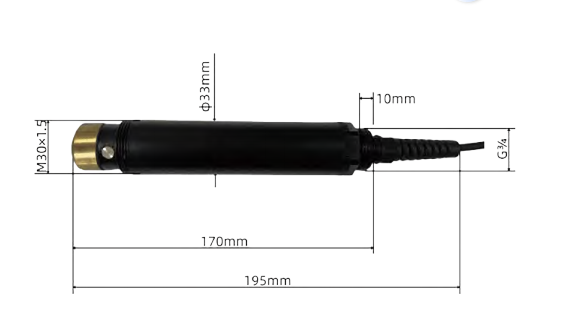
- One-hand operation — compact design (186 × 70 × 37 mm, 272 g) with audio feedback on every key press, ideal for fieldwork.
- True EPA compliance — the only budget-friendly DO meter in its class approved for wastewater compliance reporting.
How the DO200A Polarographic Sensor Works
Understanding the technology behind the Ecosense DO200A dissolved oxygen meter helps explain its strengths and limitations. The DO200A uses a polarographic (Clark-type) electrochemical sensor — the most widely adopted DO measurement technology in regulatory environments.
In simple terms: oxygen molecules diffuse through the PE membrane and react at a polarized gold cathode, generating a tiny electrical current proportional to the oxygen concentration. The instrument converts this current into a DO reading in % saturation or mg/L. Because the sensor actively consumes oxygen during measurement, adequate water flow (stirring) is necessary to prevent localized oxygen depletion around the sensor tip and maintain accurate readings.
The DO200A’s PE (polyethylene) screw-on membrane caps are a significant improvement over older PTFE/Teflon membranes — they’re more permeable, reducing response time from 30-60 seconds down to approximately 10-15 seconds in most conditions, and they significantly decrease stirring dependence compared to traditional polarographic setups.
What is Dissolved Oxygen (DO).
Dissolved oxygen is a measure of the quantity of free oxygen molecules in water. The concentration of DO is an important indicator of the health of an aquatic ecosystem because oxygen is essential for almost all forms of life.
Aquaread Dissolved Oxygen Sensor
Aquaread developed our own optical dissolved oxygen sensor back in 2010. It can be found on almost all of our Aquaprobes and on every Aquasonde. Its special design maximises the sensor cap life meaning longer that 3 years use between cap changes.

Key Features
- Replaceable aluminium caps feature the Luminophore membrane
- DO Measurement range: 0-500% / 0-50mg/L
- Simple 2-point calibration
- Internal temperature, salinity and air pressure compensation
- Easy maintenance
- Holds calibration for 6 months
- No flow of water is required to achieve stable readings
Tech behind the optical probe
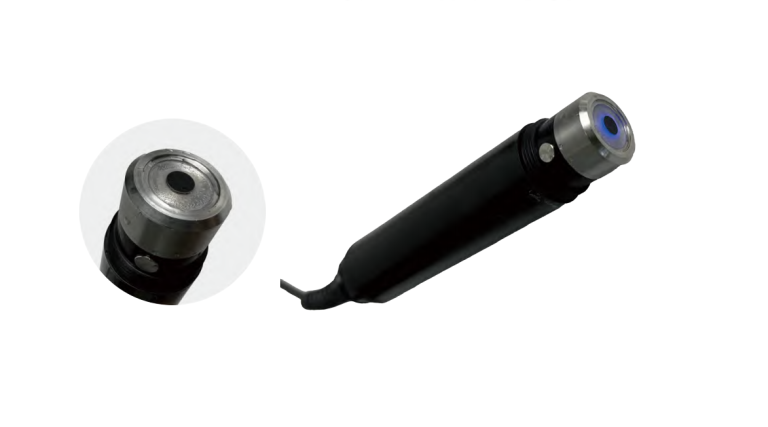
The Aquaread optical dissolved oxygen probe works on the principle of Dynamic Luminescence Quenching. A gas-permeable material known as a luminophore is excited with short bursts of blue light, which causes molecules in the luminophore to emit red photons.
By measuring the delay of the returned red photons with respect to the blue excitation, the level of dissolved oxygen present can be determined. The optical method has various advantages over the historical galvanic method for measuring dissolved oxygen.
Simple calibration
The DO sensor is easy to calibrate. There are only 2 points to calibrate, first the 100% point which you can calibrate in the air. The second is performed in zero oxygen solution. The Aquameter will do the rest, checking it’s in the correct solution and checking for stability prior to completing the calibration.
Auto salinity compensation
When measuring % saturation the salinity of the water has an influence on the dissolved oxygen % saturation measurement. The DO sensor has a built-in conductivity sensor meaning that the salinity is calculated, this value is then used for auto compensation giving the most accurate measurements with no extra user input.
More cost-effective alternative to optical?
Aquaread also offer an alternative DO sensor found on the entry level AP-700 and AP-800 Aquaprobes. These probes use the galvanic method for DO measurement. With this sensor oxygen is consumed from the sample as it’s crossed the sensors membrane. Once inside the sensor it reacts with the electrolyte solution inside the membrane cap causing a current, which is measured.

Whilst both sensors have the same great sensor resolution and accuracy, the galvanic sensors do require more maintenance by means of regular cap and electrolyte solution replacement. Also, as oxygen is consumed across the membrane these sensors are not ideal for use in still waters. Caps must be replaced every month followed by a fresh calibration.
Ecosense DO200A vs. Optical DO Sensors: A Side-by-Side Comparison
While the Ecosense DO200A dissolved oxygen meter is an excellent polarographic option, many professionals also consider optical (luminescence-based) DO sensors — such as those from Aquaread, In-Situ, or YSI’s own ProODO. Here’s how they compare:
The bottom line: Choose the Ecosense DO200A when you need EPA-approved compliance data on a budget, don’t mind regular maintenance, and typically work in flowing water. Choose optical when you need to monitor still water environments (ponds, tanks), want minimal hands-on maintenance, or plan to leave sensors deployed for extended periods.
Tech behind optical probes: Optical sensors like the Aquaread work by exciting a luminophore membrane with blue light. The delay (phase shift) of the returned red photons correlates directly with oxygen concentration — a method called Dynamic Luminescence Quenching. Since no oxygen is consumed during measurement, optical sensors deliver stable readings even in completely still water, and sensor caps can last 2+ years between replacements.
Galvanic DO Sensors: A Budget Alternative
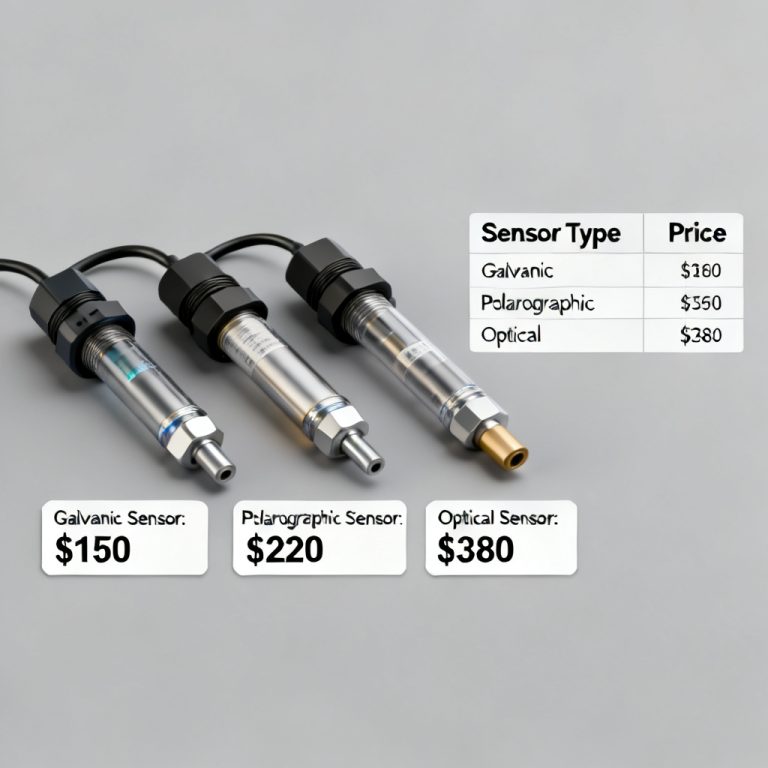
For those seeking an even more economical entry point than the Ecosense DO200A dissolved oxygen meter, galvanic DO sensors on probes like the Aquaread AP-700/AP-800 offer similar electrochemical principles but at a lower price point. Galvanic sensors are self-polarizing (no warm-up time needed), but they consume oxygen like polarographic sensors and require more frequent maintenance — typically membrane replacement every month plus fresh electrolyte solution.
However, galvanic sensors are not recommended for still water applications, as continuous oxygen consumption across the membrane creates measurement drift in low-flow conditions. For users who can accept the higher maintenance burden and work primarily in flowing water, galvanic sensors represent a viable low-cost option.
Frequently Asked Questions
Q: What applications is the Ecosense DO200A dissolved oxygen meter suitable for?
The DO200A is designed for wastewater monitoring (EPA approved for BOD/CBOD/DO compliance), surface water sampling, aquaculture operations, and laboratory BOD testing when paired with the optional self-stirring BOD probe. It’s an excellent all-around instrument for professionals who need regulatory-grade data without investing in optical technology.
Q: How often do I need to replace the membrane on the Ecosense DO200A?
PE membranes typically last 2-4 weeks under normal use, though this varies with water conditions. Turbid or high-solids samples may require more frequent replacement. The screw-on cap design makes membrane changes quick — typically under a minute.
Q: Is the Ecosense DO200A waterproof?
Yes — the DO200A carries an IP67 waterproof rating, meaning it can withstand temporary immersion in up to 1 meter of water for 30 minutes. The probe and cable are fully submersible for field measurements.
Q: Can the Ecosense DO200A be used in still water?
The polarographic sensor requires water movement across the membrane to maintain accuracy. In still water, you’ll need to manually stir the probe or accept slower stabilization times. For truly still-water applications (ponds, tanks, reservoirs), an optical DO sensor without flow dependency is the better choice.
Q: How does the Ecosense DO200A compare to the YSI Pro20?
The YSI Pro20 is YSI’s professional-grade DO meter with faster response, more robust construction, and additional features like built-in barometer. The Ecosense DO200A is YSI’s economy line — it delivers excellent accuracy at roughly half the price, making it ideal for budget-conscious operations that don’t need the Pro20’s premium features.