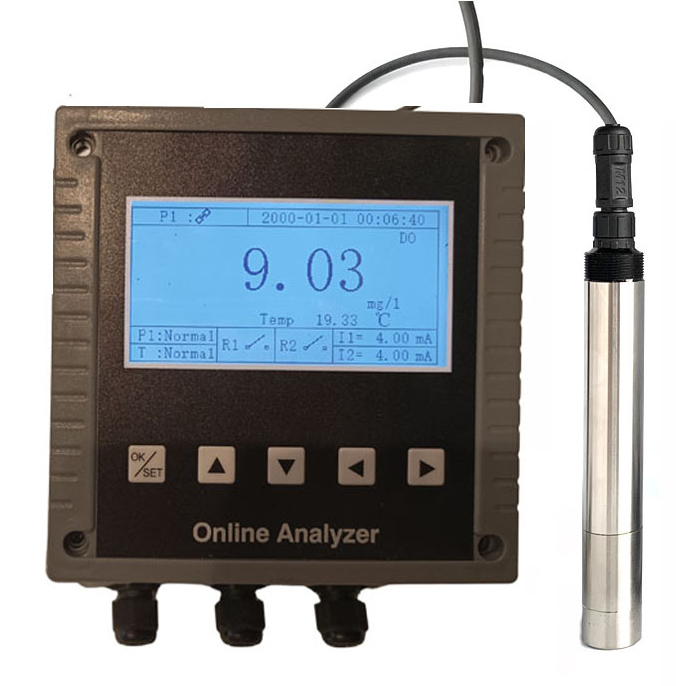
Dissolved Oxygen Sensor Engineering Specifications & Procurement Guide for Water Project Contractors
Dissolved oxygen sensor engineering specifications determine bid success, system integration cost, and long-term reliability. This guide delivers mandatory tender parameters, SCADA-ready communication protocols, and field deployment frameworks for engineering contractors and project bidders.
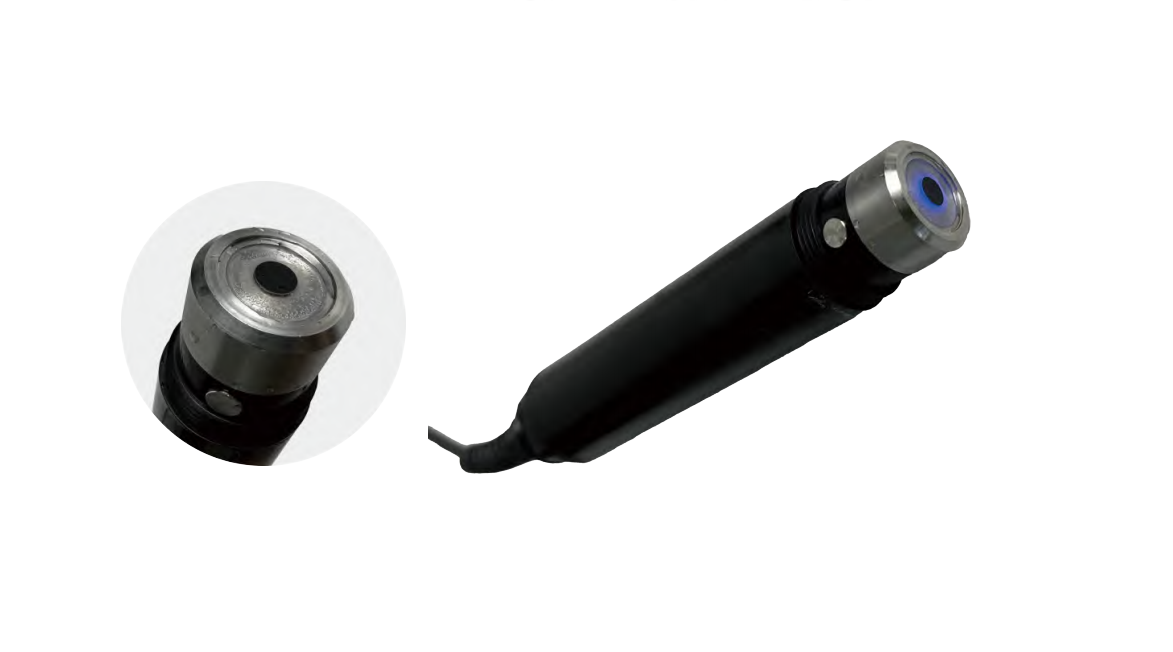
Tender-Ready Technical Specifications for DO Sensors
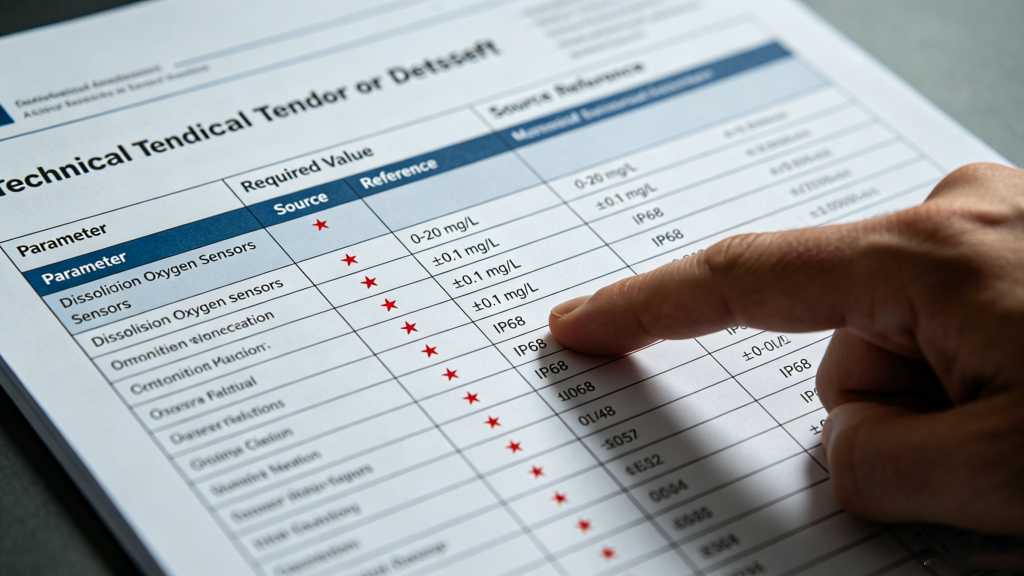
When responding to government or utility tenders, tender compliance requires a structured technical response table. The specifications below are drawn from actual municipal wastewater and environmental monitoring framework agreements.
Mandatory Specifications (★ Must-Respond Clauses)
The following table lists parameters that frequently appear as asterisk-marked mandatory items in public tenders. Failure to meet any ★ clause typically results in bid disqualification.
| Parameter | Required Value | Typical Tender Source |
|---|---|---|
| Measurement principle | Optical (fluorescence) ★ | Chengdu Environment, Thames Water |
| Measurement range | 0 – 20 mg/L (0–200% saturation) | EU Water Framework, US EPA NPDES |
| Accuracy | ±0.1 mg/L or ±1% of reading | ISO 15839, TriOS |
| Resolution | 0.01 mg/L | Common industry standard |
| Response time (T90) | < 60 seconds (T95 < 60 s acceptable) | Chengdu tender, TriOS |
| Submerged material | 316L stainless steel (titanium for marine) | Corrosion resistance requirement |
| Ingress protection | IP68 (continuous submersion) | All major utility tenders |
Additional mandatory items found in real tenders: auto-diagnostic fault alarm on controller, automatic temperature compensation, and ★ fluorescence sensing (electrochemical sensors explicitly rejected).
Environmental & Operational Specifications
Engineering contractors must verify that the proposed sensor meets site-specific conditions: operating temperature -5°C to 50°C, salinity 0–40 ppt with automatic compensation, and pressure rating IP68 up to 10 m depth. Critical cross-sensitivity note from TriOS: No interference from H2S, reducing/oxidizing substances, or pH 1–14. However, avoid organic solvents (acetone, toluene) which can damage optical sensing elements.
Communication Protocols for SCADA Compatibility
For SCADA integration, tenders typically accept 4‑20 mA (analog), Modbus RTU (RS485), SDI‑12, or Profibus/Hart. Modbus RTU is the most common for new plants. Default parameters: 9600 baud, 8 data bits, 1 stop bit, even parity. Each sensor on the same RS485 bus requires a unique Modbus address – stored in holding register 0x0000 (write via function code 0x06). The register map must be provided with the bid to prove compatibility.
Sample Modbus register map (based on NexSens integration guide):
| Register Address | Parameter | Access Method |
|---|---|---|
| 0x0000 | Modbus address (1‑247) | Read/Write (0x06) |
| 0x0004 | DO concentration (mg/L) | Read (0x03/0x04) |
| 0x0005 | DO saturation (%) | Read |
| 0x0006 | Temperature (°C) | Read |
Sensor Technology Selection for Engineering Contractors
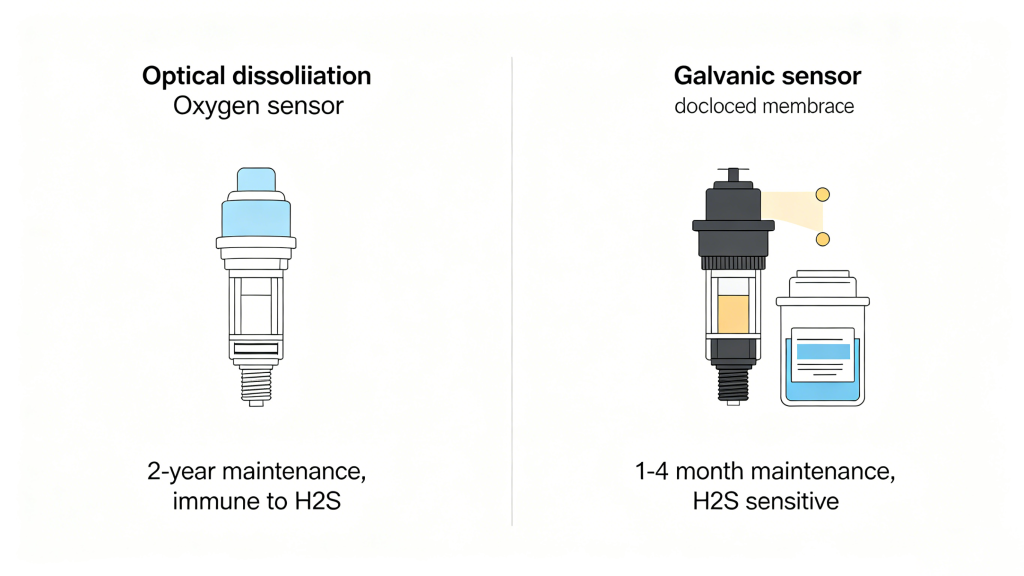
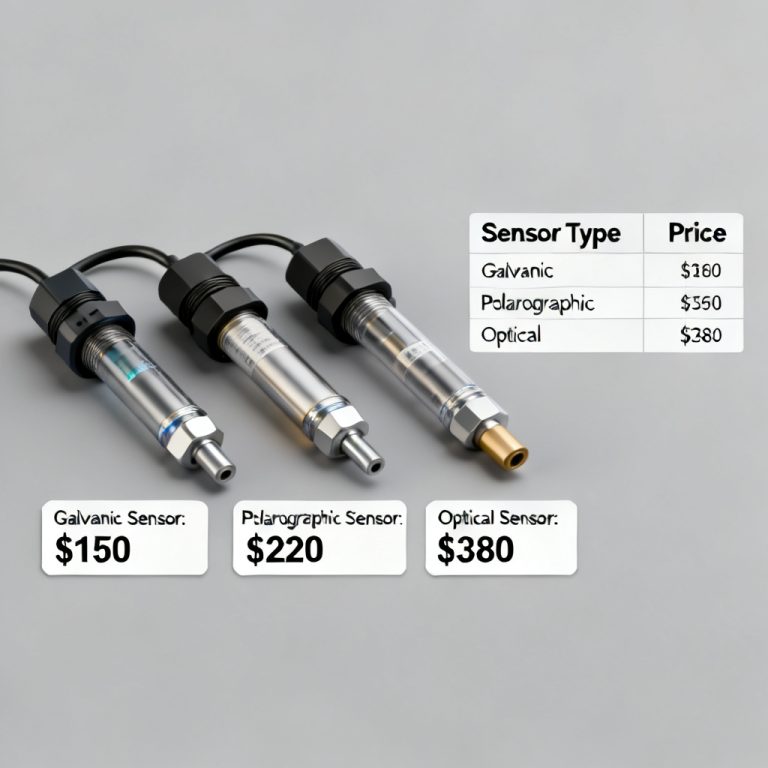
While optical sensors dominate continuous monitoring tenders, contractors occasionally need to specify galvanic or polarographic for portable or budget‑constrained sub‑projects. The decision matrix below helps align technology choice with tender requirements and lifecycle costs.
Engineering Decision Matrix
| Selection Criteria | Optical (Fluorescence) | Galvanic | Polarographic |
|---|---|---|---|
| Maintenance interval (field) | 1‑2 years (cap replacement) | 1‑4 months (membrane/electrolyte) | 1‑4 months |
| Warm‑up time | None | None | 5‑15 minutes required |
| H2S tolerance | Excellent (immune) | Poor (frequent cleaning) | Poor |
| Oxygen consumption | None | Yes (flow dependent) | Yes (stirring required) |
| Best application in tenders | WWTP aeration, environmental networks, marine aquaculture | Portable spot checks, budget backup | Laboratory, high‑precision batch |
Most large framework contracts (e.g., Thames Water, Chengdu Environment) now mandate optical technology for online continuous monitoring because of its low total cost of ownership and resistance to biofouling. Include the comparison table in your technical annex to justify your proposal.
System Integration & SCADA Architecture for Contractors
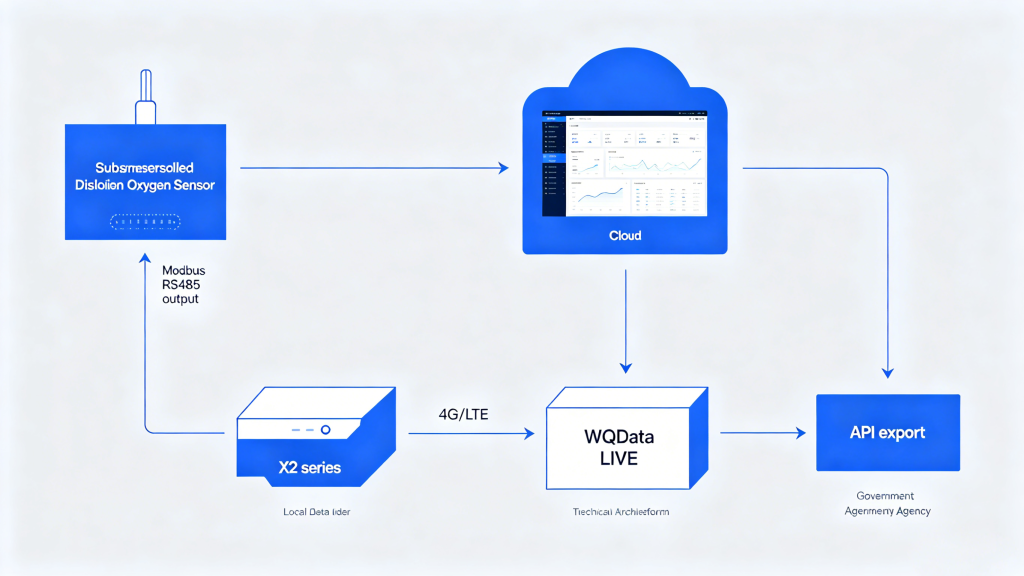
Engineering contractors must deliver working integration from sensor to PLC to telemetry. The following details are based on NexSens field deployment manuals and utility specifications.
Sensor-to-Controller Cabling & Connectors
Standard cable lengths: 5 m / 10 m, custom up to 100 m (split mounting – sensor below water, controller above ground). Use IP68 underwater piggyback connectors (MCBH type) or flying leads. For flying leads, exact wiring (YSI ODO RTU to NexSens X2): Green (GND) → Pin 2; Red (12+ VDC) → Pin 5; White (RS485 B) → Pin 7; Black (RS485 A) → Pin 8. Flying leads allow custom connector attachment but require waterproof splicing (heat‑shrink + epoxy).
Multi‑Parameter Monitoring & Bus Architecture
Modern tenders often require DO, pH, conductivity (salinity correction), turbidity, and temperature. Two integration strategies:
- Combined sonde – all parameters in one housing, simpler cabling but higher replacement cost.
- Individual Modbus RTU sensors on a common RS485 bus – more flexible, allows hot‑swap of individual sensors. Must assign unique Modbus addresses to avoid conflicts.
Data Logging, Telemetry & Cloud Platforms
Based on real‑world environmental networks (NexSens model): local data loggers store readings at user‑defined intervals (e.g., every 10 minutes). Telemetry via 4G/LTE (or satellite/LoRa for remote sites). Cloud platforms like WQData LIVE provide customizable dashboards and data export via email, FTP, or API – meeting tender requirements for “remote access and real‑time reporting”. Solar‑powered stations with battery‑backed loggers are standard for river basin networks.
Procurement & Tender Compliance Documentation
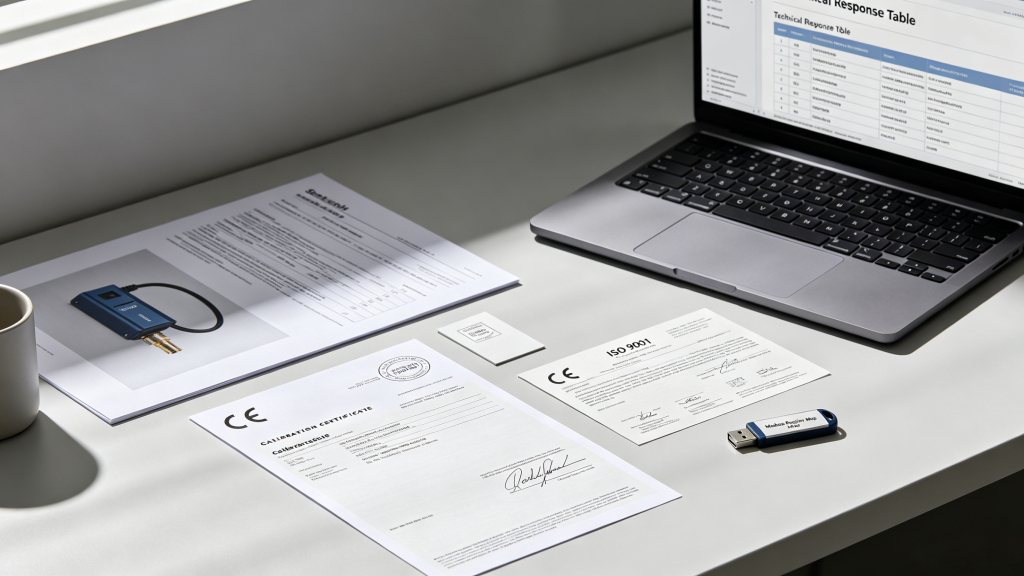
Winning bids require a complete documentation package. In addition to technical specifications, include the following:
Required Bid Documents
- Product datasheets – with all mandatory specifications highlighted and cross‑referenced to tender clauses.
- Factory calibration certificates – traceable to national/international standards.
- CE certification and RoHS compliance declarations (mandatory for EU‑funded projects).
- ISO 9001:2015 certificate of the manufacturer.
- Modbus register map and communication protocol specification.
- Warranty terms – minimum 1 year, preferably 2 years (TriOS offers 2 years).
Supplier Evaluation Criteria (for Contractor’s Procurement Team)
When selecting a sensor supplier for a tender response, use the following weighted criteria (derived from utility framework agreements):
| Criterion | Weight | Evidence Required |
|---|---|---|
| Technical specification compliance | 35% | Response table with page references, test reports |
| Quality management (ISO 9001) | 20% | Factory audit reports, calibration records |
| Delivery lead time | 15% | Confirmed schedule, liquidated damages clause |
| After‑sales support & local presence | 20% | Local distributor, response time SLA, spare parts stock |
| Warranty & post‑warranty service | 10% | Extended service contract options |
Pro tip from Chengdu tender: bidders must submit a “technical response table” where each mandatory item (★) is annotated “Compliant” with a page number from the datasheet. Structure your documentation kit to enable this.
Deployment Best Practices for Field Installation
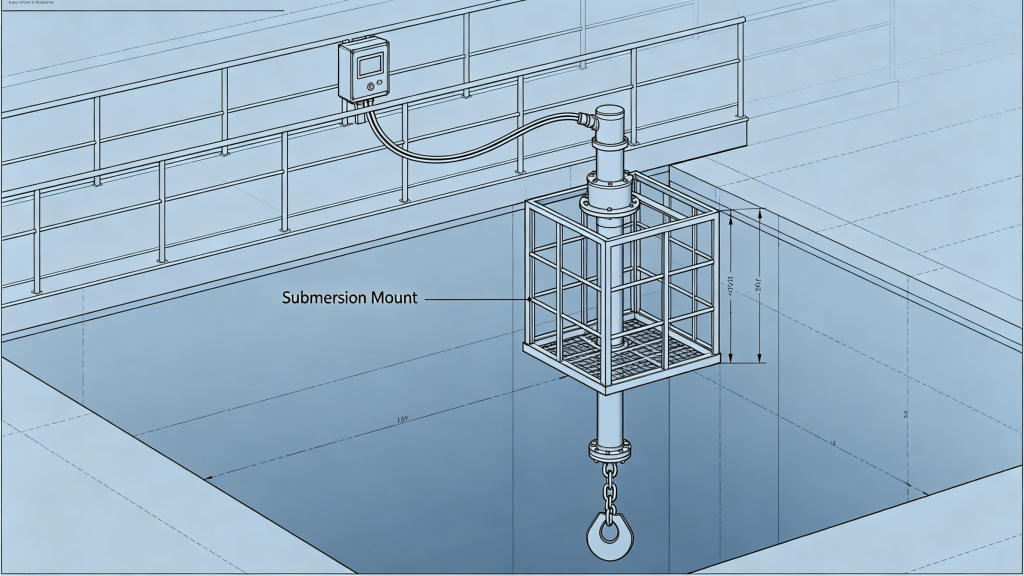
Poor installation is the #1 cause of DO data quality issues. Engineering contractors should include these practices in their site execution plan.
Site Assessment & Sensor Positioning
- Flow velocity: Maintain minimum 0.3 m/s past the sensing element. Optical sensors are less flow‑sensitive but still need representative mixing to avoid stagnant zones.
- Avoid air bubbles: DO sensors measure free oxygen; bubbles cause erratic spikes. Position away from aerators and waterfalls.
- Representative sampling: Mount sensor in the middle of the tank or channel, not near walls. For WWTP, Chengdu tender specifies “submerged in the aerobic zone of the bioreactor”.
Mounting Solutions
Three common methods specified in engineering tenders:
- Submersion mount – pipe or chain weight with protective guard cage; for open tanks, rivers, channels.
- Flow cell – for pressurized pipe systems (e.g., RO feed, drinking water). Provides constant flow and protection from debris.
- Buoy mount – for lakes, reservoirs, coastal monitoring; usually combined with solar panel and telemetry buoy.
Many tenders require “original manufacturer’s submersible mounting bracket” to ensure proper alignment and material compatibility. Avoid third‑party adapters unless proven equivalent.
Project Case Studies: Large‑Scale DO Deployments
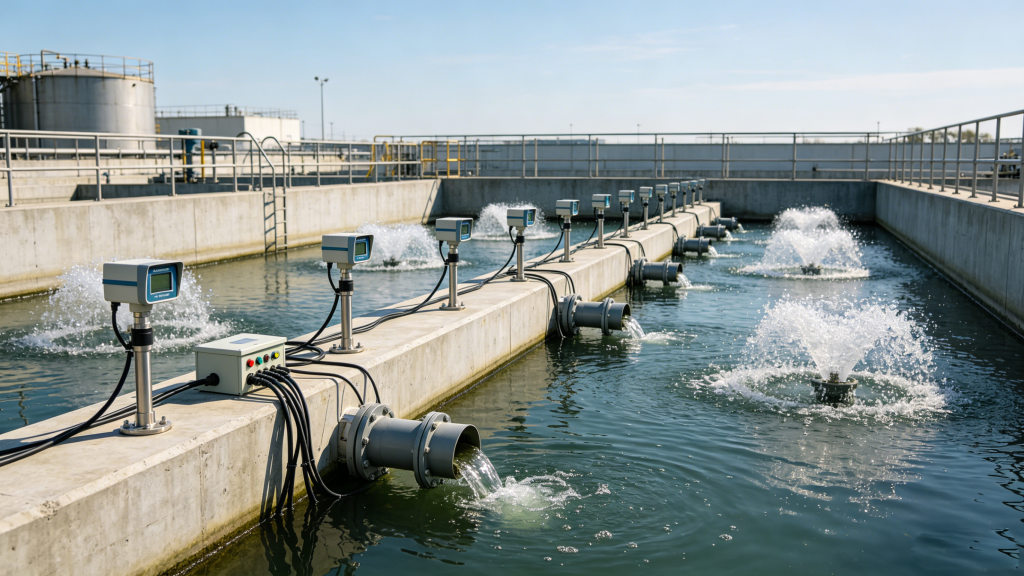
Real‑world references demonstrate how engineering specifications translate into operational ROI.
Municipal WWTP (50+ Sensors)
A 500,000 PE wastewater treatment plant replaced 60 polarographic DO sensors with optical sensors under a multi‑lot framework agreement (similar to Thames Water model). Key results:
- 70% reduction in maintenance labour – no electrolyte refills or membrane changes.
- 12% improvement in aeration energy efficiency due to stable, drift‑free readings.
- 5‑year maintenance contract covering annual calibration and optical cap replacement.
River Basin Environmental Monitoring Network
20 stations across 300 km of river, each measuring DO, temperature, pH, conductivity, turbidity. Solar‑powered buoys with 4G telemetry, optical DO sensors (low power, no stirring). Data chain: sensor → NexSens X2 logger → WQData LIVE cloud → API export for environmental agency. Outcome: reduced manual sampling cost by 85% and provided real‑time compliance reporting.
Frequently Asked Questions for Engineering Bidders
What certifications do government tenders require for dissolved oxygen sensors?
Most public tenders demand CE certification (EU), RoHS compliance, and ISO 9001 manufacturer certification. For US EPA projects, NSF/ANSI 60 or EPA‑approved methods may be required. Always attach the certificates with your bid.
How can I verify that a sensor will work with my existing SCADA before ordering?
Perform three pre‑bid checks: (1) Protocol – confirm your PLC/RTU supports Modbus RTU or 4‑20 mA. (2) Register map – obtain the map and verify the DO value address (e.g., 0x0004). (3) Unique addressing – if using RS485, ensure each sensor can be set to a unique address. Many contractors request a bench test unit before full deployment.
What is the typical calibration interval for optical DO sensors in wastewater?
Factory recommendation: every 12 to 24 months. TriOS specifies 2 years. For critical aeration control, some plants perform a quarterly spot check with a portable meter and recalibrate annually. Include calibration services in your maintenance proposal.
Can I use a galvanic DO sensor to meet a municipal tender’s specifications?
Technically yes, but many large tenders now explicitly require optical technology (★ clause). Galvanic sensors require monthly to quarterly maintenance and suffer from H2S poisoning – they may increase your lifecycle cost and risk of non‑compliance. We recommend optical for all continuous online monitoring projects.
How do I resolve Modbus address conflicts when deploying multiple sensors on one bus?
Each sensor must have a unique address (1‑247). Use function code 0x06 to write a new address to holding register 0x0000. This is often overlooked in standard specifications but critical for SCADA integration. Document your addressing plan in the system architecture section of your bid.
Engineering Contractor’s Procurement Checklist

- [ ] Mandatory specifications table (optical, 0‑20 mg/L, ±0.1 mg/L, IP68, 316L)
- [ ] Communication protocol defined (Modbus RS485 with register map provided)
- [ ] CE/RoHS/ISO 9001 certificates attached
- [ ] Installation method chosen (submersion bracket, flow cell, or buoy)
- [ ] Warranty ≥1 year, with calibration and spare cap pricing
- [ ] Integration testing plan (especially Modbus address conflict resolution)